Resume-aware faculty matching

Find professors who actually fit you

Upload your resume. Four AI agents analyze your background, rank the faculty who fit, inspect their recent research, and help you draft outreach — grounded in their actual work, not templates.

Free to startNo credit cardCancel anytime
Top matches Balanced preset
Dr. Sarah Chen
Stanford · Interpretability · NLP
91
Dr. Marcus Holloway
MIT · Robotics · RL
84
Dr. Aisha Okonkwo
CMU · Fairness · HCI
82
Nova · Professor Researcher · re-ranking top 20…
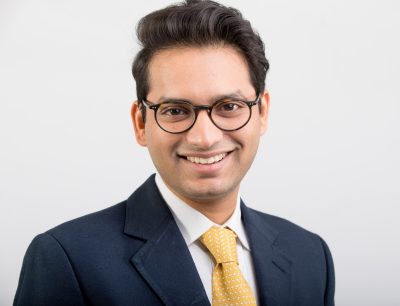
Shreyans Goenka

Shreyans Goenka

· Assistant ProfessorVerified

Virginia Tech · Marketing

Active 2017–2024

h-index7
Citations275
Papers2216 last 5y
Funding
See your match with Shreyans Goenka — sign in to PhdFit.Sign in

About

I’m Shreyans Goenka, a marketing professor at Virginia Tech and a researcher specializing in consumer ethics — the hidden moral logic that drives everyday purchasing decisions. My work sits at the intersection of psychology, politics, and the marketplace.

Research topics

  • Sociology
  • Political Science
  • Economics
  • Social psychology
  • Psychology
  • Business
  • Law
  • Law and economics
  • Marketing
  • Philosophy
  • Industrial organization
  • Cognitive psychology
  • Natural resource economics
  • Mathematics
  • Neuroscience
  • Econometrics

Selected publications

  • Price Partitioning of Socio-Moral Surcharges

    Journal of Consumer Research · 2024 · 9 citations

    1st authorCorresponding
    • Economics
    • Business
    • Natural resource economics

    Abstract Many companies are levying mandatory surcharges on products to raise funds for socio-moral causes (e.g., carbon-offset, living-wage, fair-trade, and sustainability surcharges). Should these surcharges be presented separately from the product price (i.e., partitioned pricing) or combined with the product price (i.e., all-inclusive pricing)? This research argues that partitioned pricing for socio-moral surcharges can backfire. When socio-moral surcharges are partitioned, consumers feel that the company is avoiding its own responsibility toward the cause, reducing intrinsic corporate social responsibility attributions and consequently leading to adverse consumer reactions. This theorization is specific to surcharges attached to socio-moral causes; the effects reverse for non-socio-moral surcharges. Further, we document three ways via which firms can alter consumer beliefs and attenuate negative reactions. These include approaches that signal that the firm is not seeking reputational benefits, that the firm is not avoiding responsibility, and by shifting consumers’ focus from the costs they have to bear to the benefits they accrue. Hence, this research presents implications for managers and policymakers seeking to incorporate socio-moral surcharges into product prices while mitigating consumer backlash.

  • Moral Motives in Consumption

    SSRN Electronic Journal · 2024-01-01

    articleOpen access1st authorCorresponding
  • Moral Foundations Theory and Consumer Behavior

    SSRN Electronic Journal · 2024-01-01

    articleOpen access1st authorCorresponding
  • Moral foundations theory and consumer behavior

    Journal of Consumer Psychology · 2024-06-10 · 17 citations

    articleOpen access1st authorCorresponding

    Abstract Ramos et al. ( Journal of Consumer Psychology , 2024) explain the Moral Foundations Theory (MFT) and discuss its applicability to explain marketing persuasion, consumer emotions, and prosocial behavior. We concur with Ramos et al. but suggest that the scope for MFT in consumer behavior is much broader – it can be used to investigate heterogeneity in consumers' moral utility. Specifically, we discuss how MFT can be used to investigate heterogeneity in product preferences, consumers' financial choices, consumer reactions to brand activism, and market regulation. We conclude by discussing three important challenges of using MFT in consumer research – causal identification, discriminant validity, and scientific objectivity.

  • Moral Motives in Consumption

    Journal of the Association for Consumer Research · 2024-10-08 · 4 citations

    article1st authorCorresponding

    The authors introduce the “Three Moral Motives Framework” to explain and predict consumers’ moral behaviors in the marketplace. The framework identifies three key motives—moral-beneficence, moral-self, and moral-duty—that shape when, how, and why consumers seek moral utility in their consumption choices. These motives may work together or in opposition, with varying sensitivities across individuals and contexts, influencing divergent moral decisions. The framework aims to reconcile conflicting findings in moral behavior literature and offers a unified approach to understanding consumer morality in the marketplace.

  • Enhancing Consumer and Planetary Well-Being by Consuming Less, Consuming Better

    Journal of Sustainable Marketing · 2024-06-19 · 4 citations

    articleOpen access

    The urgent need to address unsustainable consumption practices has become increasingly evident. While much traditional consumer behavior research serves to stimulate consumption, the focus needs to shift towards encouraging more sustainable consumption patterns. This commentary synthesizes insights from a roundtable discussion at the 2023 Society for Consumer Psychology Conference, which comprised an exploration of novel, creative, actionable, and theoretically sound avenues for getting people to consume less, consume better. The commentary tackles three essential questions: (1) What do we mean by consuming less, consuming better? (2) Who is/are responsible for such behaviors? (3) How do we get people to consume less, consume better? In doing so, it lays out several future research directions.

  • Partisan Media Sentiment Toward Artificial Intelligence

    SSRN Electronic Journal · 2023-01-01 · 1 citations

    articleOpen access
  • Price Partitioning of Socio-Moral Surcharges

    SSRN Electronic Journal · 2023-01-01 · 1 citations

    articleOpen access1st authorCorresponding
  • Partisan Media Sentiment Toward Artificial Intelligence

    Social Psychological and Personality Science · 2023-09-14 · 10 citations

    articleOpen access

    Artificial intelligence (AI) is becoming pervasive across society. However, its deployment appears to be a divisive issue. This research examines aversion to AI across the partisan divide. We analyze partisan media sentiment toward AI, a powerful driver of public opinion toward social issues. We conduct a text analysis of media articles on AI ( N = 7,840) from several liberal-leaning and conservative-leaning media outlets. The results demonstrate that liberal-leaning media show a greater aversion to AI than conservative-leaning media. Furthermore, a mediation analysis suggests that liberal-leaning media are more concerned with AI magnifying social biases in society than conservative-leaning media, which drives the partisan media differences. Moreover, the results also show that media sentiment toward AI became more negative after George Floyd’s death, an event that heightened sensitivity about social biases in society. Implications for how these partisan media differences can polarize public opinion and policymaker support toward AI are discussed.

  • The effect of firm size on perceived product healthiness

    Marketing Letters · 2023 · 3 citations

    • Business
    • Marketing
    • Industrial organization

Frequent coauthors

  • Manoj Thomas

    Cornell University

    13 shared
  • Stijn M. J. van Osselaer

    Cornell University

    10 shared
  • Sankar Sen

    Baruch College

    3 shared
  • Mario Pandelaere

    Virginia Tech

    3 shared
  • Angela Yi

    2 shared
  • Katharina C. Husemann

    King's College London

    2 shared
  • Shuili Du

    University of New Hampshire

    2 shared
  • Rajesh Bagchi

    Virginia Tech

    2 shared

Education

  • B.A.

    University of Pennsylvania

  • Ph.D.

    Cornell University’s S.C. Johnson School of Management

  • Resume-aware match score
  • Save to shortlist
  • AI-drafted outreach

See your match with Shreyans Goenka

PhdFit ranks faculty by your research interests, methods, and publications — grounded in their actual work, not templates.

  • Free to start
  • No credit card
  • 30-second signup