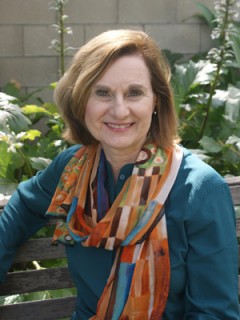
Sharon Marie Carnicke
· Professor of Theatre Critical StudiesVerifiedUniversity of Southern California · Dramatic Arts
Active 1979–2025
About
Sharon Marie Carnicke is a professor of critical studies and acting at the USC School of Dramatic Arts. She is internationally acclaimed for her groundbreaking research on Stanislavsky and her master classes on Active Analysis, a technique created by Stanislavsky and developed by the renowned Russian director Maria Knebel. Carnicke has published widely on acting for stage, screen, and new media, including books such as Dynamic Acting through Active Analysis, Stanislavsky in Focus, Anton Chekhov: 4 Plays and 3 Jokes, Checking out Chekhov, and Reframing Screen Performance. She has received numerous awards, including a citation for translation from the Kennedy Center and grants from prestigious organizations like the Rockefeller Foundation, the American Council of Learned Societies, the American Association for Theatre Studies, and the US National Science Foundation. Carnicke has conducted master classes across the United States and internationally at institutions such as the National Association of Acting Teachers, the National Academy of the Arts in Norway, MetodiFestival in Italy, NIDA in Australia, and The Moscow Art Theatre School. Her work with scientists has applied active analysis to the study of emotional expression through motion capture and interactive digital storytelling. She is also the founder of the Stanislavsky Institute for the 21st Century. Carnicke earned her PhD in Russian from Columbia University and maintains an active career in theatre as an actor, dancer, and director, having performed in New York and directed in New York, Los Angeles, Moscow, and Oslo. She holds a joint appointment in Slavic Languages and Literatures in Dornsife at USC.
Research topics
- Humanities
- Visual arts
- Philosophy
- Epistemology
- History
- Art
- Social psychology
- Aesthetics
- Psychoanalysis
- Psychology
- Art history
Selected publications
2025-11-25
book-chapter1st authorCorrespondingCentral to this introduction is Maria Andreyeva’s 1913 proposal to the Moscow Art Theatre to create a cinema studio under its auspices. As an early protégé of Stanislavsky, her desire to build a bridge from stage to screen prompted him to think deeply about the differences between acting on stage and in front of cameras, particularly with regard to human presence and absence. While most scholars assume that he rejected screen performance altogether, his writings show a much more nuanced opinion. This introductory history of Stanislavsky’s encounters and opinions of early cinema helps frame the essays in this volume as they move Stanislavsky’s ideas on actor training from stage to screen.
The Russian Review · 2025-08-18
article1st authorCorrespondingPrompting Inner Monologue Through Active Analysis
2025-11-25
book-chapter1st authorCorrespondingIn seeking a bridge between actor training for stage and screen, I conducted an experimental workshop to investigate how Konstantin Stanislavsky’s rehearsal technique for stage, Active Analysis, might automatically create inner monologues, considered foundational in screen acting by Hollywood coaches in the Studio era. Three actors joined me to explore this link by working on two short excerpts from Murray Schisgal’s Luv (1968) and Rebecca Gorman O’Neill’s Read to Me (2017). This chapter discusses the premises behind the workshop, the history of the two techniques, and the workshop’s processes and findings.
Stanislavsky and Screen Actor Training
2025-11-25 · 1 citations
bookSenior authorSlavic Review · 2024-01-01
article1st authorCorrespondingNicole Svobodny. Nijinsky's Feeling Mind: The Dancer Writes, the Writer Dances. Crosscurrents: Russia's Literature in Context. New York: Lexington Books, 2023. xi, 371 pp. Bibliography. Index. $125.00, hard bound. - Volume 83 Issue 3
Belief through Knowledge: The Relationship of Knebel’s Active Analysis to Stanislavsky’s System
Stanislavski Studies · 2023 · 1 citations
1st authorCorresponding- Psychology
- Epistemology
- Aesthetics
Stanislavsky placed belief in imagined circumstances at the heart of his acting System. As he wrote, “Everything on stage must instill belief in the possibility that it could exist in life as actual feelings and sensations, analogous to those that the artist undergoes while creating.” However, leading proponents of Stanislavsky’s late work rarely mention belief when they write about his last rehearsal technique, named Active Analysis by Maria Knebel. My essay interrogates this puzzling absence through Knebel’s practice, which still positions belief as “the foundation of foundations” in acting, but also sees belief as originating from actors’ active exploration of their roles’ circumstances. For Knebel, there can be no belief in fictional possibilities without the visceral knowledge, acquired through the rehearsal process.
Chekhov’s Moscow Art Theater (1897–1904)
Cambridge University Press eBooks · 2023-02-16
book-chapter1st authorCorrespondingIn examining Chekhov’s engagement with the Moscow Art Theater, Sharon Marie Carnicke stages the serendipitous convergence of two worlds, showing us how Chekhov’s fledgling work as a playwright met with the equally fledgling theatrical dreams of Stanislavsky and Nemirovich-Danchenko to yield two mutually reinforcing cultural edifices that would eventually transform theatrical practices the world over.
Dynamic Acting through Active Analysis
Bloomsbury Publishing Plc eBooks · 2023-01-01 · 10 citations
book1st authorCorresponding<JATS1:p>In the 21st century, actors face radical changes in plays and performance styles, as they move from stage to screen and grapple with new technologies that present their art to ever-expanding audiences. Active Analysis offers the flexibility of mind, body, and spirit now urgently needed in acting.</JATS1:p> <JATS1:p>Dynamic Acting through Active Analysis brings to light this timely legacy, born during the worst era of Soviet repression and hidden for decades from public view.</JATS1:p> <JATS1:p>Part I unfolds like a mystery novel through letters, memoirs, and transcripts of Konstantin Stanislavsky’s last classes. Far from the authoritarian director of his youth, he reveals himself as a generous mentor, who empowers actors with a brand new collaborative approach to rehearsals. His assistant, Maria Knebel, first bears witness to his forward-looking ideas and then builds the bridge to new plays in new styles through her directing and influential teaching.</JATS1:p> <JATS1:p>Part II follows a 21st century company of diverse actors as they experience the joy of applying Active Analysis to their own creative and professional work.</JATS1:p>
2023-04-24
book-chapter1st authorCorrespondingStanislavsky experimented in his last years with a new rehearsal approach that challenges actors to explore texts by means of guided improvisations, called etudes. By embodying the interactive dynamics inherent in their scenes before they memorize the words, actors viscerally experience their characters’ circumstances as present reality. This essay presents a case study on the use of Active Analysis in an undergraduate course on Greek and Roman drama, to unlock key aspects of the scene in which Agamemnon returns victorious from the Trojan War in Aeschylus’ Oresteia.
Slavic Review · 2022-01-01
article1st authorCorrespondingStsenarii peremen: Uvarovskaia nagrada i evolutsiia russkoi dramaturgii v epokhu Alesksandra II. By Kirill Zubkov. Moscow: Novoe literaturnoe obozrenie, 2021. 608 pp. Appendixes. Notes. Bibliography. Index. ₽660, hard bound. - Volume 81 Issue 3
Frequent coauthors
- 5 shared
Shrikanth Narayanan
- 5 shared
Angeliki Metallinou
- 5 shared
Chi-Chun Lee
- 4 shared
Felipe Rodrigues Carvalho
- 3 shared
Jonathan Gratch
- 3 shared
Stacy Marsella
Universidad del Noreste
- 3 shared
Anna Okhmatovskaia
- 3 shared
Carlos Busso
The University of Texas at Dallas
Awards & honors
- Citation for translation from the Kennedy Center (Washington…
- Grants from the Rockefeller Foundation
- Grants from the American Council of Learned Societies
- Grants from the American Association for Theatre Studies
- Grants from the US National Science Foundation
- Resume-aware match score
- Save to shortlist
- AI-drafted outreach
See your match with Sharon Marie Carnicke
PhdFit ranks faculty by your research interests, methods, and publications — grounded in their actual work, not templates.
- Free to start
- No credit card
- 30-second signup