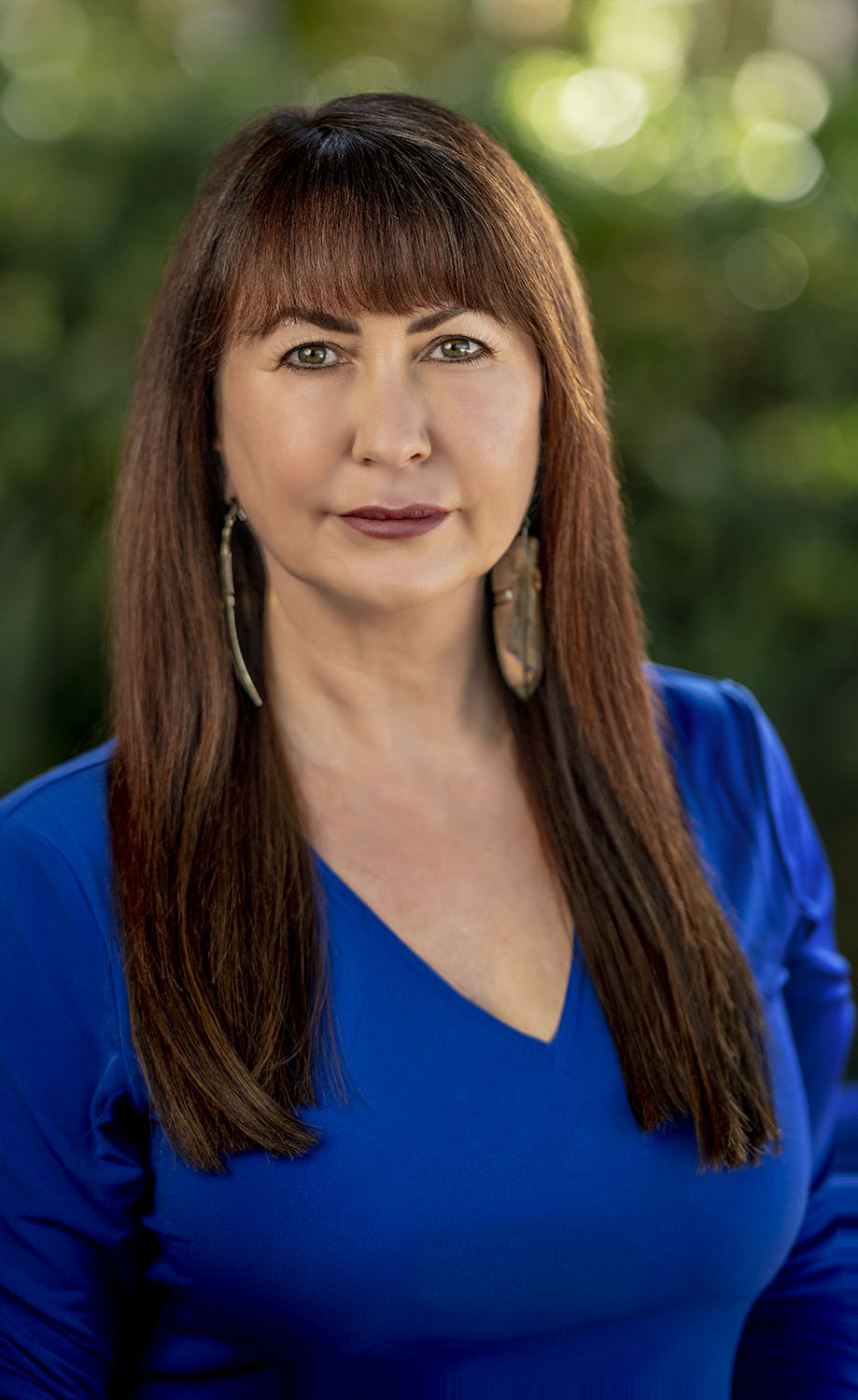
Shannon Speed
· Professor | Paula Gunn Allen Chair and Professor, American Indian Studies /Gender Studies/Anthropology, Director, American Indian Studies Center Special Advisor to the Chancellor on Native American and Indigenous AffairsUniversity of California, Los Angeles · American Indian Studies
Active 2000–2025
About
Shannon Speed is a Professor and the Paula Gunn Allen Chair at UCLA American Indian Studies, with additional appointments in Gender Studies and Anthropology. She serves as the Director of the American Indian Studies Center and is a Special Advisor to the Chancellor on Native American and Indigenous Affairs. Her work focuses on Native American law, Indigenous issues, and the intersection of gender and Indigenous identities. As a key figure in her field, she contributes to academic leadership and policy advising related to Native American communities and Indigenous affairs.
Research topics
- Sociology
- Computer Science
- Political Science
- Psychology
- Social psychology
- Cartography
- Biology
- Geography
- Psychoanalysis
- Environmental science
- Business
- Law
- Philosophy
- Psychotherapist
- Ecology
Selected publications
The Persistence of White Supremacy:
Princeton University Press eBooks · 2025-01-28
book-chapter1st authorCorrespondingPrinceton University Press eBooks · 2025-01-26
book-chapter1st authorCorrespondingIndigenous in the Shadow of the Wall:
University of Arizona Press eBooks · 2025-10-21
book-chapter1st authorCorrespondingEnding Violence Against Indigenous Women: Rethinking Human Rights and Tribal Sovereignty
Journal of Anthropological Research · 2025-04-25
article1st authorCorrespondingIn this article, I explore the persistent nature of violence against Native women and the potential strengths of combining a human rights framing with strengthened tribal sovereignty to combat the violence and to hold settler states accountable for it. The article draws upon my ethnographic and archival research in several projects spanning two decades, including research on human rights, violence against Indigenous women, and Chickasaw sovereignty in the context of settler capitalism.
The Great Power of Small Nations: A History of Contemporary Relevance
The William and Mary Quarterly · 2023-10-01
article1st authorCorrespondingThe Great Power of Small Nations:A History of Contemporary Relevance Shannon Speed (bio) ELIZABETH N. ELLIS'S The Great Power of Small Nations: Indigenous Diplomacy in the Gulf South is a remarkable book that sheds new light on the political systems of the "small nations" of the Lower Mississippi Valley in the seventeenth and eighteenth centuries and provides an important corrective to the long-standing erasure of their histories. Meticulously researched and elegantly written, the book describes the ways that these small nations' unique patterns of settlement and forms of social organization helped them navigate and survive European invasion and colonization. Ellis highlights the long-occluded history in which Chitimachas, Chakchiumas, Mobilians, Tunicas, Ishak/Atakapas, Houmas, and other small nations "shaped European empires and forged vibrant and powerful nations" (3–4) and effectively "steered the course of the development of the eighteenth-century Lower Mississippi Valley" (4). As a Chickasaw (also of Choctaw descent), I have long been interested in the history of Indigenous and colonial relations in the Lower Mississippi Valley, but The Great Power of Small Nations gave me an entirely new perspective on the history of the region. One important aspect of the book's argument is that flexible residence patterns in what Ellis characterizes as a borderlands space between the larger nations of Chickasaw, Choctaw, and Creek to the east, Osage and Quapaw to the north, and Caddoan polities to the west meant that groups of people regularly moved among and between nations, creating fluidity of spatial and ideational boundaries. The common practice of breakaway groups migrating out of their nations and receiving refuge in another, or, as Ellis calls it, "fusion and fission" (5), created new multinational, multicultural, and multilingual communities in which people grew accustomed to residing in close proximity to, and thus relating to, people of foreign nations. She both explores how this system of social relations and community composition was a significant aspect of what gave these small nations their strength and analyzes what this history can tell us about the processes of Indigenous nation building. The first obviously gives the book its title and is important because so much of the written history has focused on larger nations or [End Page 757] confederacies, and the second is what gives this book such broad interest beyond the particular nations' histories it examines. In terms of demonstrating how small nations exercised power, I found chapter 6, "Imperial Blunders and the Revival of Interdependency at Midcentury," particularly compelling (perhaps also due to my own interest in and stronger knowledge of this period of Chickasaw and Choctaw history). This chapter chronicles the Chickasaw Wars, the Choctaw Civil War, and other conflicts, taking the reader through the mind-boggling sets of alliances and changing relationships among the Petites Nations, with the powerful Chickasaw and Choctaw Nations, and with the French and British during the tumultuous and violent 1730s, 1740s, and 1750s. The author skillfully demonstrates the larger powers' absolute reliance on the Petites Nations and the tremendous significance of these alliances in the political outcomes of that era's conflicts. Further, Ellis shows us the practices of giving refuge and sharing territory, particularly in the case of the Chakchiumas, who, through their key role in the conflicts, suffered great losses of both people and political sovereignty but were able to survive after receiving refuge among the Chickasaw. Finally, we see the Petites Nations' crucial role in diplomacy, as the Chakchiumas helped to broker lasting peace between the Chickasaw and Choctaw, who signed a peace agreement in 1759 and never returned to open conflict. Though Ellis's arguments are well supported throughout the book, this chapter demonstrates effectively all her major points. Although the specific histories she sheds light on are fascinating and make the case for the power of small nations, it is Ellis's lucid depiction of Indigenous notions of power and nation building—markedly distinct from European settler conceptions—that gives the book its broader theoretical power.1 Indigenous nation building is something I have been thinking about a lot these days. What were its formal elements, and what made it distinct from Western nation building? The Great Power of Small Nations provides...
2022-10-14
book-chapter1st authorCorrespondingMy name is Shannon Speed, my Chickasaw name is Ihoo Ithána, and I am Chickasaw and Choctaw by descent. I am a citizen of the Chickasaw Nation of Oklahoma. My paternal grandfather, Samuel Speed, was Chickasaw and my paternal grandmother, Josephine Speed (née Otillie Reichert), was Choctaw. You can only enroll in one tribe, and my brothers and sisters and I were enrolled in the Chickasaw Nation, as was my father. My paternal grandparents were born in what was Indian territory prior to Oklahoma statehood and their tribal allotment lands were outside of Wynnewood, Oklahoma. My grandparents sold their small farm located on their allotment lands, and they moved to California in the 1930s. My father was 14 at the time, so he finished high school in California, graduated from Venice High and he lived here in California the rest of his life. All my siblings and I were born and raised in Los Angeles. We grew up knowing that we were Chickasaw, but we were somewhat removed from the culture and what was left of it after centuries of settler influence and imposition by the early 1960s. It wasn’t until I was an adult that I would travel regularly to Oklahoma and develop a closer relationship with folks in the tribe in general and my relations there. I do not hold a formal position other than being a citizen and I have a book under contract with the Chickasaw Press. We are the first tribe that I know of to have their own academic press, so I am honored to be working on a project with them.
15. Indigenous Rights and Language Sovereignty
Human Rights · 2022-07-14 · 2 citations
book-chapterSenior authorThis chapter covers indigenous rights and language sovereignty. It discusses the underlying logic and role of settler colonialism in the dispossession and erasure of Indigenous people. Human rights practice lies at the intersection of languages, Indigeneity, and sovereignty. The human rights world has been primarily dominated by a Western colonial mindset as the dispossession and forced migration of Indigenous people resulted in the erasure of identities and persistence of racial hierarchies, overt racism, and cultural biases. The chapter clarifies that language is not neutral as the approach and access to language needs to be decolonized and language is inextricably linked to cultural identity. It also expounds on how human rights could harm Indigenous language knowledge keepers by referencing the work of Communidades Indígenas en Liderazgo (CIELO) on language rights and language sovereignty.
University of Arizona Press eBooks · 2021-03-23 · 1 citations
book-chapter1st authorCorrespondingGrief and an Indigenous Feminist’s Rage:
University of Arizona Press eBooks · 2021 · 18 citations
1st authorCorresponding- Sociology
- Sociology
- Psychoanalysis
Presidential Comments to Introduce the 2020 NAISA Business Meeting
Native American and Indigenous Studies · 2021-03-01
article1st authorCorrespondingPresidential Comments to Introduce the 2020 NAISA Business Meeting Shannon Speed (bio) editors' note: NAISA, the Native American and Indigenous Studies Association, is the professional association responsible for publishing this journal. The 2020 annual meeting of the association was scheduled to be hosted by the University of Toronto in early May; however, in mid-March, facing the spreading COVID-19 pandemic, the NAISA Council made the difficult decision to cancel the in-person meeting in Toronto. The annual business meeting of the association was held via webinar on June 18, 2020. Given the extraordinary circumstances of the pandemic and its ongoing consequences, the editors invited President Speed to share her remarks from the business meeting in this issue of NAIS. Chinchokma'ni sabanna. In recent days, it has become a standard opening to begin all messages with, "I hope you and your family are well in these [fill in the blank] times." What goes in the blank varies in response to ongoing events and with our moods, which for most of us are fluctuating through a range of emotions. Indeed, the times are in many ways unprecedented, troubling, stressful, and infuriating but then randomly hopeful and sometimes downright surreal. In an astoundingly short period of time, the coronavirus laid waste to our plans and our activities, cut us off from friends and relatives, and, for so many, took away their jobs and their educations. Of course, it did not do so equally. Indeed, the COVID-19 pandemic has quickly laid bare the dramatic inequality our communities have long been experiencing both through the disproportionate impact of the virus itself and through the disproportionate economic impacts. Then, as we grappled with this new reality, the racially motivated killing of African Americans—Amhaud Arbery, Breonna Taylor, George Floyd, Rayshard Brooks, among others—has equally exposed—yet again—the ongoing presence of a lethal racism in the United States, a lethal racism that finds echo in settler societies everywhere. It is painful, it is outrage producing, it has brought us to the brink of chaos. But the chaos is perhaps needed in the sense that in many ways these events are not, in fact, "unprecedented." They have ample precedent in the inequality produced underlying conditions that marked our communities for death in this pandemic and in the nightmarish endless replay loop of Black deaths, particularly, though [End Page 17] not exclusively, at the hands of police. As the cumulative pain became too much, we poured into the streets in record numbers, day after day after day, to say, "Ya basta, enough is enough." It is time for change. That change is bigger than reforming or abolishing policing, although we need that. Racial justice will necessarily entail the dismantling of the white supremacy that has underpinned Native dispossession and Black enslavement since European colonialism began. Gender justice will entail dismantling its corollary logic of patriarchy. In other words, the structuring logics of settler capitalism—indeed, settler capitalism itself—are long overdue for a reckoning. Another message brought by this pandemic was environmental. For a brief time, with industry halted, planes grounded, people at home, and petroleum prices through the floor, we watched in awe as the environment and our more than human relatives made a comeback. In many places, smog cleared from the sky, rivers began to lose their cloudy hue, and animals retook their territories long invaded by human activity. Change will need to include living in the world in a different way. Of course, Indigenous people have been down this road. We have faced apocalyptic devastation of our worlds and genocide of our peoples. And iilhakóffi—we survived. Indigenous peoples have a critical contribution to make in the conversation about how to create a more just, less colonized, less exploitative world as peoples who have struggled for five hundred plus years to maintain lifeways that are distinct. Without falling into overgeneralization or essentializing, I can say that these lifeways are mostly more collective, less hierarchical, and more sustainable. They are inherently anti-colonial. While Indigenous peoples have devastatingly borne the brunt of these crises, being disproportionately affected by everything from wildfires to unemployment to COVID, we also are uniquely positioned to...
Frequent coauthors
- 6 shared
Lynn Stephen
- 6 shared
Charles R. Hale
- 6 shared
Morna Macleod
Universidad Autónoma del Estado de Morelos
- 5 shared
Rosalva Aída Hernández Castillo
- 5 shared
Mark Goodale
University of Lausanne
- 4 shared
María Teresa Mata Sierra
- 4 shared
Xóchitl Leyva Solano
- 4 shared
Xochitl Leyva
Labs
American Indian StudiesPI
Education
- 2000
Ph.D., American Indian Studies
University of Oklahoma
- 1995
M.A., American Indian Studies
University of Oklahoma
- 1993
B.A., American Indian Studies
University of Oklahoma
Awards & honors
- President’s Award from the American Anthropological Associat…
- Chickasaw Dynamic Woman of the Year award from the Chickasaw…
- Resume-aware match score
- Save to shortlist
- AI-drafted outreach
See your match with Shannon Speed
PhdFit ranks faculty by your research interests, methods, and publications — grounded in their actual work, not templates.
- Free to start
- No credit card
- 30-second signup