
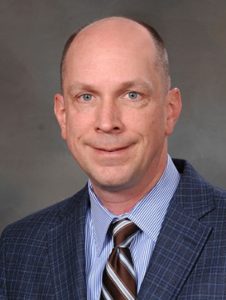
Scott Socolofsky
· Joint Faculty – Professor, Civil & Environmental EngineeringTexas A&M University · Civil & Environmental Engineering
Active 2001–2026
Academic metrics are sourced from OpenAlex and public funding records; values may differ from Google Scholar.
About
Scott Socolofsky is the DLEB 309I J. Walter “Deak” Porter ’22 and James W. “Bud” Porter ‘51 Chair Professor in Civil & Environmental Engineering. He is an affiliated faculty member of the Ocean Engineering Research Laboratory. His research focuses on environmental fluid mechanics, specifically in areas such as multi-phase flow, lake aeration, direct ocean carbon sequestration, dynamics of subsea oil spills, shallow flow stability, and mixing at tidal inlets. He earned his Ph.D. from the Massachusetts Institute of Technology in 2001. His work involves the study and development of numerical methods in environmental fluid mechanics, contributing to a deeper understanding of complex fluid dynamics phenomena in natural and engineered systems.
Research topics
- Geology
- Computer Science
- Mechanics
- Physics
- Environmental science
- Petrology
- Geomorphology
- Environmental resource management
- Oceanography
- Engineering
Selected publications
Progress in Operational Modeling in Support of Oil Spill Response
Journal of Marine Science and Engineering · 2020 · 97 citations
Following the 2010 Deepwater Horizon accident of a massive blow-out in the Gulf of Mexico, scientists from government, industry, and academia collaborated to advance oil spill modeling and share best practices in model algorithms, parameterizations, and application protocols. This synergy was greatly enhanced by research funded under the Gulf of Mexico Research Initiative (GoMRI), a 10-year enterprise that allowed unprecedented collection of observations and data products, novel experiments, and…
A Review on Multiphase Underwater Jets and Plumes: Droplets, Hydrodynamics, and Chemistry
Reviews of Geophysics · 2020 · 44 citations
Abstract Jets and plumes have been the focus of quantitative investigations since the mid‐1950s. These investigations intensified following the Deepwater Horizon oil spill, in which thousands of tons of oil and natural gas were released into the Gulf of Mexico. This review focuses on plume dynamics that apply to both single‐phase and multiphase liquid‐in‐liquid and liquid plus gas into liquid plumes, including bubble and droplet formation, and heat and mass transfer. Broadly, our work highlights…
Dynamics of Gas Bubbles From a Submarine Hydrocarbon Seep Within the Hydrate Stability Zone
Geophysical Research Letters · 2020 · 34 citations
Abstract We validate a new model for mass transfer and bubble transport for natural seeps on the continental margins using an integrated observation of a seep at 883 m in the Northern Gulf of Mexico. In the model, mass transfer is assumed to transition from clean to dirty bubble mass transfer rates following a characteristic hydrate formation time that depends on the initial bubble surface area and the hydrate subcooling. We show that buoyancy‐induced upwelling is negligible for the bubble strea…
Oil Transport Following the<i>Deepwater Horizon</i>Blowout
Annual Review of Marine Science · 2022-07-01 · 24 citations
reviewOpen accessThe Deepwater Horizon oil spill in the Gulf of Mexico in 2010 was the largest in US history, covering more than 1,000 km of shorelines and causing losses that exceeded $50 billion. While oil transformation processes are understood at the laboratory scale, the extent of the Deepwater Horizon spill made it challenging to integrate these processes in the field. This review tracks the Deepwater Horizon oil during its journey from the Mississippi Canyon block 252 (MC252) wellhead, first discussing th…
Journal of Geophysical Research Oceans · 2025-03-01 · 7 citations
articleOpen accessSenior authorCorrespondingAbstract Quantifying the vertical distribution of dissolved gases entering the oceans from natural seeps is important to understand biogeochemical cycling of these gases and to constrain their emissions to the atmosphere. The fate and transport of gas bubbles in seawater depend on their rise velocity and their rate of mass exchange with ambient water. In the deep ocean, clathrate hydrates may form as skins on bubbles of natural gases. Although it is known that hydrate skins reduce mass transfer…
Recent grants
NSF · $472k · 2004–2011
NSF · $37k · 2010–2012
Frequent coauthors
- 31 shared
Kuang‐An Chang
Texas A&M University
- 29 shared
E. Eric Adams
Massachusetts Institute of Technology
- 25 shared
Michel C. Boufadel
New Jersey Institute of Technology
- 19 shared
Jonas Gros
Ferarihs
- 18 shared
Soo Bum Bae
Texas A&M University
- 16 shared
Jin Young Kim
Korea Basic Science Institute
- 16 shared
Huilin Gao
Texas A&M University
- 16 shared
Yao Li
Southwest University
Education
- 2001
Ph.D.
Massachusetts Institute of Technology
Similar researchers at Texas A&M University
- Resume-aware match score
- Save to shortlist
- AI-drafted outreach
See your match with Scott Socolofsky
PhdFit ranks faculty by your research interests, methods, and publications — grounded in their actual work, not templates.
- Free to start
- No credit card
- 30-second signup