
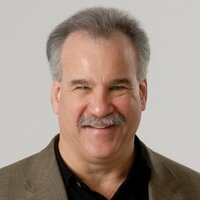
Scott E. Denmark
· Reynold C. Fuson Professor of ChemistryUniversity of Illinois Urbana-Champaign · Chemistry
Active 1975–2026
Academic metrics are sourced from OpenAlex and public funding records; values may differ from Google Scholar.
About
Scott E. Denmark was born in Lynbrook, NY in 1953. He obtained a S. B. from the Massachusetts Institute of Technology in 1975 and a D.Sc. Tech. from the ETH-Zürich under the direction of Albert Eschenmoser in 1980. That same year he was appointed as assistant professor at the University of Illinois and since 1991 has been the Reynold C. Fuson Professor of Chemistry. Professor Denmark's research interests include synthetic organic chemistry, invention of new organic reactions, elucidation of structure-reactivity-selectivity relationships through mechanistic studies, and total synthesis of natural products such as alkaloids, polypropionates, polyenes, and C-aryl glycosides. His group focuses on the origin of stereocontrol in fundamental carbon-carbon and carbon-heteroatom bond forming reactions, and applies these developments to the synthesis of complex molecular structures. The research emphasizes the relationship between structure, reactivity, and stereoselectivity in organo-element systems, particularly involving silicon, phosphorus, tin, sulfur, and lithium compounds. Recent work has concentrated on palladium catalyzed cross-coupling reactions with organofunctional silicon compounds, asymmetric catalysis of carbonyl and olefin addition reactions, and chiral Lewis base activation of Lewis acids. Additionally, his group develops and applies tandem heterodiene cycloadditions for synthesizing complex natural and unnatural nitrogen-containing compounds, and employs…
Research topics
- Artificial Intelligence
- Machine Learning
- Computer Science
- Data Mining
- Chemistry
- Organic chemistry
- Engineering
- Database
- Computational chemistry
- Stereochemistry
Selected publications
Catalytic, Enantioselective Sulfenofunctionalization of Alkenes: Development and Recent Advances
Angewandte Chemie International Edition · 2020 · 103 citations
Senior authorCorrespondingThe last decade has witnessed a burgeoning of new methods for the enantioselective vicinal difunctionalization of alkenes initiated by electrophilic sulfenyl group transfer. The addition of sulfenium ions to alkenes results in the generation of chiral, non-racemic thiiranium ions. These highly reactive intermediates are susceptible to attack by a myriad of nucleophiles in a stereospecific ring-opening event to afford anti 1,2-sulfenofunctionalized products. The practical application of sulfenium…
Journal of the American Chemical Society · 2020 · 98 citations
Senior authorCorrespondingModern, enantioselective catalyst development is driven largely by empiricism. Although this approach has fostered the introduction of most of the existing synthetic methods, it is inherently limited by the skill, creativity, and chemical intuition of the practitioner. Herein, we present a complementary approach to catalyst optimization in which statistical methods are used at each stage to streamline development. To construct the optimization informatics workflow, a number of critical component…
Nature Chemistry · 2020 · 86 citations
Senior authorCorrespondingMachine Learning to Develop Peptide Catalysts─Successes, Limitations, and Opportunities
ACS Central Science · 2024-02-05 · 19 citations
articleOpen accessCorrespondingPeptides have been established as modular catalysts for various transformations. Still, the vast number of potential amino acid building blocks renders the identification of peptides with desired catalytic activity challenging. Here, we develop a machine-learning workflow for the optimization of peptide catalysts. First─in a hypothetical competition─we challenged our workflow to identify peptide catalysts for the conjugate addition reaction of aldehydes to nitroolefins and compared the performan…
ACS Catalysis · 2024-02-06 · 14 citations
articleSenior authorCorrespondingA catalyst selection method for the optimization of an asymmetric, vinylogous Mukaiyama aldol reaction is described. A large library of commercially available and synthetically accessible copper–bis(oxazoline) catalysts was constructed in silico. Conformer-dependent, grid-based descriptors were calculated for each catalyst, defining a chemical feature space suitable for machine learning. Selection of a diverse subset of catalyst space produced an initial training set of 26 new bis(oxazoline) lig…
Recent grants
Catalytic, Enantioselective Dihalogenation of Alkenes
NSF · $490k · 2017–2020
Asymmetric Nucleophilic Catalysis with Chiral Lewis Bases
NSF · $617k · 2004–2007
Asymmetric Catalysis in Main Group Chemistry
NIH · $2.4M · 2010–2018
Frequent coauthors
- 31 shared
Robert A. Stavenger
GlaxoSmithKline (United States)
- 30 shared
Andrew F. Zahrt
University of Illinois Urbana-Champaign
- 26 shared
Jeremy Henle
- 23 shared
Jesse L. Panger
University of Illinois Urbana-Champaign
- 22 shared
Tyler W. Wilson
- 22 shared
Ken‐Tsung Wong
National Taiwan University
- 21 shared
Anastassia Matviitsuk
Janssen (Belgium)
- 21 shared
Gregory L. Beutner
The Bristol-Myers Squibb Children's Hospital
Labs
Awards & honors
- Paracelsus Prize (Swiss Chemical Society), 2020
- Ryoji Noyori Prize (Society of Synthetic Organic Chemistry,…
- EROS 2019 Best Reagent of the Year Award, 2019
- The Journal of Organic Chemistry Outstanding Publication of…
- National Academy of Sciences, Member, 2018
Similar researchers at University of Illinois Urbana-Champaign
- Resume-aware match score
- Save to shortlist
- AI-drafted outreach
See your match with Scott E. Denmark
PhdFit ranks faculty by your research interests, methods, and publications — grounded in their actual work, not templates.
- Free to start
- No credit card
- 30-second signup