
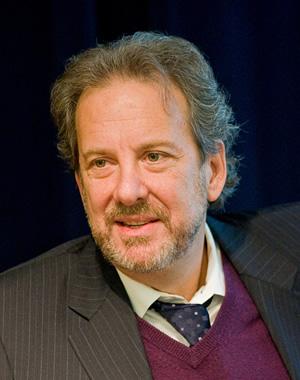
Scott Atran
VerifiedUniversity of Michigan · Public Policy
Active 1981–2025
About
Scott Atran is an anthropologist who experiments on ways scientists and ordinary people categorize and reason about nature, on the cognitive and evolutionary psychology of religion, and on limits of rational choice in political and cultural conflict. He has conducted fieldwork around the world, interviewing the leadership and members of insurgent and extremist groups. Atran has briefed NATO, the U.S. Senate and House, National Security Council staff at the White House, UN Security Council, EU Governments, and the World Economic Forum on issues related to youth and violent extremism. He is tenured as Research Director in Anthropology at France's National Center for Scientific Research (CNRS), Institut Jean Nicod at École Normale Supérieure, in Paris. Additionally, he is a founding fellow of the Centre for Resolution of Intractable Conflict at Harris Manchester College and the Department of Politics and International Relations at the University of Oxford. His work and life have been spotlighted in the popular and scientific press, including feature and cover stories of the New York Times Magazine, Chronicle of Higher Education, Nature, and Science Magazine.
Research topics
- Psychology
- Political science
- Social psychology
- Sociology
- Epistemology
Selected publications
Group and Personal Rejection Are Similarly Linked to Extreme Intergroup Attitudes
2025-07-11
preprintOpen accessPerceived marginalization of social groups has been identified as one of the main drivers of violent extremism across countries. However, most psychological research has focused on interpersonal rather than intergroup processes to understand the link between social exclusion and aggression. We developed a new paradigm, RateME, which dissociates the effects of group rejection and personal rejection, two types of social exclusion that involve negative attention. We compared the psychological effects of group rejection with those of personal rejection using RateME as well as ostracism using Cyberball in a sample of more than 1200 UK residents. Experiencing group rejection, personal rejection, and ostracism was independently associated with increased psychological distress and state hostility, regardless of participants’ degree of identification with the group. Exclusion of either type also indirectly increased group supremacist attitudes by undermining psychological needs and indirectly increased extreme intergroup attitudes by increasing state hostility. Our work reveals similar detrimental psychological effects of group-level and personal-level exclusion, highlighting group rejection as a risk factor for mental health with potential implications for violent extremism.
When group grievances become personal: The neural correlates of group and personal rejection
Cognitive Affective & Behavioral Neuroscience · 2025-01-07 · 3 citations
articleOpen accessWitnessing rejection against one's group can have similar impacts on psychological distress and aggression as experiencing rejection personally. In this study, we investigated the neural activity patterns of group rejection and whether they resemble those of personal-level rejection. We first identified the neural correlates of social rejection (exclusion based on negative attention) compared with ostracism (exclusion based on lack of social connection) and then compared group-level to personal-level rejection. We employed a novel social exclusion task, "RateME," to induce group and personal rejection and Cyberball to evoke ostracism during fMRI scans. Our results showed that personal rejection increased activity in regions associated with autobiographical memory and self-identity, such as the dorsomedial prefrontal cortex and the lingual gyrus, whereas ostracism engaged areas related to social pain and salience, including the anterior cingulate cortex and the insula. Additionally, group and personal-level rejection elicited similar neural activity patterns, regardless of participants' fusion with the rejected groups. Therefore, group membership seems sufficient for group rejection to trigger self-referential processing pathways similar to those activated by personal rejection. Our findings highlight the overlapping neural mechanisms underlying personal and group-level grievances, which may explain the detrimental effects of group rejection on aggression, extremism, and intergroup conflict.
Devoted versus Rational Actors
Cambridge University Press eBooks · 2025-08-07 · 1 citations
book-chapter1st authorCorrespondingWhat Sustains Wars: Will to Fight Versus Military Might
Annals of the New York Academy of Sciences · 2025-11-02 · 1 citations
articleOpen access1st authorCorrespondingThis essay explores the contributions of psychosocial factors in sustaining wars and other extreme group conflicts. It uses the Devoted Actor Framework (DAF) to better understand will to fight (WTF) as a quest for ontological significance. Devoted actors are viscerally and inseparably fused to one another and to their group by moral ideals often held to be sacred and indivisible, and thus highly resistant to negotiation and compromise. The quest for ontological significance involves affirming and securing group identities and associated moral ideals. The importance of WTF and reasons for its postwar neglect are highlighted in an analysis of initial versus later stages of the European theater in WWII. Next is an assessment of the limits of rational realism and the significance of religion and nationalism, followed by an examination of psychosocial factors involved in WTF via behavioral and brain studies in the Middle East, North Africa, Europe, and North America. The discussion section examines the scope and limits of DAF in terms of descriptive and explanatory power and in relation to other approaches to war and group conflict. A final coda addresses the Israel-Palestine conflict and the recent Gaza War to illustrate DAF's relevance for understanding and managing seemingly intractable conflicts.
Group and personal rejection are similarly linked to extreme intergroup attitudes
Journal of Experimental Social Psychology · 2025-07-21 · 2 citations
articleGroup and Personal Rejection Are Similarly Linked to Extreme Intergroup Attitudes
2024-03-07 · 1 citations
preprintOpen accessPerceived marginalization of social groups has been identified as one of the main drivers of violent extremism across countries. However, most psychological research has focused on interpersonal rather than intergroup processes to understand the link between social exclusion and aggression. We developed a new paradigm, RateME, which dissociates the effects of group rejection and personal rejection, two types of social exclusion that involve negative attention. We compared the psychological effects of group rejection with those of personal rejection using RateME as well as ostracism using Cyberball in a sample of more than 1200 UK residents. Experiencing group rejection, personal rejection, and ostracism was independently associated with increased psychological distress and state hostility, regardless of participants’ degree of identification with the group. Exclusion of either type also indirectly increased group supremacist attitudes by undermining psychological needs and indirectly increased extreme intergroup attitudes by increasing state hostility. Our work reveals similar detrimental psychological effects of group-level and personal-level exclusion, highlighting group rejection as a risk factor for mental health with potential implications for violent extremism.
Oxford University Press eBooks · 2024-03-01 · 1 citations
book-chapter1st authorCorrespondingAbstract This chapter explores the unsettling parallels between jihadist and far-right radicalization amongst the young, and their linkage to the collapse of cultures and the dark side of globalization, arguing that the ideologies, strategies, tactics, and messaging of xenophobic ethno-nationalists and jihadi groups are often strikingly similar and symbiotic. Moreover, for extremists of all stripes, whether alt-right or radical Islam, the values of liberal and open democracy increasingly appear to be losing ground around the world to those of narrow, xenophobic ethno-nationalisms and radical religious ideologies. The chapter further argues that the people most susceptible to joining radical groups are youth in their teens and twenties seeking community and purpose. The attraction of community is especially keen where there are sentiments of social exclusion or collapsed community structures and moral authority, whether or not accompanied by economic deprivation. Purpose most readily propels action and sacrifice, including the willingness to fight and die, when it is perceived to be in defense of transcendent values that are dissociated from material costs or consequences.
2024-07-16
preprintOpen accessWitnessing discrimination against one’s group can have similar impacts on psychological distress, aggression, and extreme pro-group action as experiencing rejection personally. However, the effects of group discrimination on brain activity, and whether they resemble those caused by personal rejection, have yet to be examined. We investigated neural activity patterns in response to group discrimination. To do this, we first identified the neural correlates of social discrimination (explicit and systematic rejection) compared to ostracism (lack of social connection) and then compared group-level discrimination to personal-level discrimination. We employed a novel social discrimination task, “RateME,” to induce feelings of group and personal discrimination, and used Cyberball to evoke feelings of ostracism during fMRI scans. Our results showed that personal discrimination activated brain regions associated with autobiographical memory and self-identity, such as the dorsomedial prefrontal cortex and the lingual gyrus, while ostracism engaged areas related to social pain and salience, including the anterior cingulate cortex and the insula. Additionally, group and personal-level discrimination elicited similar neural activity patterns, regardless of participants’ level of identification with the discriminated groups. Therefore, mere group membership seems sufficient for group discrimination to trigger self-referential processing pathways similar to those activated by personal discrimination. Our findings highlight the overlapping neural mechanisms underlying personal and group-level grievances, which may explain the detrimental effects of group discrimination on aggression, violent extremism, and inter-group conflict.
Group Discrimination Elicits Levels of Distress and Hostility Similar to Personal Exclusion
SSRN Electronic Journal · 2024-01-01
preprintOpen accessTranscultural pathways to the will to fight
Proceedings of the National Academy of Sciences · 2023-06-06 · 19 citations
articleOpen accessSenior authorThe ‘Will to Fight Act’ was amended to the nation's annual defense bill (FY2023 NDAA) urging attention to assessing will to fight, after debate acknowledging that current evaluation efforts within the political and military establishment remain contentious, fragmented, and meager. This likely will persist, along with attendant policy failures and grievous costs, without awareness of research that the social and psychological sciences reveal on the will to fight [S. Atran, Science 373 , 1063 (2021)]. We illustrate such research using converging data from a multimethod and multicultural approach, including field and online studies from the Middle East, North Africa, and Europe. These studies reveal specific psychosocial pathways, within a general causal framework, that predict willingness to make costly sacrifices, including to cooperate, fight, and die in war and sustained conflict. From the continuing strife in Iraq to embattled Ukraine, 31 studies were conducted in 9 countries with nearly 12,000 participants. These include people in longstanding conflicts, refugees, imprisoned jihadists and gangs, US military, studies in Ukraine before and during the current war, and rolling studies with a European ally of Ukraine. Results provide evidence for a mediation model of transcultural pathways to the will to fight. Building on our previous behavioral and brain research, on the battlefield in Iraq, with violent extremists, and with US military, the linear mediation yielding the will to fight involves identity fusion, perceived spiritual formidability, and trust. The model, a variation on “The Devoted Actor Framework,” applies to primary reference groups, core cultural values, and leaders.
Recent grants
Mental Models of a Mesoamerican Forest Environment and Human Health
NSF · $125k · 2004–2007
Sacred Values in Decision Making and Cultural Conflict
NSF · $750k · 2005–2010
Sacred Values and Biological Antecedents of Political Conflict
NSF · $1.2M · 2008–2014
Collaborative Research: Culture, Psychological Distance and Modes of Moral Decision Making
NSF · $290k · 2010–2014
Frequent coauthors
- 60 shared
Jeremy Ginges
- 48 shared
Robert Axelrod
University of Michigan–Ann Arbor
- 40 shared
Douglas L. Medin
Northwestern University
- 37 shared
Hammad Sheikh
Mayo Hospital
- 28 shared
Richard E. Davis
San Diego Miramar College
- 24 shared
Clara Pretus
- 21 shared
Óscar Vilarroya
Universitat Autònoma de Barcelona
- 20 shared
Ángel Gómez
Labs
Scott AtranPI
Education
- 1984
PhD, Anthropology
Columbia University
- 1973
MA, Social Relations
Johns Hopkins University
- 1972
BA, Anthropology
Columbia University Columbia College
Awards & honors
- Founding fellow of the Centre for Resolution of Intractable…
- Resume-aware match score
- Save to shortlist
- AI-drafted outreach
See your match with Scott Atran
PhdFit ranks faculty by your research interests, methods, and publications — grounded in their actual work, not templates.
- Free to start
- No credit card
- 30-second signup