Resume-aware faculty matching

Find professors who actually fit you

Upload your resume. Four AI agents analyze your background, rank the faculty who fit, inspect their recent research, and help you draft outreach — grounded in their actual work, not templates.

Free to startNo credit cardCancel anytime
Top matches Balanced preset
Dr. Sarah Chen
Stanford · Interpretability · NLP
91
Dr. Marcus Holloway
MIT · Robotics · RL
84
Dr. Aisha Okonkwo
CMU · Fairness · HCI
82
Nova · Professor Researcher · re-ranking top 20…
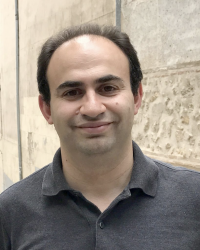
Sasha Senderovich

Sasha Senderovich

· Associate Professor

University of Washington · Slavic Languages & Literatures

Active 2003–2025

h-index2
Citations14
Papers157 last 5y
Funding
See your match with Sasha Senderovich — sign in to PhdFit.Sign in

About

I'm an Associate Professor in the Slavic Department and the Jackson School of International Studies at the University of Washington in Seattle. I'm also a faculty affiliate of UW's Stroum Center for Jewish Studies. Among other hats I wear: I co-run the Translation Studies Hub and have, since 2014, been on the faculty of the Great Jewish Books program for high school students at the Yiddish Book Center.

Research topics

  • Political Science
  • History
  • Computer Science
  • Art
  • Philosophy
  • Literature
  • Linguistics
  • Classics
  • Archaeology
  • Library science

Selected publications

  • First as Comedy, Then as Nationalism

    Oxford University Press eBooks · 2025-10-22

    book-chapterSenior author

    Abstract This chapter examines the post-Soviet immigrant novel, focusing on multilingual narratives by émigré Jewish authors. It looks beyond the immigrant novels’ conventional dichotomy of assimilation and alienation to their performances of Russianness in new political contexts at the turn of the twenty-first century. These works are preoccupied with mapping out webs of interconnectedness between the Soviet/post-Soviet experience and its two largest diasporic centers: the United States and Israel. First, the chapter suggests that the novels of Dina Rubina and Gary Shteyngart are marked by an ironic cosmopolitanism that estranges the mythology of Israel and the United States, respectively, as the immigrants’ idealized new homelands. Subsequently, the chapter analyzes the prose of Alex Tarn and David Bezmozgis as these writers’ concerns shift from immigration itself to the realm of reactionary ethno-nationalist politics that reflect broader rightward trends in the countries where these works are set and around the world.

  • Introduction

    Stanford University Press eBooks · 2025-12-11

    book-chapter1st authorCorresponding
  • Mother Tongue, Other Tongue: Soviet-born Jewish Writers in Their New Language Environment. By Sergii Gurbych. Heidelberg: Universitätverlag Winter, 2021. 225 pp. Notes. Bibliography. €32.00, hard bound.

    Slavic Review · 2023

    1st authorCorresponding
    • Computer Science
    • History
    • Classics

    Mother Tongue, Other Tongue: Soviet-born Jewish Writers in Their New Language Environment. By Sergii Gurbych. Heidelberg: Universitätverlag Winter, 2021. 225 pp. Notes. Bibliography. €32.00, hard bound. - Volume 82 Issue 4

  • Antisemitic Violence of the Russian Civil War and Its Legacy in the Soviet Union

    The Russian Review · 2023-04-01

    article1st authorCorresponding
  • Frontmatter

    Harvard University Press eBooks · 2022-07-07

    book-chapterOpen access1st authorCorresponding
  • How the Soviet Jew Was Made

    2022 · 1 citations

    1st authorCorresponding
    • Political Science
    • History
    • Political Science
  • How the Soviet Jew Was Made

    Harvard University Press eBooks · 2022 · 1 citations

    1st authorCorresponding
    • Political Science
    • Political Science
    • History

    In post-1917 Russian and Yiddish literature, films, and reportage, Sasha Senderovich finds a new cultural figure: the Soviet Jew. Suddenly mobile after more than a century of restrictions under the tsars, Jewish authors created characters who traversed space and history, carrying with them the dislodged practices and archetypes of a lost world.

  • Svetlana Boym Remembers Forgetting

    2019-03-30

    book-chapter1st authorCorresponding
  • Introduction: For Raya Kulbak

    Yale University Press eBooks · 2017-12-31

    book-chapter1st authorCorresponding
  • In Search of Readership: Bergelson among the Refugees (1928)

    2017-12-02

    book-chapter1st authorCorresponding

    This chapter examines the self-creation and subsequent self-refashioning of one writer, David Bergelson, in the context of the emigre Yiddish literary scene in Weimar Berlin, bearing in mind Bergelson's status as a professional writer. A number of critics have commented on Bergelson's reorientation towards Moscow, most of them sceptical of Bergelson's affirmations of allegiance to the Soviet literary cause, made most explicitly in his 1926 essay 'Dray tsentren'. The marketplace for Yiddish publications emanating from Berlin was the United States and Eastern Europe'. There was insufficient local readership for much of the Yiddish literary output that found a temporary home in Berlin during the inter-war years. Max Wentzl's status as a poet is very much in doubt because he is neither known to an established readership nor published in literary journals. As Wentzl — another of many refugees in Berlin and a poor poet whose work is not recognized by critics.

Frequent coauthors

  • Denise J. Youngblood

    University of Vermont

    1 shared
  • Stephen Hutchings

    1 shared
  • Elena Monastireva‐Ansdell

    Colby College

    1 shared
  • Alexander Prokhorov

    1 shared
  • Seth Graham

    1 shared
  • Elena Prokhorova

    1 shared
  • Natalie Ryabchikova

    1 shared
  • Sergei I. Zhuk

    1 shared

Awards & honors

  • National Jewish Book Award Finalist
  • Best First Book Award from American Association of Teachers…
  • Resume-aware match score
  • Save to shortlist
  • AI-drafted outreach

See your match with Sasha Senderovich

PhdFit ranks faculty by your research interests, methods, and publications — grounded in their actual work, not templates.

  • Free to start
  • No credit card
  • 30-second signup