Resume-aware faculty matching

Find professors who actually fit you

Upload your resume. Four AI agents analyze your background, rank the faculty who fit, inspect their recent research, and help you draft outreach — grounded in their actual work, not templates.

Free to startNo credit cardCancel anytime
Top matches Balanced preset
Dr. Sarah Chen
Stanford · Interpretability · NLP
91
Dr. Marcus Holloway
MIT · Robotics · RL
84
Dr. Aisha Okonkwo
CMU · Fairness · HCI
82
Nova · Professor Researcher · re-ranking top 20…
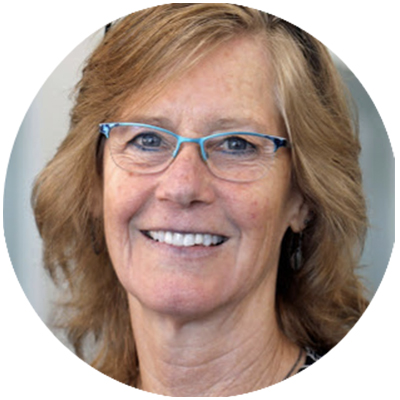
Sarah Carrier

Sarah Carrier

· Head, Department of Teacher Education and Learning Sciences (TELS)Verified

North Carolina State University · Health, Physical Education, and Recreation

Active 1979–2025

h-index20
Citations1.7k
Papers7320 last 5y
Funding
See your match with Sarah Carrier — sign in to PhdFit.Sign in

About

Sarah Carrier is the Head of the Department of Teacher Education and Learning Sciences (TELS) at NC State University. Her role involves leadership within the department, contributing to the development and advancement of teacher education and learning sciences. The page does not provide specific details about her research focus, background, or key contributions.

Research topics

  • Sociology
  • Psychology
  • Political Science
  • Pedagogy
  • Mathematics education
  • Social Science
  • Epistemology
  • Computer Science
  • Geography
  • Social psychology
  • Public relations
  • Engineering ethics
  • Philosophy
  • Engineering
  • Medical education
  • Developmental psychology
  • Medicine

Selected publications

  • An Emerging Theory of School-Based Participatory Science

    Citizen Science Theory and Practice · 2025-01-01 · 1 citations

    articleOpen access

    Citizen Science: Theory and Practice (CSTP) is an online, open-access, peer-reviewed publication focused on the global field of citizen science and other participatory sciences. It provides a venue to share and advance related theories and practices, and serves those interested in and contributing to citizen science across all disciplines, including scientists, educators, community organizers, evaluators, information technologists, and resource managers. It also partners with organizations supporting citizen science and associated endeavors. The journal is an integral part of the Association for Advancing Participatory Sciences and is published by ]u[ Ubiquity Press. This is made possible by the significant support of many volunteer contributors; this includes its leadership team, editors, reviewers, and advisors. Are you interested in reading CSTP? See our latest articles in the feed to the right, or explore our extensive library in “Articles”. There is no charge to view our open-access publications, which are supported by author fees. Are you interested in submitting a manuscript? See our “About” tab to learn more about what we publish and to download our Author Guidelines for Submission. Please pay special attention to maximum allowed words for each submission type, as submission over that limit will not be considered.

  • Climate change visual representations in science lesson plans: selection rationales and psychological distance

    Environmental Education Research · 2025-09-03

    article
  • Novice Elementary Teachers’ Science Teaching: Instructional Planning and Discourse

    Journal of Science Teacher Education · 2024-07-22 · 1 citations

    article1st authorCorresponding
  • The making of an outdoor educator: a mixed methods study of identity through voice and discourse

    International Journal of Science Education Part B · 2024-06-13

    article

    While research has identified the myriad benefits of outdoor learning, the voice of the outdoor educators (OEs) who play an integral role in developing this programming is often backgrounded, leaving a dearth of information regarding their professional contributions within informal and nonformal educational spaces. To begin to fill this gap, the present study utilises an embedded mixed methods approach to investigate the development of OEs positional identity within the environmental education field. We developed and validated a survey instrument using structural equation modelling (SEM), distributed to 211 OEs. To provide contextual support to the quantitative findings, we conducted interviews with nine OEs across the United States. Results indicate that OEs more strongly identify with their connection to nature than with the scientific community and that OEs share the common goal of supporting learners' social-emotional development through outdoor learning. The OEs attribute their connection with nature as the driving force for their professional and pedagogical decisions. Our findings uncover that OEs have a strong desire to be a complementary, cross-curricular resource to formal educators to support learners' development and connection to the biosphere yet feel a lack of recognition and legitimacy within the educational discourse.

  • Elementary teachers as collaborators: developing educative support materials for citizen science projects

    International Journal of Science Education · 2024-02-16 · 4 citations

    article1st authorCorresponding

    Science education is an important component of a full education beginning in primary grades. In recent decades, research has identified young learners' rich knowledge of the natural world and their potential to connect with sophisticated science ideas. Elementary teachers face many challenges to implementing reform-based science instruction in their classrooms. Some teachers may choose to enhance their students' science experiences by introducing them to citizen science (CS) projects. Unfortunately, few CS projects offer substantial guidance for teachers seeking to implement the projects for instructional purposes, placing a heavy burdenon teachers. To address these burdens, our research team collaborated with Teacher Advisory Group (TAG teachers) during the development and revision of educative support materials for two CS projects. We present data about how the TAG teachers informed our CS support materials' revisions, how they implemented the two CS projects with and without educative support materials, and how they perceived their students' classroom and outdoor experiences with the CS projects. These data demonstrate the importance of including teachers' voices and experiences in reform efforts, particularly when trying to incorporate instructional elements that teachers may perceive as deviations from what they are expected to teach.

  • Citizen science in elementary classrooms: a tale of two teachers

    Frontiers in Education · 2024-09-27 · 2 citations

    articleOpen access1st authorCorresponding

    Introduction Elementary teachers face many challenges when including reform-based science instruction in their classrooms, and some teachers have chosen to enhance their science instruction by introducing students to citizen science (CS) projects. When CS projects are incorporated in formal school settings, students have an opportunity to engage in real-world projects as they collect and make sense of data, yet relatively few CS projects offer substantial guidance for teachers seeking to implement the projects, placing a heavy burden on teacher learning. Methods Framed in theory on teacher relationships with curricula, we prepared science standards-aligned educative support materials for two CS projects. We present convergent mixed methods research that examines two teachers’ contrasting approaches to including school-based citizen science (SBCS) in their fifth-grade classrooms, each using support materials for one of the two CS projects. Both are veteran teachers at under-resourced Title 1 (an indicator of the high percentage of the students identified as economically disadvantaged) rural schools in the southeastern United States. We document the teachers’ interpretations and use of SBCS materials for the CS projects with data from classroom observations, instructional logs, teacher interviews, and student focus groups. Results One teacher adapted the materials to include scaffolding to position students for success in data collection and analysis. In contrast, the second teacher adapted the SBCS support materials to maintain a teacher-centered approach to instruction, identifying perceptions of students’ limited abilities and limited instructional time as constraining factors. Discussion We discuss the intersection of CS projects in formal education and opportunities for engaging students in authentic science data collection, analysis, and sense-making. The two teachers’ stories identify the influences of school context and the need for teacher support to encourage elementary teachers’ use of SBCS instruction to supplement their science instruction.

  • Turning Science Lessons Inside Out: Professional Development for Elementary School Teachers' Outdoor Instruction

    Journal of Outdoor Recreation Education and Leadership · 2024-11-06 · 2 citations

    articleOpen access

    Despite the growing field of research focusing on the benefits of learning science in the outdoors where students have direct connections with the natural world, teachers report that challenges such as time and test preparation discourage outdoor science instruction. Additionally, many teachers feel ill-equipped and a lack of support from administrators to teach science and enact outdoor instruction. We present research collected during a series of professional development workshops at two elementary schools designed to help teachers recognize the potential for teaching science outdoors and provide strategies for adapting their existing lessons to include schoolyard experiences. Through observation and interview data with teachers and school leaders, we document teachers’ views of and experiences with outdoor teaching and learning. Interview data document four major themes that include teachers’ outdoor experiences, outdoor connections with science and other subjects, benefits and barriers of outdoor teaching and learning, and teachers’ impressions of students and outdoor science. While teachers report that the year-long professional development experience provided a strong introduction to outdoor instruction, they need continued support to enact authentic science instruction situated in the schoolyard.

  • Case: Getting Down and Dirty

    Springer texts in education · 2023-01-01

    book-chapter1st authorCorresponding
  • What is community-level environmental literacy, and how can we measure it? A report of a convening to conceptualize and operationalize CLEL

    Environmental Education Research · 2022 · 13 citations

    • Sociology
    • Political Science
    • Sociology

    Environmental education research often emphasizes the importance of community context, but conceptualization and measurement of environmental literacy has mostly occurred at the individual level, often focusing on individual behaviors. The environmental problems facing the world today require collective action—communities coming together to address large-scale problems. Accordingly, understanding and encouraging collective action requires a shift in focus from individual to community-level environmental literacy (CLEL). Despite its importance, CLEL has been left largely undefined and unmentioned in environmental education literature. To understand the field’s current conceptualizations and measurement strategies around CLEL, the authors held a convening of 24 researchers to discuss the topic. Here, we report the findings of this convening and present a series of tensions that emerged in conceptualizing and measuring CLEL. We see this area of research as rich with opportunity for innovation and offer considerations for researchers engaging in this work.

  • Leveraging the epistemic emotion of awe as a pedagogical tool to teach science

    International Journal of Science Education · 2022 · 17 citations

    • Sociology
    • Mathematics education
    • Psychology

    Awe is a complex emotion theorised to impact science learning and practice. In science education, awe has the potential to motivate explanation-seeking, promote conceptual change, and instill feelings of connectedness to the natural world. This exploratory study examined teachers’ experiences with awe as well as their uses of awe in their science instruction. Thirty-four elementary (grades 4-5; n =14) and middle school (grades 6-7; n = 20) teachers completed a survey of awe perceptions and experiences and participated in a semi-structured interview. Results showed that science teachers report using awe-invoking classroom experiences in a variety of science disciplines with the intention of leveraging the emotional response in ways that facilitate learning outcomes and inspire long-term science interest. Teachers also reported numerous dispositional factors they perceived as being influential in governing awe experiences in science instruction including age, prior experiences, interest, curiosity, and the presence of co-occurring emotions. This study adds to the developing body of work around awe and science instruction, supports the findings from other fields related to the epistemic and self-transcendent nature of awe, and suggests that awe can be used to enhance science teaching and learning.

Frequent coauthors

Labs

  • Department of Teacher Education and Learning SciencesPI

Education

  • PhD

    University of Florida

Awards & honors

  • Alumni Distinguished Graduate Professor
  • Resume-aware match score
  • Save to shortlist
  • AI-drafted outreach

See your match with Sarah Carrier

PhdFit ranks faculty by your research interests, methods, and publications — grounded in their actual work, not templates.

  • Free to start
  • No credit card
  • 30-second signup