
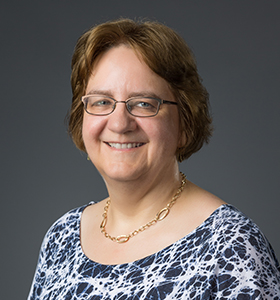
Sabine Grunwald
· ProfessorUniversity of Florida · Soil and Water Sciences
Active 1988–2026
Academic metrics are sourced from OpenAlex and public funding records; values may differ from Google Scholar.
About
Sabine Grunwald is a professor in the Department of Soil, Water, and Ecosystem Sciences at the University of Florida, within the Institute of Food and Agricultural Sciences. Her research focuses on various aspects of soil and environmental sciences, including carbon modeling and global climate change, soil health and security, and digital soil mapping and modeling. She specializes in pedometrics, landscape analysis, and GIS, with a particular interest in investigating the scaling behavior of soil and environmental properties across different spatial and temporal scales. Her work involves understanding carbon dynamics and modeling terrestrial carbon patterns and processes, as well as exploring the spatially-explicit relationships between human-induced stressors such as land use and climate change and environmental landscape factors like soil, climate, terrain, geology, and hydrology. She aims to gain insights into biophysical feedbacks and carbon sequestration or loss in ecosystems, and she analyzes phosphorus and nitrogen behavior in aquatic and terrestrial systems. Her research integrates geospatial science and technologies to assess ecosystem services and address social-cultural-environmental relations.
Research topics
- Environmental science
- Computer Science
- Environmental resource management
- Ecology
- Mathematics
- Psychology
- Environmental planning
- Remote sensing
- Statistics
- Soil science
Selected publications
Artificial intelligence for geoscience: Progress, challenges, and perspectives
The Innovation · 2024-08-23 · 312 citations
reviewOpen accessThis paper explores the evolution of geoscientific inquiry, tracing the progression from traditional physics-based models to modern data-driven approaches facilitated by significant advancements in artificial intelligence (AI) and data collection techniques. Traditional models, which are grounded in physical and numerical frameworks, provide robust explanations by explicitly reconstructing underlying physical processes. However, their limitations in comprehensively capturing Earth's complexities…
Climate change: Strategies for mitigation and adaptation
The Innovation Geoscience · 2023 · 205 citations
<p>The sustainability of life on Earth is under increasing threat due to human-induced climate change. This perilous change in the Earth's climate is caused by increases in carbon dioxide and other greenhouse gases in the atmosphere, primarily due to emissions associated with burning fossil fuels. Over the next two to three decades, the effects of climate change, such as heatwaves, wildfires, droughts, storms, and floods, are expected to worsen, posing greater risks to human health and glo…
Practical Guide to Measuring Wetland Carbon Pools and Fluxes
Wetlands · 2023 · 73 citations
that enhance the interpretation of findings and facilitate model development. The protocols that we describe to measure soil, water, vegetation, and gases are also relevant for related disciplines such as ecology. Improved quality and consistency of data collection and reporting across studies will help reduce global uncertainties and develop management strategies to use wetlands as nature-based climate solutions. Supplementary Information: The online version contains supplementary material avai…
The Science of The Total Environment · 2020 · 53 citations
Senior authorCorrespondingHydrological Sciences Journal · 2023-05-16 · 34 citations
articleABSTRACTThe Mann-Kendall (MK) test is frequently used for trend detection in hydrological time series although its power has not been systematically studied under the influence of both missing data and aggregation of data (daily, monthly averages). We used Monte Carlo experiments to examine how the power of the MK test and the accuracy/precision of the Theil-Sen (TS) estimator are affected by missing data and taking averages of the data. A case study using real measurements is presented to evalu…
Recent grants
EAGER: Development of a Geospatial Soil-Crop Inference Engine for Smallholder Farmers
NSF · $292k · 2012–2014
Frequent coauthors
- 43 shared
Stephen Scott
King's College Hospital
- 41 shared
John M. McClellan
University of North Carolina at Chapel Hill
- 40 shared
Christoph U. Correll
Zucker Hillside Hospital
- 37 shared
Fritz Mattejat
- 36 shared
Stan Kutcher
McGill University
- 36 shared
Aribert Rothenberger
- 36 shared
Jan K. Buitelaar
- 35 shared
Elizabeth Pappadopulos
Eisai (United States)
Similar researchers at University of Florida
- Resume-aware match score
- Save to shortlist
- AI-drafted outreach
See your match with Sabine Grunwald
PhdFit ranks faculty by your research interests, methods, and publications — grounded in their actual work, not templates.
- Free to start
- No credit card
- 30-second signup