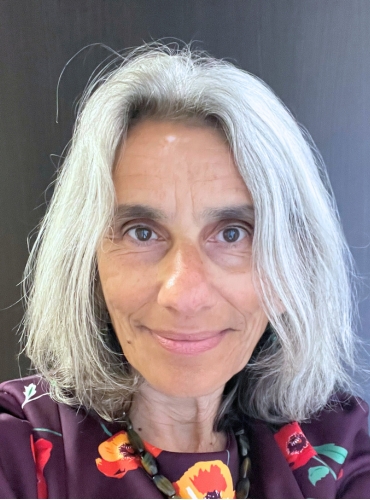
Ruth Wallach
· ProfessorVerifiedUniversity of Southern California · Master of Management in Library and Information Science
Active 1995–2024
About
Ruth Wallach is the Academic Director of the Master of Management in Library and Information Science (MMLIS) program and the Associate Dean for the Social Sciences and Humanities Libraries Division at the USC Libraries. Her previous positions at USC Libraries include Head of the Helen Topping Architecture and Fine Arts Library and Library Subject Specialist in Slavic languages, comparative literatures, and gender studies. Ruth has authored and co-authored book chapters, articles, and conference presentations on topics of relevance to academic librarianship, information literacy, professional mentorship, and situating library information science pedagogy within diversity, equity, inclusion, and anti-racism. Additionally, she has authored several books on Los Angeles architecture and urban history based on primary source materials from USC Libraries' specialized collections. Ruth earned her BA in economics and MLS in library science from UCLA, and holds an MHC from the School of Architecture and an MPAS from the Roski School of Fine Arts at USC. She is a member of the 2017 cohort of the Leadership Institute for Academic Librarians at Harvard Graduate School of Education and the 2018 cohort of UCLA Senior Library Fellows.
Research topics
- Sociology
- Pedagogy
- Computer Science
- Social Science
- Political Science
- Public relations
- Library science
- Management
Selected publications
Identifying Core DEIA+AR Andragogical Competencies in LIS Education: A Systematic Review
Journal of Education for Library and Information Science · 2024 · 1 citations
Senior authorCorresponding- Computer Science
- Sociology
- Library science
With 22 states recently passing legislation attacking diversity programs and initiatives on college campuses, it is now, more than ever, important for educators to find a way to protect and foster Diversity, Equity, Inclusion, Accessibility, and Anti-Racism (DEIA+AR) in postsecondary education in order to prepare graduates to participate in a diverse workforce and to be global citizens. By focusing on andragogical practices (the method and practice of teaching adult learners) instead of curricular interventions, educators can ensure that DEIA+AR is intentionally part of academic programs and in the classrooms. Additionally, andragogical practices allow for DEIA+AR to be embedded in courses that are not directly centered on this topic. This systematic review set out to examine what approaches have been tried, what is being currently done, and whether there are identifiable best andragogical practices that support DEIA+AR in post-secondary education. While the focus is on the fields of education and library and information science, the applications have broad external validity for successful practices.
Reference Services Review · 2021 · 9 citations
Senior authorCorresponding- Sociology
- Political Science
- Sociology
Purpose A working group of Masters in Management of Library and Information Science (MMLIS) Librarian Faculty was formed to address diversity, equity, inclusion, accessibility and anti-racism (DEIA + AR) specifically in pedagogy and curriculum, resulting in actionable items and recommendations that will ensure the program is promoting diversity, equity, inclusive, accessable and anti-racist strategies, curriculum, resources and pedagogical practices in our classrooms. Design/methodology/approach The Working Groups charge was designed to begin the work of dismantling the inequitable power structures which will lead to more equitable opportunities and access for marginalized groups that will become leaders in information sciences in the future. Findings The efforts of the DEIA + AR Working Group resulted in several supplemental documents in addition to the formal recommendations including curricular and pedagogical best practices, a terminology document (establishing a shared language), a commitment document, recommendations, and a resource repository. Practical implications A working group of MMLIS Librarian Faculty was formed to address DEIA + AR specifically in the program's pedagogy and curriculum, resulting in actionable items and recommendations that will ensure the program is promoting anti-racist strategies, curriculum, resources and pedagogical practices in our classrooms. Social implications This process study has value and impact for academics from any discipline to learn about one University's MMLIS program prioritizing DEIA + AR in program development, curriculum and pedagogical practices. Originality/value The converging events of the international pandemic and the national crisis of inequity in the United States in 2020 prompted a renewed commitment by the MMLIS program at the University of Southern California (USC) to revisit the program's DEIA policies and procedures and add anti-racism constructs into the curriculum.
Electronic Information Delivery and Consortium Realities at the End of the Millennium
2019-10-16
book-chapter1st authorCorrespondingConstructing Authority in Professional Practice: Personal Reflections
2017-08-09 · 1 citations
book-chapter1st authorCorrespondingAbstract Academic library literature is noted for studying and analyzing the role of librarians’ informational services to users. Librarians typically recommend sources that are appropriate for locating topical or scholarly information, help develop contextual and conceptually appropriate search terms, and analyze user behavior and needs in order to customize services and collections, particularly in an online environment. Librarians increasingly assist users in making qualitative decisions about their topics and research strategies, and provide guidance on what kind of information and what avenues of research are appropriate, how to evaluate sources, and how to use them. A scan through library literature also reveals an ongoing concern that librarians sometimes suffer from an impostor syndrome, with articles devoted to the qualification needs of academic librarians (Clark, Vardeman, & Barba, 2014; Marcum, 2012). This chapter explores how librarians at a comprehensive academic institution feel about their disciplinary and functional knowledge and professional competence and authority in providing qualitative and contextual research advice. The underlying basis for this inquiry is the assumption that we are informed by the notion that research is a process of inquiry and scholarship is a conversation in which librarians play an important role. The study is based on a small number of hour-long interviews conducted in 2014–2015 with librarians working in several academic disciplinary areas, particularly professional education, social sciences, the arts, and the sciences. Although the population used was small and confined to one large academic institution, the interviews revealed librarians’ own understanding of the place of their expertise and authority within the disciplinary research process that may resonate on a broad professional level.
Learning Opportunities for Librarians: Embarking on a Digital Humanities Project
HAL (Le Centre pour la Communication Scientifique Directe) · 2017-08-15
preprintOpen access1st authorCorrespondingIn 2015, while exploring new uses of library collections for humanities-driven research, we “discovered” that our Special Collections department possessed a very small collection of letters to and from Francois-Marie Arouet, known by his pen name as Voltaire. Voltaire’s entire epistolary corpus is comprised of tens of thousands of letters, which have been published in major print and electronic scholarly editions. Our collection had only 30 letters and 4 sheets of poems which may have been appended to some of the letters. They became the basis for an experimental “do it yourself” librarian-led digital humanities project, with the initial goal to create a scholarly edition that could instigate a curated online projects on Voltaire. Most digital humanities projects start out on a small scale, involving a limited number of researchers and very modest funding. This paper will describe what it actually means to embark on such a project from the perspective of the libraries. The Voltaire letters project was instigated by several librarians interested in making this small cache of letters discoverable within a normative scholarly apparatus. To do that we had to decide on several issues to contextualize the letters within the digital humanities, including framing the letters within a particular scholarly and methodological structure, positioning the letters for potential use within the humanities curriculum, deciding on a digital manifestation, selecting an editorial framework, and developing a roadmap for funding. Lastly, we also needed to decide how this small project would integrate into and contribute to the much larger world of primary resources and scholarship on Voltaire and his vast intellectual output.
Does Cultural Heritage Information Want to Be Free
2016-01-01
article1st authorCorrespondingResearch Guides: Women in Architecture @ USC: Female Graduates in Architecture, 1910s-1950s
2016-04-21
libguides1st authorCorrespondingThis guide attempts to capture information about female graduates of USC's architecture between 1927 and 1975. It also lists names of early female faculty.
Research Guides: Women in Architecture @ USC: Home
2016-04-21
libguides1st authorCorrespondingThis guide attempts to capture information about female graduates of USC's architecture between 1927 and 1975. It also lists names of early female faculty.
Research Guides: Women in Architecture @ USC: Female Faculty in Architecture
2016-04-21
libguides1st authorCorrespondingThis guide attempts to capture information about female graduates of USC's architecture between 1927 and 1975. It also lists names of early female faculty.
2013-12-18
review1st authorCorresponding
Frequent coauthors
- 2 shared
Evdokia Nagrodskaia
- 2 shared
Glenn S. Fowler
- 2 shared
Louise McReynolds
- 2 shared
Jade Winn
University of Southern California
- 2 shared
Linda McCann
- 2 shared
Melissa Miller
University of Southern California
- 1 shared
Rosalind P. Blakesley
University of Cambridge
- 1 shared
Katarzyna Gruber
Education
- 2013
Master in Heritage Conservation, Architecture
University of Southern California
- 2007
Master in Public Art Studies, Fine Arts
University of Southern California
- 1988
Master of Library Science, Library Science
University of California Los Angeles
Awards & honors
- 2017 cohort of the Leadership Institute for Academic Librari…
- 2018 cohort of UCLA Senior Library Fellows
- Resume-aware match score
- Save to shortlist
- AI-drafted outreach
See your match with Ruth Wallach
PhdFit ranks faculty by your research interests, methods, and publications — grounded in their actual work, not templates.
- Free to start
- No credit card
- 30-second signup