
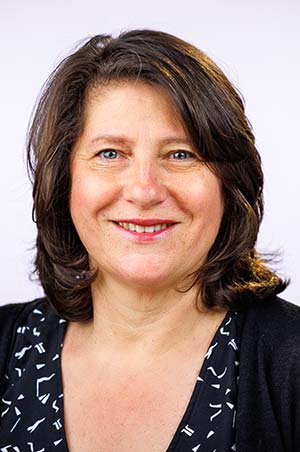
Ruth Etzioni
· Affiliate Professor; Professor, Biostatistics Program, Public Health Sciences Division, Fred HutchUniversity of Washington · Pharmacy
Active 1990–2026
Academic metrics are sourced from OpenAlex and public funding records; values may differ from Google Scholar.
About
Dr. Ruth Etzioni is a biostatistician who primarily focuses on cancer screening and early detection. Much of her work is in the area of prostate and breast cancer, where she develops methods for evaluating diagnostic tests; creates mathematical models to reflect the impact of screening tests on the incidence and mortality rates of these cancers; calculates costs and benefits of preventive screening; tracks population trends with regard to screening and related behaviors and works with investigators on trial design and analysis. Dr. Etzioni also researches overdiagnoses associated with certain screening tests — when screening finds cancers that would not cause symptoms or death within a patient’s natural lifetime. She also evaluates novel cancer biomarkers and tracks patterns and outcomes of cancer care. Dr. Etzioni leads the biostatistics core for the National Cancer Institute-funded multicenter Northwest Prostate Cancer Specialized Program of Research Excellence, or SPORE, and she has a longstanding interest in researching, tracking and working to eliminate health disparities.
Research topics
- Medicine
- Gynecology
- Internal medicine
- Pathology
- Oncology
- Medical physics
- Environmental health
- Demography
- Obstetrics
- Gerontology
Selected publications
CA A Cancer Journal for Clinicians · 2020 · 966 citations
The American Cancer Society (ACS) recommends that individuals with a cervix initiate cervical cancer screening at age 25 years and undergo primary human papillomavirus (HPV) testing every 5 years through age 65 years (preferred); if primary HPV testing is not available, then individuals aged 25 to 65 years should be screened with cotesting (HPV testing in combination with cytology) every 5 years or cytology alone every 3 years (acceptable) (strong recommendation). The ACS recommends that individ…
NCCN Guidelines® Insights: Prostate Cancer Early Detection, Version 1.2023
Journal of the National Comprehensive Cancer Network · 2023 · 148 citations
The NCCN Guidelines for Prostate Cancer Early Detection provide recommendations for individuals with a prostate who opt to participate in an early detection program after receiving the appropriate counseling on the pros and cons. These NCCN Guidelines Insights provide a summary of recent updates to the NCCN Guidelines with regard to the testing protocol, use of multiparametric MRI, and management of negative biopsy results to optimize the detection of clinically significant prostate cancer and m…
CA A Cancer Journal for Clinicians · 2025-12-04 · 4 citations
articleOpen accessThis update expands the 2020 American Cancer Society (ACS) cervical cancer screening guideline for average-risk women and individuals with a cervix who are at average risk, to include self-collection for human papillomavirus (HPV) testing and revised guidance for exiting cervical cancer screening. Self-collected vaginal specimens, a method of primary HPV testing, align with the ACS cervical cancer screening guideline. When clinician-collected cervical specimens are used for HPV testing, repeat s…
ArXiv.org · 2026-04-12
articleOpen accessAccurate estimation of cancer risk from longitudinal electronic health records (EHRs) could support earlier detection and improved care, but modeling such complex patient trajectories remains challenging. We present TrajOnco, a training-free, multi-agent large language model (LLM) framework designed for scalable multi-cancer early detection. Using a chain-of-agents architecture with long-term memory, TrajOnco performs temporal reasoning over sequential clinical events to generate patient-level s…
SSRN Electronic Journal · 2026-01-01
preprintOpen access
Recent grants
NIH · $606k · 2002
Developing Data-Driven Cancer Researchers
NIH · $13.6M · 1980–2029
NIH · $1.1M · 2013
Frequent coauthors
- 463 shared
Roman Gulati
Fred Hutch Cancer Center
- 246 shared
Scott D. Ramsey
University of Washington
- 224 shared
Timothy R. Church
University of Minnesota
- 214 shared
Louise C. Walter
University of California, San Francisco
- 209 shared
Robert A. Smith
Heart Hospital Baylor Plano
- 208 shared
Christopher R. Flowers
The University of Texas MD Anderson Cancer Center
- 208 shared
Ya‐Chen Tina Shih
University of California, Los Angeles
- 208 shared
Kevin C. Oeffinger
Labs
Education
- 1990
PhD, Statistics
Carnegie Mellon University
Similar researchers at University of Washington
- Resume-aware match score
- Save to shortlist
- AI-drafted outreach
See your match with Ruth Etzioni
PhdFit ranks faculty by your research interests, methods, and publications — grounded in their actual work, not templates.
- Free to start
- No credit card
- 30-second signup