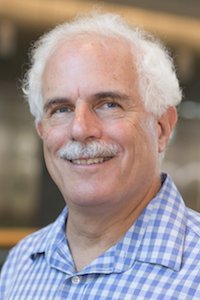
Ronald Siegel
· Professor and Director of Graduate Studies, Department of Pharmaceutics, PharmacyVerifiedUniversity of Minnesota · Biomedical Engineering
Active 1978–2026
About
Ronald A. Siegel, ScD, is a Professor and Director of Graduate Studies in the Department of Pharmaceutics at the University of Minnesota. He received his ScD degree in Electrical Engineering and Computer Science from the Massachusetts Institute of Technology (MIT) in 1984. His academic career includes faculty positions at the University of California, San Francisco, where he was on the faculty of the School of Pharmacy from 1984 to 1998, before moving to the University of Minnesota in 1998. He served as Head of the Department of Pharmaceutics from 1999 to 2009 and again from 2022 to 2024, and is also part of the faculty of the Department of Biomedical Engineering. His research interests encompass intranasal prodrugs and delivery systems for the treatment of epilepsy, hydrogels and polymer-drug interactions, development of inert biodegradable polymers for implants, and physical and mathematical modeling of processes governing drug disposition. Dr. Siegel's work involves polymer synthesis and characterization, UV-Vis, NMR, FTIR, DSC, DTA, PXRD, HPLC, and mathematical and computational modeling. His academic focus includes controlled drug and gene delivery, physical chemistry, and physical pharmacy, with courses taught in these areas.
Research topics
- Materials science
- Composite material
- Chemical engineering
- Organic chemistry
- Chemistry
- Biomedical engineering
- Nanotechnology
- Polymer chemistry
- Chromatography
Selected publications
Molecular Pharmaceutics · 2026-01-24 · 1 citations
articleSenior authorCorrespondingA c*-guided high-temperature rheological approach and solid-state NMR (ssNMR) 1H T1ρ and 1H T1 relaxation time measurements were used to estimate the miscibility of celecoxib (CEL)/polyvinylpyrrolidone (PVP) amorphous solid dispersions (ASDs) prepared by melt quench and spray drying. The ssNMR spin diffusion method is capable of investigating the miscibility of ASDs processed by the two methods, as it measures as-is ASD powders, while the c*-guided high-temperature rheological approach cannot, since it erases the processing history. Our results indicate a general agreement of the estimated miscibility of ASDs prepared by the two processing methods. The crystallization tendency is significantly different when the polymer concentration c is below and above c*. When c < c*, the onset of crystallization in dilute CEL/PVP ASDs is approximately identical to that of neat amorphous CEL. However, when c > c*, the first evidence of CEL crystallization is significantly delayed, indicating a reduced crystallization propensity. These results confirm that the efficient and material-sparing rheological approach can be used to estimate the miscibility (limit) and predict stability against crystallization for both melt-extruded and spray-dried ASDs. Our findings are useful in the rational and efficient design of robust ASDs with a desirable stability against crystallization during long-term storage.
European Journal of Pharmaceutics and Biopharmaceutics · 2025-03-13 · 3 citations
articleSenior authorCorrespondingJournal of Controlled Release · 2025-09-22
article1st authorCorrespondingExperiments and finite element simulations pertinent to hydrogel debonding from a solid substrate
Polymer · 2025-07-04 · 4 citations
articleCorrespondingJournal of Pharmaceutical Sciences · 2024-04-28 · 10 citations
articleOpen accessSenior authorSIAM Journal on Applied Mathematics · 2024-08-13 · 2 citations
article2024-11-21
peer-reviewMolecular Pharmaceutics · 2024-03-21 · 4 citations
articleSenior authorCorrespondingUpon dissolution, amorphous solid dispersions (ASDs) of poorly water-soluble compounds can generate supersaturated solutions consisting of bound and free drug species that are in dynamic equilibrium with each other. Only free drug is available for absorption. Drug species bound to bile micelles, polymer excipients, and amorphous and crystalline precipitate can reduce the drug solute's activity to permeate, but they can also serve as reservoirs to replenish free drug in solution lost to absorption. However, with multiple processes of dissolution, absorption, and speciation occurring simultaneously, it may become challenging to understand which processes lead to an increase or decrease in drug solution concentration. Closed, nonsink dissolution testing methods used routinely, in the absence of drug removal, allow only for static equilibrium to exist and obscure the impact of each drug species on absorption. An artificial gut simulator (AGS) introduced recently consists of a hollow fiber-based absorption module and allows mass transfer of the drug from the dissolution media at a physiological rate after tuning the operating parameters. In the present work, ASDs of varying drug loadings were prepared with a BCS-II model compound, ketoconazole (KTZ), and hypromellose acetate succinate (HPMCAS) polymer. Simultaneous dissolution and absorption testing of the ASDs was conducted with the AGS, and simple analytical techniques were utilized to elucidate the impact of bound drug species on absorption. In all cases, a lower amount of crystalline precipitate was formed in the presence of absorption relative to the nonsink dissolution "control". However, formation of HPMCAS-bound drug species and crystalline precipitate significantly reduced KTZ absorption. Moreover, at high drug loading, inclusion of an absorption module was shown to enhance ASD dissolution. The rank ordering of the ASDs with respect to dissolution was significantly different when nonsink dissolution versus AGS was used, and this discrepancy could be mechanistically elucidated by understanding drug dissolution and speciation in the presence of absorption.
Impact of solid content on the bulk properties of lyophilized powders
International Journal of Pharmaceutics · 2024-12-20 · 6 citations
articleEfficient development of high drug loaded posaconazole tablets enabled by amorphous solid dispersion
RSC Pharmaceutics · 2024-12-04 · 6 citations
articleOpen accessCorrespondingA 50% API-loaded posaconazole tablet was developed in 14 days using just 1.5 g of API through systematic evaluation of stability, dissolution, and manufacturability.
Recent grants
NIH · $397k · 2006
NIH · $348k · 1991
NSF · $220k · 1997–1999
NIH · $331k · 2010
NIH · $1.0M · 2008
Frequent coauthors
- 27 shared
Babak Ziaie
Atlantic Technological University
- 20 shared
Sichen Song
- 19 shared
Antonio Baldi
Institut de Microelectrònica de Barcelona
- 15 shared
Manuel A. Sánchez
- 15 shared
Bruce A. Firestone
Allergan (United States)
- 14 shared
Duvan Henao
University of O'Higgins
- 14 shared
Yuandong Gu
Shanghai University
- 13 shared
Mikhail M. Feldstein
Lomonosov Moscow State University
Awards & honors
- Fellow, CRS, 2010
- CRS/Jorge Heller Journal of Controlled Release Outstanding P…
- CRS/Ethypharm Best Pharmaceutical Paper Award, 2001
- Fellow, American Association of Pharmaceutical Scientists, 1…
- Fellow, American Institute for Medical and Biological Engine…
- Resume-aware match score
- Save to shortlist
- AI-drafted outreach
See your match with Ronald Siegel
PhdFit ranks faculty by your research interests, methods, and publications — grounded in their actual work, not templates.
- Free to start
- No credit card
- 30-second signup