
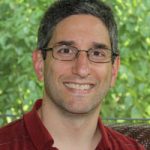
Robert J. Duronio
· Cary C. Boshamer Professor & Department ChairUniversity of North Carolina at Chapel Hill · Biology
Active 1989–2026
Academic metrics are sourced from OpenAlex and public funding records; values may differ from Google Scholar.
About
Robert J. Duronio is the Cary C. Boshamer Professor and Department Chair in the Department of Genetics at the University of North Carolina at Chapel Hill. His research focuses on understanding the molecular mechanisms that regulate DNA replication and cell proliferation during animal development. He studies the cell cycle, which consists of phases G1, S, G2, and M, and how gene expression events control the decision of cells to enter S phase and proliferate or to exit the cycle and differentiate. His work emphasizes the importance of cell cycle regulation in coordinating tissue development and function, as well as its breakdown in the formation of cancer. Duronio's research utilizes the fruit fly Drosophila melanogaster as a model organism because the genes controlling cell proliferation are highly conserved across species, including humans. This allows for the application of genetic and cell biological techniques to study gene function in a whole animal context. His studies aim to elucidate how cell cycle regulatory pathways operate normally and how their malfunction contributes to cancer, with the goal of gaining insights into the molecular basis of deregulated growth in human disease.
Research topics
- Biology
- Genetics
- Cell biology
Selected publications
Developmental Cell · 2020 · 87 citations
Nucleus · 2023-12-14 · 34 citations
articleOpen accessSenior authorCorrespondingHistone locus bodies (HLBs) are biomolecular condensates that assemble at replication-dependent (RD) histone genes in animal cells. These genes produce unique mRNAs that are not polyadenylated and instead end in a conserved 3' stem loop critical for coordinated production of histone proteins during S phase of the cell cycle. Several evolutionarily conserved factors necessary for synthesis of RD histone mRNAs concentrate only in the HLB. Moreover, because HLBs are present throughout the cell cycl…
<i>Drosophila</i> histone locus body assembly and function involves multiple interactions
Molecular Biology of the Cell · 2020 · 29 citations
Senior authorCorrespondingpromoter. These data suggest that multiple protein-protein and/or protein-DNA interactions contribute to HLB formation, and that the large number of endogenous RD histone gene copies sequester available factor(s) from attenuated transgenic arrays, thereby preventing HLB formation and gene expression on these arrays.
Distinct roles for canonical and variant histone H3 lysine-36 in Polycomb silencing
Science Advances · 2023-03-01 · 28 citations
articleOpen accessPolycomb complexes regulate cell type–specific gene expression programs through heritable silencing of target genes. Trimethylation of histone H3 lysine 27 (H3K27me3) is essential for this process. Perturbation of H3K36 is thought to interfere with H3K27me3. We show that mutants of Drosophila replication-dependent ( H3.2 K36R ) or replication-independent ( H3.3 K36R ) histone H3 genes generally maintain Polycomb silencing and reach later stages of development. In contrast, combined ( H3.3 K36R H…
Molecular Cell · 2024-05-24 · 22 citations
articleOpen accessCorresponding
Recent grants
Regulation of Histone Gene Expression During Drosophila Development
NSF · $455k · 2004–2008
Epigenetic Control of the Cell Cycle During Animal Development
NIH · $1.7M · 2022–2027
Histone mRNA Regulation in Development
NIH · $11.9M · 2024–2025
Frequent coauthors
- 104 shared
William F. Marzluff
University of North Carolina at Chapel Hill
- 68 shared
A. Gregory Matera
University of North Carolina at Chapel Hill
- 51 shared
Daniel J. McKay
University of North Carolina at Chapel Hill
- 40 shared
Brian D. Strahl
University of North Carolina at Chapel Hill
- 30 shared
Jeffrey I. Gordon
Washington University in St. Louis
- 23 shared
Robin L. Armstrong
University of North Carolina at Chapel Hill
- 20 shared
Harmony R. Salzler
University of North Carolina at Chapel Hill
- 20 shared
Pamela Y. Malek
University of North Carolina at Chapel Hill
Education
- 1996
Postdoctoral Fellow, Biochemistry & Biophysics
UCSF Medical Center
- 1991
PhD, Biochemistry and Molecular Biology
Washington University in Saint Louis
- 1986
B.S., Biology
Massachusetts Institute of Technology
Similar researchers at University of North Carolina at Chapel Hill
- Resume-aware match score
- Save to shortlist
- AI-drafted outreach
See your match with Robert J. Duronio
PhdFit ranks faculty by your research interests, methods, and publications — grounded in their actual work, not templates.
- Free to start
- No credit card
- 30-second signup