
About
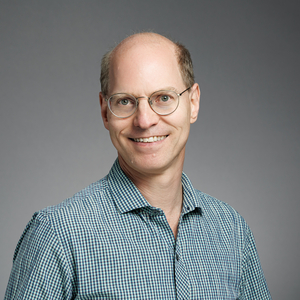
Robert Frank is a professor of Linguistics at Yale University. He received his PhD in 1992 from the University of Pennsylvania in Computer and Information Science. His research explores computational models of language learning and processing as well as the role of computational constraints in linguistic explanation. He has worked extensively on the application of the Tree Adjoining Grammar formalism in syntactic theory. Before coming to Yale, he held positions at Johns Hopkins University in Cognitive Science and at the University of Delaware in Linguistics.
Research topics
- Artificial Intelligence
- Computer Science
- Natural Language Processing
- Mathematics
- Machine Learning
- Statistics
- Data science
- Psychology
- Geography
Selected publications
Beyond the Imitation Game: Quantifying and extrapolating the capabilities of language models
arXiv (Cornell University) · 2022 · 548 citations
Language models demonstrate both quantitative improvement and new qualitative capabilities with increasing scale. Despite their potentially transformative impact, these new capabilities are as yet poorly characterized. In order to inform future research, prepare for disruptive new model capabilities, and ameliorate socially harmful effects, it is vital that we understand the present and near-future capabilities and limitations of language models. To address this challenge, we introduce the Beyon…
2020 · 47 citations
Senior authorCorrespondingBy positing a relationship between naturalistic reading times and information-theoretic surprisal, surprisal theory This paper re-evaluates a claim due to Goodkind and Bicknell ( By extending Goodkind and Bicknell's analysis to modern neural architectures, we show that the proposed relation does not always hold for Long Short-Term Memory networks, Transformers, and pre-trained models. We introduce an alternate measure of language modeling performance called predictability norm correlation based…
Formal Language Recognition by Hard Attention Transformers: Perspectives from Circuit Complexity
Transactions of the Association for Computational Linguistics · 2022-01-01 · 22 citations
articleOpen accessSenior authorCorrespondingAbstract This paper analyzes three formal models of Transformer encoders that differ in the form of their self-attention mechanism: unique hard attention (UHAT); generalized unique hard attention (GUHAT), which generalizes UHAT; and averaging hard attention (AHAT). We show that UHAT and GUHAT Transformers, viewed as string acceptors, can only recognize formal languages in the complexity class AC0, the class of languages recognizable by families of Boolean circuits of constant depth and polynomia…
2023-01-01 · 17 citations
articleOpen accessWhen acquiring syntax, children consistently choose hierarchical rules over competing non-hierarchical possibilities. Is this preference due to a learning bias for hierarchical structure, or due to more general biases that interact with hierarchical cues in children's linguistic input? We explore these possibilities by training LSTMs and Transformers - two types of neural networks without a hierarchical bias - on data similar in quantity and content to children's linguistic input: text from the…
Transactions of the Association for Computational Linguistics · 2023-01-01 · 12 citations
articleOpen accessSenior authorCorrespondingAbstract Language models are typically evaluated on their success at predicting the distribution of specific words in specific contexts. Yet linguistic knowledge also encodes relationships between contexts, allowing inferences between word distributions. We investigate the degree to which pre-trained transformer-based large language models (LLMs) represent such relationships, focusing on the domain of argument structure. We find that LLMs perform well in generalizing the distribution of a novel…
Recent grants
NIH · $513k · 1992
NIH · $464k · 1995
NSF · $343k · 2019–2025
Frequent coauthors
- 16 shared
Jungo Kasai
Toyota Technological Institute at Chicago
- 15 shared
Owen Rambow
- 13 shared
Andrea Cometa
IMT School for Advanced Studies Lucca
- 13 shared
Tal Linzen
- 11 shared
R. Thomas McCoy
Princeton University
- 11 shared
Dan Friedman
- 11 shared
William Merrill
- 10 shared
Dragomir Radev
Labs
Education
- 1992
PhD, Computer and Information Science
University of Pennsylvania
- 1987
SB, Brain and Cognitive Science
Massachusetts Institute of Technology
Similar researchers at Yale University
- Resume-aware match score
- Save to shortlist
- AI-drafted outreach
See your match with Robert Frank
PhdFit ranks faculty by your research interests, methods, and publications — grounded in their actual work, not templates.
- Free to start
- No credit card
- 30-second signup