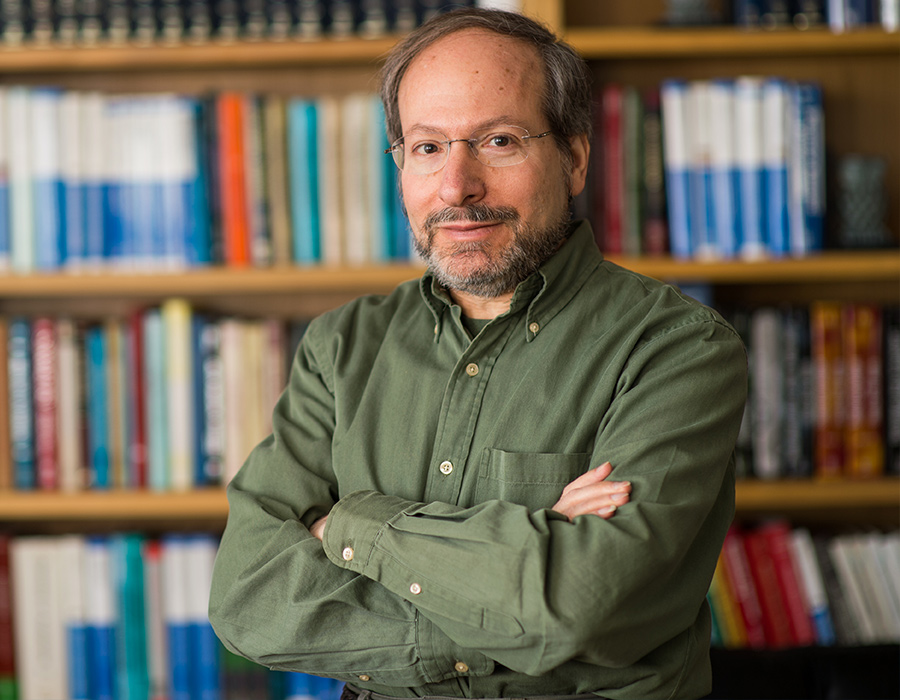
Rick Lane Danheiser
· A C Cope ProfessorVerifiedMassachusetts Institute of Technology · Chemistry
Active 1973–2025
About
Rick Lane Danheiser is the A C Cope Professor of Chemistry at MIT. His laboratory focuses on the development of new synthetic methods and strategies, particularly their application in the total synthesis of natural products and biologically important compounds. A major area of his research involves designing and inventing new cycloaddition and annulation strategies for synthesizing carbocyclic and heterocyclic compounds, often involving unusual molecules and highly reactive species as building blocks. His work emphasizes the chemistry of highly unsaturated conjugated molecules such as vinylketenes, iminoacetonitriles, conjugated enynes, and vinylallenes, as well as unusually strained molecules like arynes, cycloalkynes, and cyclic allenes. These methods are tested and refined through their application in synthesizing biologically active natural products, including the total synthesis of compounds like the antitumor antibiotic ascochlorin, the azulene antiulcer drug egualen sodium, and neurotoxic alkaloids from poison dart frogs. His research also explores the synthesis of polycyclic aromatic systems with novel electronic properties and the development of environmentally benign synthetic methods, such as using supercritical water and carbon dioxide as reaction media and metal-free reactions that minimize waste.
Research topics
- Chemistry
- Organic chemistry
- Combinatorial chemistry
- Medicinal chemistry
- Stereochemistry
Selected publications
The Journal of Organic Chemistry · 2025-05-14
articleSenior authorCorrespondingThe herbindoles are cyclopent[g]indole alkaloids whose structures incorporate a fully substituted benzenoid ring and, as such, have served as useful platforms for the testing and refinement of methods for the construction of highly substituted indoles. Herein we report efficient and convergent total syntheses of four herbindole alkaloids, including the first enantioselective total synthesis of trans-(+)-herbindole A. The pivotal step in the synthetic strategy is the application of our vinylketene-based benzannulation in which a thermal Wolff rearrangement generates a vinylketene which combines with an ynamide derivative in the first step of a pericyclic cascade that produces a highly substituted aniline intermediate primed for cyclization to form the cyclopent[g]indole ring system. Subsequent cross-coupling reactions allow for the elaboration of a common precursor to herbindoles of the A, B, and C series.
Editorial Announcing “OS Techniques” – A New Category of Articles in Organic Syntheses
Organic Syntheses · 2025-01-01
article1st authorCorrespondingOrganic Syntheses · 2024-08-01
otherSenior authorOrganic Syntheses · 2024-08-01
otherSenior authorAbstract This chapter presents the procedure for preparation of highly‐substituted pyridines via Diels‐Alder reactions of vinylallenes and tosyl cyanid. The procedures in Organic Syntheses are intended for use only by persons with proper training in experimental organic chemistry. All hazardous materials should be handled using the standard procedures for work with chemicals described in references such as “Prudent Practices in the Laboratory”. The development of practical and efficient methods for the construction of highly substituted pyridines remains a challenging goal for organic synthesis. Vinylallenes are reactive dienes in Diels‐Alder reactions which engage in cycloadditions with triple bonds to afford isoaromatic products that isomerize to aromatic systems spontaneously or under mild conditions. The authors have developed several strategies for the synthesis of highly substituted pyridines based on the cycloadditions of vinylallenes with nitrogen heterodienophiles. The chapter also describes the optimal conditions for the Diels‐Alder reaction of vinylallene 2 and tosyl cyanide.
Synthesis of Diethyl (1‐Diazo‐2‐oxopropyl)phosphonate
Organic Syntheses · 2024-08-01
otherSenior authorAbstract This chapter presents the procedure for synthesis of Diethyl (1‐Diazo‐2‐oxopropyl)phosphonate. Diethyl and dimethyl (1‐diazo‐2‐oxopropyl)phosphonate are versatile building blocks for organic synthesis. These diazo compounds react via dipolar cycloaddition and other pathways to provide access to diverse classes of nitrogen heterocycles including phosphoryl substituted pyrazoles, triazolines, oxazoles, and thiazoles. Although commercially available, both diethyl and dimethyl (1‐diazo‐2‐oxopropyl)phosphonate are relatively expensive and so many labs opt to prepare the reagents which can then be stored indefinitely for use in the Ohira‐Bestmann homologation and other reactions. Several groups have reported the application of diazo transfer to dialkyl (2‐oxopropyl)phosphonate as an efficient method for the preparation of the “Ohira‐Bestmann reagents”. In addition, the sulfonamide byproduct formed in the reaction of the sulfonyl azide can be separated by filtration, simplifying the purification of the diazo product by chromatography.
Organic Syntheses · 2023-07-14
otherSenior authorAbstract This chapter describes the procedure for detrifluoroacetylative diazo group transfer:( E )‐1‐Diazo‐4‐phenyl‐3‐buten‐2‐one. It presents some of the important points to be considered, the conditions that need to be maintained, characterization data, and the reagents required, as well as the techniques used and the equipment setup that are vital to carrying out the process. The chapter also describes the hazards associated with working with chemicals and the ways to deal with these hazards. It then highlights the application of the detrifluoroacetylative diazo transfer method to several important classes of compounds.
The Journal of Organic Chemistry · 2019-12-04 · 20 citations
articleSenior authorCorrespondingA convergent strategy for the synthesis of multisubstituted pyridines is described. Vinylallenes combine with commercially available arylsulfonyl cyanides in Diels-Alder cycloadditions to generate isopyridine cycloadducts that are converted to pyridines upon further heating or addition of a base. The 2-sulfonylpyridine products undergo nucleophilic aromatic substitution reactions with oxygen and carbon nucleophiles to provide access to a variety of highly substituted pyridines.
Organic Letters · 2018-09-24 · 18 citations
articleSenior authorCorrespondingTwo methods for the synthesis of multisubstituted pyridines are described. In each strategy, a highly reactive vinylallene is generated via an intramolecular propargylic ene reaction in the presence of an azadienophile. Reactions employing ethyl N-(tosyl)iminoacetate furnish an intermediate that undergoes elimination and isomerization upon the addition of DBU. The reaction of the intermediate vinylallene with TsCN leads to the isolation of a 2-sulfonylpyridine that serves as a versatile intermediate undergoing substitution reactions with oxygen and carbon nucleophiles.
Organic Letters · 2018-09-26 · 17 citations
articleSenior authorCorrespondingThe first synthesis of the tetracyclic aromatic compound furo[2,3- g]thieno[2,3- e]indole ("FTI") is described. The synthetic strategy features a photochemical benzannulation based on the reaction of an α-diazo ketone and ynamide which assembles a benzothiophene equipped with substituents that enable subsequent cyclizations to generate the nitrogen and oxygen heterocyclic rings.
A short and efficient synthesis of the polyacetylene natural product deca-4,6,8-triyn-1-ol
Tetrahedron Letters · 2018-07-30 · 6 citations
articleSenior authorCorresponding
Recent grants
NIH · $5.5M · 2012
New Cycloaddition and Annulation Strategies for Organic Synthesis
NSF · $450k · 2015–2020
New Cycloaddition and Annulation Strategies for Organic Synthesis
NSF · $435k · 2011–2015
Frequent coauthors
- 36 shared
D. M. George
University of New England
- 35 shared
Gregory B. Dudley
West Virginia University
- 35 shared
Wesley Austin
Foghorn Therapeutics (United States)
- 18 shared
J. J. Kowalczyk
- 14 shared
Jefferson W. Tester
Cornell University
- 10 shared
Xiao Yin Mak
IIT@MIT
- 9 shared
Adam R. Renslo
University of California, San Francisco
- 9 shared
David M. Fink
Sanofi (United States)
Education
- 1978
Ph.D., Chemistry
Harvard University
- 1972
A.B.
Columbia University Columbia College
- Resume-aware match score
- Save to shortlist
- AI-drafted outreach
See your match with Rick Lane Danheiser
PhdFit ranks faculty by your research interests, methods, and publications — grounded in their actual work, not templates.
- Free to start
- No credit card
- 30-second signup