Resume-aware faculty matching

Find professors who actually fit you

Upload your resume. Four AI agents analyze your background, rank the faculty who fit, inspect their recent research, and help you draft outreach — grounded in their actual work, not templates.

Free to startNo credit cardCancel anytime
Top matches Balanced preset
Dr. Sarah Chen
Stanford · Interpretability · NLP
91
Dr. Marcus Holloway
MIT · Robotics · RL
84
Dr. Aisha Okonkwo
CMU · Fairness · HCI
82
Nova · Professor Researcher · re-ranking top 20…
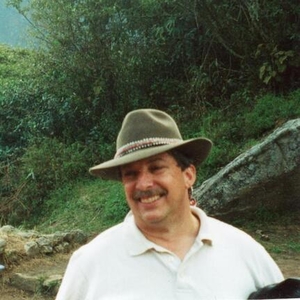
Richard L. Burger

Richard L. Burger

· Charles J. MacCurdy Professor of AnthropologyVerified

Yale University · Anatomy

Active 1966–2026

h-index42
Citations6.7k
Papers16314 last 5y
Funding
See your match with Richard L. Burger — sign in to PhdFit.Sign in

About

Richard L. Burger is the Charles J. MacCurdy Professor of Anthropology at Yale University and serves as the Curator in the Division of Anthropology at the Peabody Museum. He received his undergraduate degree in archaeology from Yale College and completed his doctoral work at the University of California, Berkeley in 1978. Burger has been a member of the Yale faculty since 1981, during which time he has served as the Chairman of the Anthropology Department and the Council for Archaeological Studies, as well as the Director of the Peabody Museum of Natural History from 1995 to 2002. His research focuses on the emergence of civilization in the Central Andes of Peru. He has conducted extensive archaeological excavations at sites such as Chavin de Huantar and Huaricoto in Peru’s northern highlands, and at Cardal, Mina Perdida, and Manchay Bajo on the central coast. Burger has pioneered sourcing techniques for obsidian and cinnabar in Peru to better understand ancient patterns of interaction and exchange. He has also taught at Peruvian universities including San Marcos University (UNMSM) and the Catholic University (PUCP) in Lima, and holds honorary memberships at the University of Cuzco (UNSAAC) and the University of Iquitos. Burger has authored numerous books and articles on South American prehistory, including works on the Chavin culture, Formative Ecuador, and Inka power, among others. His contributions have significantly advanced understanding of Andean archaeology and prehistory.

Research topics

  • Geography
  • Archaeology
  • Geology
  • History
  • Demography
  • Biology
  • Ancient history
  • Genetics
  • Medicine
  • Virology
  • Ethnology
  • Evolutionary biology
  • Paleontology

Selected publications

  • The Pocó-Saladoid connection and the first widespread technological ceramic tradition in Tropical Lowland South America

    Antiquity · 2026-05-14

    article

    Some of the earliest ceramics in the Americas are found in Amazonia, though localised traditions become more widespread only c . 3500 cal BP with the development of Saladoid and Pocó ceramics in the Orinoco and Amazon basins, respectively. Despite stylistic affinities, these two assemblages have not been compared in detail. Here, the authors provide this missing comparative analysis, highlighting shared forms and similarities in chaîne opératoire . These findings, they argue, indicate a shared technological origin, with the spread of Pocó-Saladoid ceramics corresponding with the movement of people and the establishment of wider interactions across Amazonia and the Antilles.

  • Mass spectrometry measurements of mercury isotope ratios support geochemical sourcing of archaeological cinnabar in the Andean region

    PLoS ONE · 2025-07-07 · 2 citations

    articleOpen access

    Geochemical methods can identify the long-distance exchange of resources in the archaeological record. Cinnabar is a mineral with a limited number of geological sources; however, methods for determining the geological origin of cinnabar are constricted by the limited availability of comparative geological source materials. This study applies a multi-method approach to compare isotopic ratios of mercury and sulfur in archaeological specimens of cinnabar from museum collections and scientifically excavated materials from the Andes region of South America. We demonstrate that the δ202Hg to Δ199Hg relationship, assessed through Multicollector Inductively Coupled Plasma Mass Spectrometry (MC-ICP-MS), falls along a predictive slope, while Isotope Ratio Mass Spectrometry (IR-MS) for sulfur (S) was not a reliable proxy for determining ore source. Furthermore, Hg isotope ratios from similar sites and contexts tended to cluster, suggesting that most sites exploited cinnabar from the same ore source. Statistical analyses support the idea that the Huancavelica deposit served as the primary source of cinnabar pigment for pre-Hispanic societies, while also revealing some intriguing divergences that suggest alternate sources were exploited during certain periods on the North and South Coasts of Peru. These results demonstrate that MC-ICP-MS analyses of mercury can be used to geochemically trace cinnabar ore in the Andes and beyond.

  • Innovaciones en vasijas rituales andinas coloniales: keros y pacchas

    Boletín del Museo Chileno de Arte Precolombino · 2025-12-29

    articleOpen access1st authorCorresponding

    Este artículo explora las innovaciones en el diseño y la producción de keros y pacchas, dos tipos de vasijas rituales coloniales de los Andes peruanos y bolivianos. La manufactura de keros de madera y pacchas de cerámica con incrustaciones metálicas y de vidrio verde, respectivamente, se produjo en Cusco durante el período Colonial Temprano (1532-1783 dC) y no tiene antecedentes prehispánicos. El análisis arqueométrico muestra que se utilizaron varillas de estaño, plata y paktong en las incrustaciones de estos objetos, siendo el estaño y el paktong probablemente importados de Europa. De igual manera, se demuestra que el vidrio proviene de cuentas y vasijas de este material reutilizadas, traídas posiblemente de Venecia, Italia. El estudio de estos engastes revela el desarrollo de técnicas sin precedentes para fijar los materiales exóticos a estos contenedores rituales. La justificación ontológica y cosmológica para la creación de estas nuevas clases de objetos durante este período, se considera en el contexto de nuestra comprensión de la cosmovisión indígena colonial. Los dos casos de estudio presentados aquí se interpretan como testimonios de la continua vitalidad de la cultura andina después de la conquista española.

  • Innovations in Colonial Andean Ritual Vessels: Keros and Pacchas

    Scientific Electronic Library Online (Scientific Electronic Library Online) · 2025-12-01

    otherOpen access1st authorCorresponding

    ABSTRACT: This article explores innovations in the design and production of two types of colonial ritual vessels from the Peruvian and Bolivian Andes: keros and pacchas. The production of wooden keros with metal incrustations and ceramic pacchas with green glass inlays occurs in Cusco during the Early Colonial period (ad 1532-1783), and there are no prehispanic antecedents. Our archaeometric analyses show that short tin, silver and paktong rods were used as inlays, with the tin and paktong probably being imported from Europe. Similarly, the glass inlays are argued to be from repurposed beads and vessels likely brought from Venice, Italy. A study of these insets reveals the development of unprecedented techniques to attach the exotic materials to the ritual vessels. The ontological and cosmological rationale for the creation of these new classes of objects during this time is considered within the context of our understandings of colonial indigenous worldview. The two case studies are interpreted as testaments to the continued vitality of Andean culture after the Spanish conquest.

  • Tom Patterson and the origins of early Peruvian civilization

    Arqueología y Sociedad · 2024-12-13

    articleOpen access1st authorCorresponding

    Thomas C. Patterson is a significant figure in the history of Peruvian archaeology. This article reviews some of his contributions with an emphasis on his work on early Andean civilization. Beginning in the 1960s he focused along with Edward Lanning on the settlement patterns and economic systems of the central coast, especially those of the Preceramic (or Archaic). This work shed light on the interdependence of shoreline dwellers and inland farmers. It also produced information on the Lima culture, a subject that served as the basis for his doctoral dissertation at the University of California, Berkeley under the supervision of John Howland Rowe. Patterson’s subsequent excavations at the shoreline site of Ancón, his survey of the Lurin Valley and his visits to previously known early sites helped to clarify the pottery sequence of the central coast and the Initial Period and to demonstrate that the pre-Chavin pyramid complexes such as Huaca La Florida predated the fluorescence of Chavin de Huantar. His thinking has continued to evolve and his later work uses Marxist theory to better understand the emergence of early Andean societies on the coast and the rise and fall of the Incas. Utilizing the historically specific concept of social formations rather than more common neo-evolutionary stages, he has demonstrated that the builders of the monumental U-shaped pyramid complexes were not chiefdoms nor states as had been claimed. These writings demonstrate the value of utilizing perspective of historical materialism to interpret Peru’s archaeological record.

  • Insights into the genetic histories and lifeways of Machu Picchu’s occupants

    Science Advances · 2023-07-26 · 46 citations

    articleOpen accessCorresponding

    Machu Picchu originally functioned as a palace within the estate of the Inca emperor Pachacuti between ~1420 and 1532 CE. Before this study, little was known about the people who lived and died there, where they came from or how they were related to the inhabitants of the Inca capital of Cusco. We generated genome-wide data for 34 individuals buried at Machu Picchu who are believed to have been retainers or attendants assigned to serve the Inca royal family, as well as 34 individuals from Cusco for comparative purposes. When the ancient DNA results are contextualized using historical and archaeological data, we conclude that the retainer population at Machu Picchu was highly heterogeneous with individuals exhibiting genetic ancestries associated with groups from throughout the Inca Empire and Amazonia. The results suggest a diverse retainer community at Machu Picchu in which people of different genetic backgrounds lived, reproduced, and were interred together.

  • The Ancient Andean States: Political Landscapes in Pre-Hispanic Peru. Henry Tantaleán. 2021. Routledge, New York. xiii + 282 pp. $49.95 (paper), ISBN 9781138097636.

    Latin American Antiquity · 2023-05-17

    article1st authorCorresponding

    An abstract is not available for this content so a preview has been provided. Please use the Get access link above for information on how to access this content.

  • Ten millennia of hepatitis B virus evolution.

    Bern Open Repository and Information System (University of Bern) · 2022-01-26

    articleOpen access
  • The Lurín Valley before Pachacamac

    University Press of Florida eBooks · 2022-07-30

    book-chapter1st authorCorresponding
  • Chavín: Cultura matriz de la civilización andina, 2nd ed. Julio C. Tello. 2019. Fondo Editorial de la Universidad Nacional Mayor de San Marcos, Museo de Arqueología y Antropología de la Universidad Nacional Mayor de San Marcos, and Fundación Augusto N. Wiese, Lima, Peru. 505 pp. $45.00 (hardcover), ISBN 978-9972-46-669-4.

    Latin American Antiquity · 2022-08-11

    article1st authorCorresponding

    Chavín: Cultura matriz de la civilización andina, 2nd ed. Julio C. Tello. 2019. Fondo Editorial de la Universidad Nacional Mayor de San Marcos, Museo de Arqueología y Antropología de la Universidad Nacional Mayor de San Marcos, and Fundación Augusto N. Wiese, Lima, Peru. 505 pp. $45.00 (hardcover), ISBN 978-9972-46-669-4. - Volume 33 Issue 4

Frequent coauthors

  • Lucy C. Salazar

    National University of Saint Anthony the Abbot in Cuzco

    26 shared
  • Michael D. Glascock

    25 shared
  • Daniel H. Sandweiss

    University of Maine

    12 shared
  • David Reich

    Broad Institute

    9 shared
  • Heather E. McInnis

    American Association For The Advancement of Science

    9 shared
  • Bernardino Ojeda

    National Agrarian University

    9 shared
  • Rolando Paredes

    9 shared
  • Marı́a del Carmen Sandweiss

    Whitney Museum of American Art

    9 shared

Education

  • Ph.D., Anthroplogy

    University of California Berkeley

    1978

Awards & honors

  • Chair of the Senior Fellows of Pre-Columbian Studies at Dumb…
  • President of the Institute of Andean Research
  • Resume-aware match score
  • Save to shortlist
  • AI-drafted outreach

See your match with Richard L. Burger

PhdFit ranks faculty by your research interests, methods, and publications — grounded in their actual work, not templates.

  • Free to start
  • No credit card
  • 30-second signup