Resume-aware faculty matching

Find professors who actually fit you

Upload your resume. Four AI agents analyze your background, rank the faculty who fit, inspect their recent research, and help you draft outreach — grounded in their actual work, not templates.

Free to startNo credit cardCancel anytime
Top matches Balanced preset
Dr. Sarah Chen
Stanford · Interpretability · NLP
91
Dr. Marcus Holloway
MIT · Robotics · RL
84
Dr. Aisha Okonkwo
CMU · Fairness · HCI
82
Nova · Professor Researcher · re-ranking top 20…
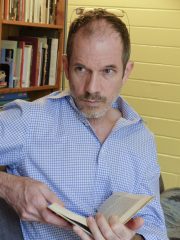
Richard Kernaghan

Richard Kernaghan

· Associate Professor, AnthropologyVerified

University of Florida · Toxicology and Pharmacology

Active 2001–2023

h-index4
Citations131
Papers169 last 5y
Funding
See your match with Richard Kernaghan — sign in to PhdFit.Sign in

About

Richard Kernaghan is an Associate Professor of Anthropology at the University of Florida and an Affiliate Faculty member at the Center for Latin American Studies. His ethnographic research focuses on aesthetics and legal relations, particularly how political time finds expression in rivers, roads, and landscapes that are in motion. His work examines the aftermaths of war and everyday experiences of law in a settler frontier where (counter)insurgency and illicit economies are intertwined. Kernaghan's first book, Coca’s Gone (Stanford, 2009), is an ethnography of a post-cocaine boom in the Upper Huallaga Valley of Central Peru, reflecting on local narratives of a turbulent past and law-making processes at the margins of the state. His second book, Crossing the Current (Stanford UP, 2022), documents transformations of territory through oral histories and practices of rural transit operators, exploring how legal topographies and landscapes have changed following war and the defeat of the Maoist Shining Path. This work investigates aesthetic ways in which transitions to a postwar era are experienced through everyday itineraries and transit practices. Kernaghan is currently engaged in a new ethnographic and archival project examining river travel in Western Amazonia, focusing on the lowland water ecologies connected to the Andes. His research explores how variations in terrains influence legal relations in the triple-border region of Colombia, Brazil, and Peru, an area historically disputed by Spanish and Portuguese empires. His interests include legal relations, territory, rivers, roads, transportation, ethnographic writing and imagery, philosophies of sense, settler colonialism, frontier law, political matter, memory, oblivion, aesthetics, technics, and ecological aspects of Coca and Amazonia.

Research topics

  • Archaeology
  • Philosophy
  • Epistemology
  • Optics
  • History
  • Geometry
  • Art
  • Geography
  • Physics
  • Art history

Selected publications

  • Commentary on ‘Recalcitrance: The foreclosure of news about violence in Mexico’

    The Journal of Latin American and Caribbean Anthropology · 2023-06-01

    articleOpen access1st authorCorresponding
  • Crossing the Current

    Stanford University Press eBooks · 2022-10-21 · 20 citations

    book1st authorCorresponding
  • El trueno lejano

    Encartes · 2022-03-21 · 11 citations

    articleOpen access1st authorCorresponding

    The Huallaga River of Peru was scene to a counterinsurgency war that in the 1980s converged with a cocaine boom. Later, when the war had largely withdrawn and when the region’s inhabitants narrated events of that increasingly remote history, the Huallaga River appeared as a force: one that set boundaries but also intervened in the trajectories of a multifaceted violence. This essay examines how the attributes of that river, both topological and sensori-material, came to be expressed in images, which circulated in times of post-conflict. By reading for their obtuse sense, this text connects the images that recurred by means of stories and dreams with those of another sort, this time photographs of the Huallaga River itself, when the war no longer seemed to threaten directly. Here, bringing distinct manifestations of image into conversation with one another permits tracing the uncertainties that cropped up between different effects of reality. It also opens the possibility for listening to the sounds that arrived in the distance, from the previous upheaval, and that would occasionally disrupt the passing of presents belonging now to other times. If ethnography implies responding to empirical worlds, not with a simple repetition that copies what happens, but with new and unexpected approximations, this essay describes and echoes images that endured or that insisted in returning from fieldwork.

  • Chapter five. writing time as weather

    Stanford University Press eBooks · 2022-10-28

    book-chapter1st authorCorresponding
  • Obtuso es el sentido: visualidad y práctica etnográfica

    Encartes · 2022 · 14 citations

    1st authorCorresponding
    • Art
    • Art history
    • History

    What about the image that marks absence, when more than revealing it increases uncertainty? There, teetering on the currents of a river, a lump appears. Over here, closer, in a washed-out portrait, a wink is detonated. There are always opaque regions where bodies are formed. Between the dumbness and the change, waves escape. When the back is turned to the camera in a moment frozen by astonishment. Shadows that brush, that interplay with the sun's rays and the piercing noises of drills. There where there are material traces of a care suspended by disappearance. Every ethnographic encounter leaves records. Sometimes, from them emerge images that point to something singular, of fleeting temporality.

  • 1 Ya no hay coca ya

    Stanford University Press eBooks · 2020-12-31

    book-chapter1st authorCorresponding
  • Time as weather

    Manchester University Press eBooks · 2020-02-28

    book-chapterOpen access1st authorCorresponding

    The Shining Path have intended the act of looking at human corpses to alter subjectivities, but as a self-proclaimed revolutionary movement its broader goal was to modify collective attachments by announcing and reinforcing political boundaries. Bodily remains could be used to accomplish that, perhaps, since encounters with corpses focus attention on borders of the most basic and experientially immanent kind. They focus attention onto the lines separating one bodily self from another and one human biological life from death. If the primary purpose of political community is to safeguard relations between subjects, time becomes 'weather' precisely when the possibility of property itself is placed in doubt. 'Time as weather' haunts because property itself presupposes temporality, or rather a particular manner in which duration comes to be fused with things.

  • Coca's Gone

    Stanford University Press eBooks · 2020 · 22 citations

    1st authorCorresponding
    • Geography
    • Archaeology
  • Oblivious Title: On the Political Time of Land Tenure in Postwar Peru

    Anthropological Quarterly · 2017-01-01 · 3 citations

    article1st authorCorresponding

    How does political time inflect legal titles to property no less than the possibilities of their falsification? In this article, I consider historical entanglements of rural land tenure in a coca-growing area of central Peru during the twilight years of the Shining Path insurgency. Where regionally the Maoist movement's claim to Revolution had long ceased to be plausible and its own disappearance loomed, I share an episode in which Shining Path surreptitiously manipulated the Peruvian state's administrative power so that parcels seized from a local farmer would be registered as the future legal property of its members and sympathizers. My reflections on this event unfold as a discussion of falsification and its camouflaging effects, through which I ask how shifts in political time at once animate and selectively obscure the multiplicity of social relations that bind people to material things. The bestowal of legal title itself arguably participates in obscuring the plurality of those relations—through an oblivion engendered when legal rights of other, competing, claimants are disregarded. If so, the traces of a former order of insurgent land tenure, persisting into the times of post-conflict, surely complicate such oblivion-effects. Here, the notion of that insurgent order, lingering as it were into the aftermath, serves a heuristic purpose: it draws ethnographic attention to the afterlives of defeated land claims and to the life plans those claims once conveyed.

  • Time as weather

    Manchester University Press eBooks · 2016-05-15

    book-chapter1st authorCorresponding

Frequent coauthors

  • Gabriela Zamorano Villarreal

    2 shared
  • Resume-aware match score
  • Save to shortlist
  • AI-drafted outreach

See your match with Richard Kernaghan

PhdFit ranks faculty by your research interests, methods, and publications — grounded in their actual work, not templates.

  • Free to start
  • No credit card
  • 30-second signup