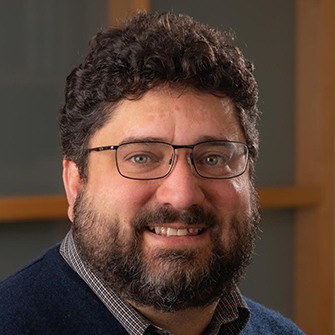
Richard Freiman
· Professor of Molecular Biology, Cell Biology and Biochemistry, Vice Chair of Molecular Biology, Cell Biology and Biochemistry, Professor of Obstetrics and GynecologyVerifiedBrown University · Genetics
Active 1990–2026
About
Richard Freiman is a senior author and biologist at Brown University whose research focuses on the genetic and developmental mechanisms underlying fertility, particularly sperm production. His work has elucidated the role of the protein TAF4b in sustaining long-term sperm generation in male mice. Freiman's research demonstrated that mice lacking the gene responsible for producing TAF4b initially produce sperm but rapidly lose fertility due to a deficit in progenitor cells during embryonic development, which leads to a reduced pool of spermatogonial stem cells necessary for ongoing sperm production. This discovery highlights the importance of embryonic developmental processes in adult reproductive function. Freiman's group has also shown that female mice without TAF4b are completely infertile and experience premature ovarian aging, indicating the protein's critical role in reproductive biology across sexes. His research has significant implications for human fertility, as mutations in the TAF4b gene have been linked to low sperm counts in men, suggesting potential clinical applications such as early detection and sperm banking for affected individuals. Freiman's work integrates developmental biology, genetics, and reproductive science to advance understanding of fertility and its genetic regulation.
Research topics
- Biology
- Cell biology
- Genetics
Selected publications
Coordinating meiotic prophase I progression and early oocyte differentiation
Development · 2026-03-12
articleOpen accessSenior authorFemale reproductive senescence results from the regulated depletion of a finite pool of oocytes called the ovarian reserve. This pool of oocytes is initially established during fetal development, but the oocytes that it consists of must remain quiescent for decades until they are activated during maturation in adulthood. In order for developmentally competent oocytes to populate the ovarian reserve, they must successfully initiate both meiosis and oogenesis. As the factors that regulate the timing and fidelity of these early events remain elusive, we assessed the precise function and timing of the transcriptional regulator TAF4b during meiotic prophase I progression in mouse fetal oocytes. Compared to matched controls, E14.5 Taf4b-deficient oocytes enter meiosis I in a timely manner; however, their subsequent progression through the pachytene-to-diplotene transition of meiotic prophase I is compromised. Moreover, this disruption of meiotic progression is associated with the reduced ability of Taf4b-deficient oocytes to repair double-strand DNA breaks. Transcriptional profiling of Taf4b-deficient oocytes reveals that between E16.5 and E18.5 these oocytes fail to properly coordinate the reduction of meiotic gene expression and the activation of oocyte differentiation genes.
Transcriptional Integration of Meiotic Prophase I Progression and Early Oocyte Differentiation
bioRxiv (Cold Spring Harbor Laboratory) · 2025-01-06
preprintOpen accessSenior authorCorrespondingAbstract Female reproductive senescence results from the regulated depletion of a finite pool of oocytes called the ovarian reserve. This pool of oocytes is initially established during fetal development, but the oocytes that comprise it must remain quiescent for decades until they are activated during maturation in adulthood. In order for developmentally competent oocytes to populate the ovarian reserve they must successfully initiate both meiosis and oogenesis. As the factors that regulate the timing and fidelity of these early events remain elusive, we assessed the precise function and timing of the transcriptional regulator TAF4b during meiotic prophase I progression in mouse fetal oocytes. Compared to matched controls, E14.5 Taf4b -deficient oocytes enter meiosis I in a timely manner however, their subsequent progression through the pachytene-to-diplotene transition of meiotic prophase I is compromised. Moreover, this disruption of meiotic progression is associated with the reduced ability of Taf4b -deficient oocytes to repair double-strand DNA breaks. Transcriptional profiling of Taf4b -deficient oocytes reveals that between E16.5 and E18.5 these oocytes fail to coordinate the reduction of meiotic gene expression and the induction of oocyte differentiation genes. These studies reveal that TAF4b promotes the formation of the ovarian reserve in part by orchestrating the timely transition to meiosis I arrest and oocyte differentiation, which are often perceived as separate events.
Elsevier eBooks · 2024-12-14
book-chapterSenior author2023-04-03
preprintOpen accessSenior author<div>Abstract<p>Ovarian cancer is a lethal disease with the majority of diagnosed women having distant metastases. Interestingly, although Notch3 overexpression has been correlated with poor survival in epithelial ovarian cancer (EOC), little is known about its mechanism of action. Data show that Notch3 specifically promotes anoikis resistance. In addition, data indicate a positive role for focal adhesion kinase (FAK) as well as downstream signaling kinases such as Akt and Erk 1/2 in promoting anchorage-independent growth. Mechanistically, both mRNA transcript and protein levels of type IV collagen (COL4A2) are reduced when Notch3 levels are decreased and exogenous collagen IV supplementation reverses the anoikis sensitivity. Reduction of COL4A2 expression by RNAI-mediated knockdown induces cell death. Finally, elevated Notch3 expression levels correlate with higher COL4A2 expression in human ovarian tumor specimens.</p><p><b>Implications:</b> These data highlight type IV collagen as a novel therapeutic target for metastatic EOC.</p><p><b>Visual Overview:</b> <a href="http://mcr.aacrjournals.org/content/early/2014/11/25/1541-7786.MCR-14-0334/F1.large.jpg" target="_blank">http://mcr.aacrjournals.org/content/early/2014/11/25/1541-7786.MCR-14-0334/F1.large.jpg</a></p><p><i>Mol Cancer Res; 13(1); 78–85. ©2014 AACR</i>.</p></div>
2023-04-03
preprintOpen accessSenior author<div>Abstract<p>Ovarian cancer is a lethal disease with the majority of diagnosed women having distant metastases. Interestingly, although Notch3 overexpression has been correlated with poor survival in epithelial ovarian cancer (EOC), little is known about its mechanism of action. Data show that Notch3 specifically promotes anoikis resistance. In addition, data indicate a positive role for focal adhesion kinase (FAK) as well as downstream signaling kinases such as Akt and Erk 1/2 in promoting anchorage-independent growth. Mechanistically, both mRNA transcript and protein levels of type IV collagen (COL4A2) are reduced when Notch3 levels are decreased and exogenous collagen IV supplementation reverses the anoikis sensitivity. Reduction of COL4A2 expression by RNAI-mediated knockdown induces cell death. Finally, elevated Notch3 expression levels correlate with higher COL4A2 expression in human ovarian tumor specimens.</p><p><b>Implications:</b> These data highlight type IV collagen as a novel therapeutic target for metastatic EOC.</p><p><b>Visual Overview:</b> <a href="http://mcr.aacrjournals.org/content/early/2014/11/25/1541-7786.MCR-14-0334/F1.large.jpg" target="_blank">http://mcr.aacrjournals.org/content/early/2014/11/25/1541-7786.MCR-14-0334/F1.large.jpg</a></p><p><i>Mol Cancer Res; 13(1); 78–85. ©2014 AACR</i>.</p></div>
2023-04-03
preprintOpen accessSenior author<p>Supplementary Figure/Table Legends</p>
Frontiers in Cell and Developmental Biology · 2023-10-12 · 4 citations
articleOpen accessSenior authorCorrespondingProspermatogonia (ProSpg) link the embryonic development of male primordial germ cells to the healthy establishment of postnatal spermatogonia and spermatogonial stem cells. While these spermatogenic precursor cells undergo the characteristic transitions of cycling and quiescence, the transcriptional events underlying these developmental hallmarks remain unknown. Here, we investigated the expression and function of TBP-associated factor 4b ( Taf4b ) in the timely development of quiescent mouse ProSpg using an integration of gene expression profiling and chromatin mapping. We find that Taf4b mRNA expression is elevated during the transition of mitotic-to-quiescent ProSpg and Taf4b- deficient ProSpg are delayed in their entry into quiescence. Gene ontology, protein network analysis, and chromatin mapping demonstrate that TAF4b is a direct and indirect regulator of chromatin and cell cycle-related gene expression programs during ProSpg quiescence. Further validation of these cell cycle mRNA changes due to the loss of TAF4b was accomplished via immunostaining for proliferating cell nuclear antigen (PCNA). Together, these data indicate that TAF4b is a key transcriptional regulator of the chromatin and quiescent state of the developing mammalian spermatogenic precursor lineage.
2023-04-03
preprintOpen accessSenior author<p>Supplementary Figure 1. Reduction in Notch1 levels did not alter levels of col4α2 expression. Supplementary Table 1. List of Antibodies. Supplementary Table 2. List of Primers. Supplementary Table 3. Increased Notch3 expression correlates with increased col4α2 in the human ovarian tumor dataset from TCGA.</p>
2023-04-03
preprintOpen accessSenior author<p>Supplementary Figure/Table Legends</p>
2023-04-03
preprintOpen accessSenior author<p>Supplementary Figure 1. Reduction in Notch1 levels did not alter levels of col4α2 expression. Supplementary Table 1. List of Antibodies. Supplementary Table 2. List of Primers. Supplementary Table 3. Increased Notch3 expression correlates with increased col4α2 in the human ovarian tumor dataset from TCGA.</p>
Recent grants
Dynamic Regulation of the Ovarian Reserve
NIH · $1.7M · 2018–2023
NIH · $9.0M · 2012
Ovarian-specific transcription networks regulated by the TFIID subunit TAF4b
NIH · $1.6M · 2010–2016
Ovarian-Specific Transcription Networks Regulated by the TFIID Subunit TAF4b
NIH · $323k · 2010–2018
Frequent coauthors
- 75 shared
Robert Tjian
California Institute for Regenerative Medicine
- 68 shared
Kimberly A. Seymour
Providence College
- 66 shared
Kenneth G. Geles
Diamond Materials (United States)
- 64 shared
Kirk Lo
Mount Sinai Hospital
- 64 shared
Patricia L. Morris
Rockefeller University
- 64 shared
Dolores J. Lamb
Weill Cornell Medicine
- 64 shared
KeumSil Hwang
New York Proton Center
- 64 shared
Allison E. Falender
Labs
Freiman labPI
Education
- 1997
Ph.D., Genetics
SUNY Stony Brook
Other, Mechanisms of tissue-specific gene expression
UC Berkeley
- Resume-aware match score
- Save to shortlist
- AI-drafted outreach
See your match with Richard Freiman
PhdFit ranks faculty by your research interests, methods, and publications — grounded in their actual work, not templates.
- Free to start
- No credit card
- 30-second signup