
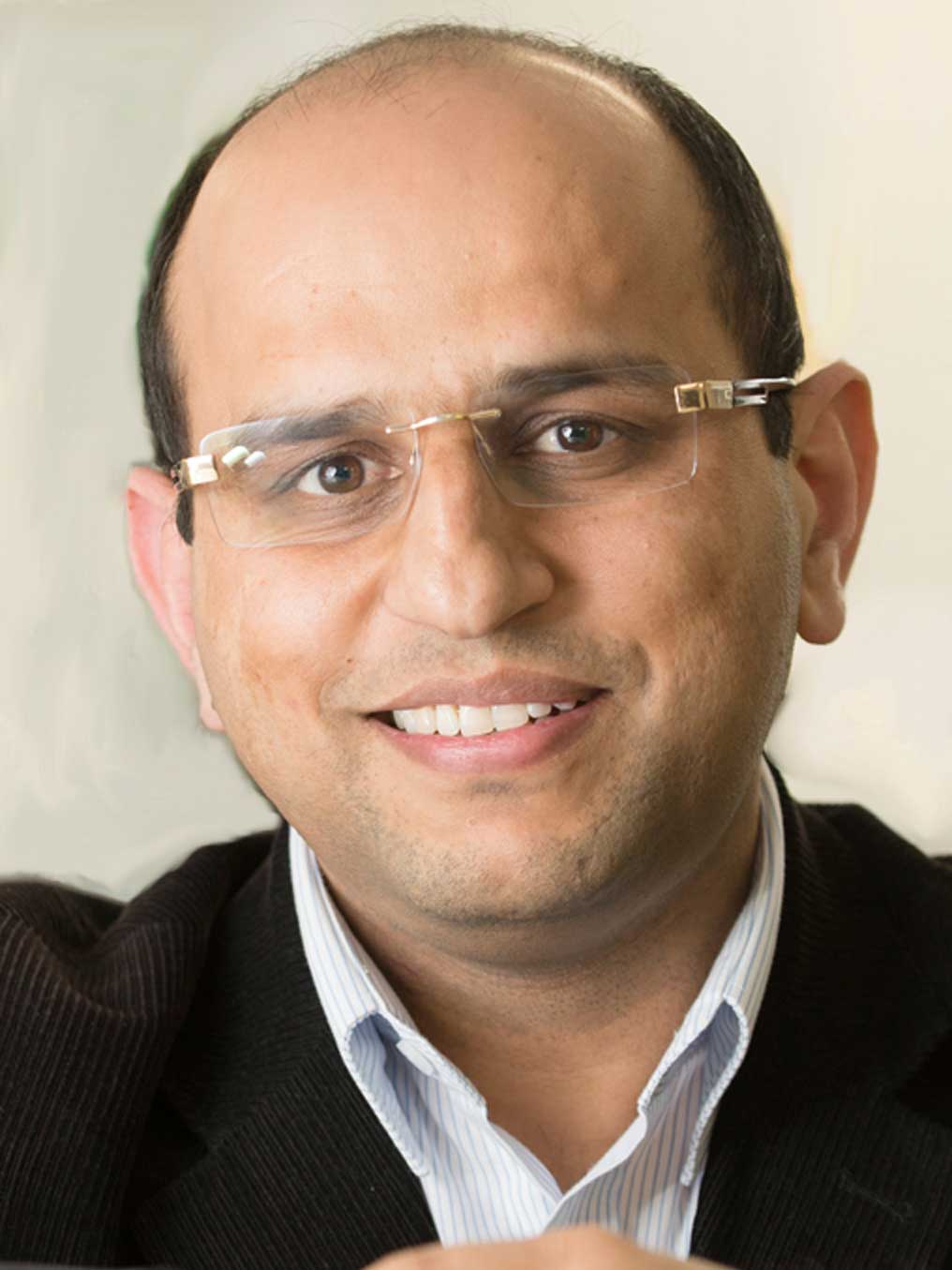
Ravinder Dahiya
Northeastern University · Electrical and Energy Engineering
Active 1974–2026
Academic metrics are sourced from OpenAlex and public funding records; values may differ from Google Scholar.
About
Ravinder Dahiya is a Professor of Electrical and Computer Engineering at Northeastern University College of Engineering. His research focuses on flexible printed electronics, robotics (including soft robotics), electronic skin, tactile sensing, haptics, intelligent interactive systems, and wearable systems. He leads the Bendable Electronics and Sustainable Technologies Group, a multidisciplinary team working at the interface of printed electronics, material science, sensors, applied physics, robotics, and interactive systems. His work spans from the synthesis of nanostructures to the integration of electronic systems on large-area, flexible, and non-conventional substrates, with an emphasis on resource-efficient manufacturing and addressing global challenges such as electronic waste. Dahiya has made significant contributions to the development of technologies that promote societal benefit through sustainable electronics and innovative sensing systems.
Research topics
- Computer Science
- Materials science
- Nanotechnology
- Composite material
- Engineering
- Chemical engineering
- Systems engineering
- Risk analysis (engineering)
- Business
- Chemistry
Selected publications
npj Flexible Electronics · 2025-03-10 · 30 citations
articleOpen accessSenior authorAbstract Transparent light detection devices are attractive for emerging see-through applications such as augmented reality, smart windows and optical communications using light fidelity (Li-Fi). Herein, we present flexible and transparent photodetectors (PDs) using conductive poly(3,4-ethylenedioxythiophene): polystyrene sulfonate (PEDOT:PSS): Ag nanowires (NWs) based nanofibres and zinc oxide (ZnO) NWs on a transparent and degradable cellulose acetate (CA) substrate. The electrospun (PEDOT:PSS…
Transparent and Transient Flexible Electronics
Advanced Science · 2025-06-20 · 17 citations
reviewOpen accessSenior authorTransparent electronics has gained tremendous attention in recent years because of the growing demand for see-through devices in applications such as displays, windscreens, and wearables. These applications require transparent electronics in a large area and flexible form factors along with performances at par with conventional electronics. Additionally, the controlled transience and degradability of electronics are desired to reduce the end-of-life challenges. Attaining these attributes simulta…
End-of-Life usefulness of degradation by products from transient electronics
npj Flexible Electronics · 2025-05-07 · 8 citations
articleOpen accessSenior authorAbstract Transient electronics, comprising of degradable devices that disintegrate and disappear after their operational life, has received considerable interest in recent years because of the concerns related to the rapidly growing electronic waste (e-waste). However, the degradability or biodegradability of electronic devices alone is insufficient to ascertain environmental safety. The evaluation of the nature of degradation by-products is also essential to assess the environmental impact of a…
iScience · 2025-09-17 · 7 citations
reviewOpen accessSenior authorThe rapid expansion of the semiconductor industry has not only accelerated global digital transformation but also brought serious environmental concerns, particularly through the discharge of hazardous, toxic, and persistent wastewater. Traditional semiconductor manufacturing is highly water and energy intensive, relying on critical and often toxic materials-many with proprietary or unknown chemical compositions. This review outlines the environmental impact of semiconductor wastewater, highligh…
Nature Machine Intelligence · 2025-06-19 · 7 citations
articleOpen access
Recent grants
NIH · $2.0M · 2002
Role of genetic biomarkers in clinical assessment of prostate cancer
NIH · 2012–2016
Regulation of c-Myc/HIF pathway in the management of kidney cancer
NIH · 2011–2020
Frequent coauthors
- 1394 shared
Krikor Ozanyan
University of Manchester
- 1346 shared
Fabrice Labeau
- 1344 shared
Chonggang Wang
InterDigital (United States)
- 1344 shared
Anil Roy
Dhirubhai Ambani Institute of Information and Communication Technology
- 768 shared
Andrei Past
University of Glasgow
- 576 shared
Andrei Past
The University of Texas at Arlington
- 97 shared
Leandro Lorenzelli
Fondazione Bruno Kessler
- 68 shared
Deepak Uttamchandani
Dhirubhai Ambani Institute of Information and Communication Technology
Labs
Bendable Electronics and Sustainable Technologies GroupPI
Awards & honors
- Fellow, IEEE
- Fellow, The Royal Society of Edinburgh
- Life Member, Marie Curie Fellows Association
- Fellow, The Institution of Engineers in Scotland
- Microelectronic Engineering Young Investigator Award (2016)
Similar researchers at Northeastern University
- Resume-aware match score
- Save to shortlist
- AI-drafted outreach
See your match with Ravinder Dahiya
PhdFit ranks faculty by your research interests, methods, and publications — grounded in their actual work, not templates.
- Free to start
- No credit card
- 30-second signup