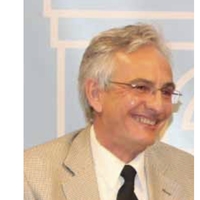
Raúl Marrero-Fente
· ProfessorVerifiedUniversity of Minnesota · Spanish and Portuguese
Active 1834–2024
About
Raúl Marrero-Fente is a Professor of Spanish and Law at the University of Minnesota. He is a Numerary Academic of the Academia Norteamericana de la Lengua Española and a Correspondent member of the Real Academia Española. His scholarly work focuses on the cultural and legal history of Colonial Latin America. Marrero-Fente is recognized as a cultural and legal scholar whose research explores the intersections of literature, law, and colonial history in the early Iberian world. His work often examines the literary and legal dimensions of colonial texts, emphasizing the complex cultural interactions and legal frameworks that shaped the Spanish empire in the Americas during the sixteenth century and beyond.
Research topics
- Humanities
- Artificial Intelligence
- Computer Science
- Political Science
- History
- Geography
- Art
- Law
- Philosophy
- Literature
Selected publications
Iberoamericana Vervuert eBooks · 2024-04-25
book-chapter1st authorCorrespondingCambridge University Press eBooks · 2024-07-31
book-chapter1st authorCorrespondingIberoamericana Vervuert eBooks · 2024-04-03
book1st authorCorrespondingRaúl Marrero-Fente es catedrático de Literaturas Hispánicas y Derecho en la University of Minnesota, miembro numerario de la Academia Norteamericana de la Lengua Española y correspondiente de la Real Academia Española. Reconocido especialista en literatura colonial hispanoamericana entre sus publicaciones destacan: la edición de Obra nuevamente compuesta... de Bartolomé de Flores (1571), Poesía épica colonial del siglo XVI. Historia, teoría y práctica (2017) y Primer poema hispano de los Estados Unidos (2021).
Iberoamericana Vervuert eBooks · 2024-04-25
book-chapter1st authorCorrespondingBulletin of Spanish Studies · 2023-08-09
articleOpen accessReview of "JORGE IBARGÜENGOITIA, Las muertas. Edición, introducción y notas de Antonio Sánchez Jiménez. Madrid: Ediciones Cátedra. 2023. 264 pp."
Iuris Dictio · 2022 · 1 citations
1st authorCorresponding- Humanities
- Humanities
- Philosophy
Ignacio Agramonte y Loynaz (1841-1873) es una de las figuras históricas de la lucha por la Independencia de Cuba. Aunque su acción política y militar es famosa, su etapa de estudiante de Derecho es poco conocida. Este artículo es una aproximación a un pensamiento temprano de Agramonte sobre Derecho Administrativo en ocasión de una sabatina en la Real y Literaria Universidad de La Habana en 1862. En el mismo se discuten aspectos concretos del derecho administrativo como la centralización y las estructuras políticas administrativas que pone a debatir, la articulación de un modelo estatal diferente y el uso de fuentes pocos comunes.
Revista chilena de literatura · 2022-11-01
articleOpen access1st authorCorrespondingResumen: Este ensayo estudia la pervivencia del tema del caballo de Troya de la Eneida de Virgilio en Espejo de paciencia de Silvestre de Balboa. Primero se presentan algunos ejemplos del tema del caballo de Troya en las literaturas clásicas grecolatinas, luego su transmisión en la literatura española desde la época medieval hasta el Siglo de Oro. Finalmente, su recreación en el texto de Balboa, donde sirve de metáfora programática del poema.
La matanza de Caonao en La Carta de relación de Diego Velázquez: una retórica de exculpación
Dialnet (Universidad de la Rioja) · 2021-01-01
articleOpen access1st authorCorrespondingThis paper studies the rhetorical strategies of Diego Velázquez’s relation letter of the conquest of Cuba and compares it with texts by Bartolomé de Las Casas that reveal the responsibility of the Spanish soldiers for the Caonao massacre.
ORÍGENES DE UNA ETIOLOGIA CUBANA EN ESPEJO DE PACIENCIA (1608) DE SILVESTRE DE BALBOA VEREDAS
Revista Épicas · 2021
1st authorCorresponding- Humanities
- Humanities
- Art
This work examines the construction of an etiology or fable of origins by Silvestre de Balboa in Espejo de paciencia (1608). From the use of classical mythology, Balboa assigns a new symbolic value to Cuban nature that allows us to see the landscape based on an insular autochthonous feeling, marking the difference with the European landscape.
Gigantes, carañas, caníbales y tacamahacas: noticias maravillosas desde Norteamérica
Cuadernos hispanoamericanos · 2021-01-01
article1st authorCorresponding
Frequent coauthors
- 5 shared
María C. Albin
- 4 shared
Aída M. Beaupied
- 3 shared
Santa Arias
- 3 shared
Megan Corbin
West Chester University
- 2 shared
Juan Carlos Bayo
Universidad Complutense de Madrid
- 2 shared
Kelly S. McDonough
- 2 shared
John A. Jones
University of Hull
- 2 shared
Nathanial Gardner
Awards & honors
- Elected Academic Numerary, Academia Norteamericana de la Len…
- Elected Correspondent Member, North American Academy of the…
- Imagine Fund Faculty Award. Office of the Provost, Universit…
- Newberry Renaissance Consortium Grant, 2014
- Program for Cultural Cooperation Between Spain's Ministry of…
- Resume-aware match score
- Save to shortlist
- AI-drafted outreach
See your match with Raúl Marrero-Fente
PhdFit ranks faculty by your research interests, methods, and publications — grounded in their actual work, not templates.
- Free to start
- No credit card
- 30-second signup