Upload your resume. PhdFit's six research agents compare your background with faculty profiles, recent publications, lab focus, and outreach opportunities, then rank professors with evidence you can review.
Resume-aware matchingEvidence from recent researchOutreach drafts included
Advisor Match Brief Resume uploaded
Resume signals5 found
NLPHCIFairnessGraph MLPyTorch
Six-agent analysisRunning
Axel · Candidate AnalystResume parsed
Nova · Professor ResearcherRecent papers
Echo · Match ExplainerEvidence linked
Atlas · Strategy AdvisorFit ranked
Lyra · Outreach WriterDraft queued
Juno · Meeting Prep CompilerNext step ready
SC
Dr. Sarah Chen
Stanford · NLP & interpretability
91
fit
Fairness + NLP projects overlap with her recent work.
Strong methods fit: model evaluation and interpretability.
Clear outreach angle for current trustworthy AI research.
Outreach angle
Ask how her lab is extending interpretability methods into fairness audits for real-world AI systems.
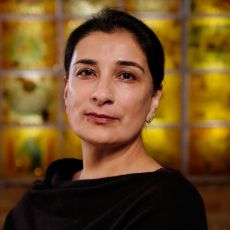
Ranjana Khanna is a Professor of English, Women's Studies, and the Literature Program at Duke University. She works on Anglo- and Francophone Postcolonial theory and literature, as well as Film, Psychoanalysis, and Feminist theory. She has published widely on transnational feminism, psychoanalysis, and postcolonial and feminist theory, literature, and film. Her notable publications include 'Dark Continents: Psychoanalysis and Colonialism' (Duke University Press, 2003) and 'Algeria Cuts: Women and Representation 1830 to the present' (Stanford University Press, 2008). She has also published in various academic journals such as Differences, Signs, Third Text, Diacritics, Screen, Art History, positions, SAQ, Feminist Theory, and Public Culture. Currently, she is working on book manuscripts titled 'Asylum: The Concept and the Practice' and 'Technologies of Unbelonging.' Khanna has held appointments as Professor of English, Director of the John Hope Franklin Humanities Institute, Professor of Literature, and Professor of Gender, Sexuality & Feminist Studies at Duke University.
The Corpse Washer by Sinan Antoon is a novel of necrophiliac desire. It has a metonymical relation to the global though its governing motif of touch, and minor and individuated senses and gestures that do not fit obviously within a rubric of the scale suggested by "global novel," which conjures terms and qualifications like Anthropocene, global war, financialization and the circulation of world capital, social movements, population, the refugee crisis, new technologies, and the potential for revolutionary uprising by the exploited of the world. The tiny and intimate gestures described in it, especially that of touching another, point to how phenomenology speaks to the category of the global (where philosophy meets the political) through literary figuration, and thus where minor gestures attain a significance beyond themselves. What is at stake in thinking about such intimacies of touch and death, however, deserves a larger backdrop that addresses where, when, how, and why one understands the idea of the "global novel," and the relationship between terms like global, commonwealth, third-world, postcolonial, and world as qualifiers of literary texts.
Journal of Middle East Women s Studies · 2018-03-01 · 13 citations
article1st authorCorresponding
I have understood part of miriam cooke’s work over the years to embody a commitment to understanding the forms of cultural production that emerge in the context of life beside a corpse or, following Sarah Kofman (2007, 241), living on in the face of the intolerable. In her early book War’s Other Voices, cooke (1987) writes about the “Beirut Decentrists” and returns repeatedly to literature that engages the corpse. In a piece in the collection The Moon’s Tears, Wisal Khalid writes of “Tariq who died in good health and all his parts were new” (37). When his mother takes his corpse to the hospital, the staff turns her away because they do not handle cadavers, so she puts him in the refrigerator. Engaging the equally surreal world of Ghada Samman’s Beirut Nightmares, cooke writes of a moment when the body of an uncle who died of natural causes is disposed of in a garbage can while the cook’s corpse is buried in the garden (46). Protagonists who become obsessed with the materiality of corpses and the language used to document them in the newspapers, cooke argues, demand that “a new language . . . be invented that would bypass normal channels of communication” (56). In Layla Usayran’s Usta’s Citadel, the character Maryam imagines herself not only as dead but as a stinking corpse, eaten by worms, ravens and wolves (101). cooke also writes of Hamida Nana’s condemnation of writing being as valueless as a corpse (99).Words that are corpses, and indeed corpses that become remainders so abundant they are placed inappropriately, live alongside more obviously pathetic figures like the corpses of children (cooke 1987, 36, 157). The absurd question of what to do with the corpse when one cannot find a means of appropriate disposal becomes the occasion to consider how to live in the face of the intolerable. cooke’s work shows that, far from being valueless, cultural production allows us to begin to imagine how to live on after death and particularly after being beside a corpse. In fact, her analysis extends a form of thinking that emerged in periods of war; Homeric contemplation on the value of life in the face of death is the most obvious example. cooke addressed this topic starting from her early work on Lebanon and continuing in her most recent scholarship on Syria, as when she contemplated an image by Abed Naji during a gallery tour of an exhibition she collaborated on called The Creative Memory of the Syrian Revolution.1 Discussing the absence of corpses in the imagery, cooke addressed Naji’s work in terms of understanding how to live after being traumatized by exposure to the corpses of torture and war.One of cooke’s ongoing commitments is to make sense of what cultural products like art, film, and literature can provide in contexts of extreme violence like war. She does not make grandiose claims for the arts, but by considering and opening space to speculate on what can arise from such moments, she engages in political intervention. In just the past four years, for example, I have had the opportunity to contribute to events she has organized on the work of Assia Djebar and on the latest refugee crisis. She has been instrumental in gathering people from diverse backgrounds in the arts and humanities to consider and make sense of contemporary violence.• • •Sigmund Freud’s essay “Thoughts for the Times on War and Death,” written a few months into World War I, was his attempt to make sense of widespread disillusionment concerning civilization, the laws of war, and ideals of peace. He writes, “The individual who is not himself a combatant—and so a cog in the gigantic machine of war—feels bewildered in his orientation, and inhibited in his powers and activities” (Freud 1978, 275). Following a section in which he stages, without directly citing, readings of Thomas Hobbes’s state of nature from the Leviathan and Immanuel Kant’s Of Perpetual Peace, Freud writes of his own disillusionment with the war and the inevitability of war in the face of a legal apparatus for perpetual peace among what he understood to be advanced societies. Freud attributes his own sense of loss to disillusionment with an understanding of the past as enshrined in museums and in international law, both of which provide the illusion of civilizational advancement. In civilization one understands oneself as belonging to the world of peace, with all the hospitality afforded by that term, when in actuality war is perpetual. In this context,countless men and women have exchanged their native home for a foreign one, and made their existence dependent on the intercommunications between friendly nations. Moreover anyone who was not by stress of circumstance confined to one spot could create for himself out of all the advantages and attractions of these civilized countries a new and wider fatherland, in which he could move about without hindrance or suspicion. (277)The international laws of war and peace thus allow a sense of belonging (“hospitality”) and movement through borders for some members of civilization. For Freud, an internationalist of sorts, this arrangement raises the question of the forms of unhappiness that civilization produces to ensure the rights of private property and to differentiate between those with common bonds based on established legal and institutional values, and the lives demarcated by those very values to exist outside their parameters.Later in the essay Freud writes of the changing relation to death, which he imagines as a changing relation to the corpse. Modern warfare, he says, has changed our whole attitude to death:We were of course prepared to maintain that death was the necessary outcome of life, that everyone owes nature a death and must expect to pay the debt—in short, that death was natural, undeniable and unavoidable. In reality, however, we were accustomed to behave as if it were otherwise. We showed an unmistakable tendency to put death on one side, to eliminate it from life. . . . In the unconscious every one of us is convinced of his own immortality.When it comes to someone else’s death, the civilized man will carefully avoid speaking of such a possibility in the hearing of the person under sentence. (289).Then he argues that the arts offer a form of “compensation” for such losses:It is an inevitable result of all this that we should seek in the world of fiction, in literature and in the theatre compensation for what has been lost in life. There we still find people who know how to die—who, indeed, even manage to kill someone else. There alone too the condition can be fulfilled which makes it possible for us to reconcile ourselves with death: namely, that behind all the vicissitudes of life we should still be able to preserve a life intact. (291)Freud then makes an orientalist exception replete with the system of citation Edward Said taught us to recognize:The complement to this cultural and conventional attitude towards death is provided by our complete collapse when death has struck down someone whom we love—a parent or a partner in marriage, a brother or sister, a child or a close friend. Our hopes, our desires and our pleasures lie in the grave with him, we will not be consoled, we will not fill the lost one’s place. We behave as if we were a kind of Asra, who die when those they love die. (290)2Modern warfare, he continues, returns us to a more primitive attitude toward death, in which we can no longer deny that it will occur. Freud ends the essay with the following: “To tolerate life remains, after all, the first duty of all living beings. Illusion becomes valueless if it makes this harder for us. We recall the old saying: Si vis pacem, para bellum. If you want to preserve peace, arm for war. It would be in keeping with the times to alter it: Si vis vitam, para mortem. If you want to endure life, prepare yourself for death” (299–300). He asks us to turn to the arts for an education in how to live, indeed, in how to speculate, in the face of the intolerable. Though he distinguishes himself implicitly from philosophers such as Aristotle who, he says, understand the root of all speculation to be primeval man’s relationship to the corpse, he comes to a similar understanding in his own reading of Homer’s depiction of Achilles’s encounter with Odysseus. As if to return us to a moment of slow contemplation beside the corpse, he invites us to return to a relationship in which life begins with a contemplation of death. He insists that we cannot contemplate life if we are immune to the indiscretions of a war, where death seems indiscriminate (294–95).• • •Some months ago, during a conference miriam organized on the refugee crisis, she posed a question concerning how we understand a sequence of events as a crisis, when inaction has the possible consequence of our witnessing death on a large scale. I wrote on the photography of refugees and art that has emerged and the role of the aesthetic more generally in this genre in asking us to contemplate the value of life outside economic assessment of the costs and benefits of refugees to host countries. Today speculation is typically taken to mean engagement in risky financial transactions dependent on volatile markets. Philosophically, however, it has other meanings. For Hegel, it is a form of reason that refuses an opposition between natural consciousness and understanding, or subjective and objective perception. As if to reference Aristotle yet depart from him, Hegel (1979, par. 51) explains his idea in relation to the image of a corpse. Jacques Derrida (1987), Sarah Kofman (2007), Luce Irigaray (1985), and Gayatri Chakravorty Spivak (1988) deconstructively understand speculation as a reaching from and between the ontic (real) and the ontological, a resting point in productive tension between the verifiable and the nonverifiable that we may recognize as characteristic of the literary. Once again, the corpse is central to such articulation.Refugee imagery reached its apotheosis with the famous picture of Aylan Kurdi, the three-year-old Syrian boy from Damascus whose body washed ashore in Bodrum, a port city in southwestern Turkey, in early September 2015. Commentators praised and condemned newspapers for printing the image, taken by Kurdish photojournalist Nilüfer Demir. Many noted that the image was modified before circulation to remove other people in the scene and to sanitize it. The image facilitates readings of the child as the pure victim, in contrast to scapegoated adult refugees, who are less likely to evoke sympathy or recognition from host countries and citizens.3 Moreover, the figure of Aylan articulates no claims and signifies as helpless rather than as vulnerable, a distinction Adriana Cavarero (2008, 30–32) discusses in detail. Like the figure of the martyr described by Derrida in “Demeure,” the body signifies without representing as such (Blanchot and Derrida 2008, 38). A second image of Turkish aid officer Mehmet Ciplak carrying the limp and fully dressed body of Aylan from the shore gave virtual substance to the corpse. As the world retreats from death as the underside of desperate mass migration, the officer carries the body in a manner as if to show us how to touch death while avoiding it. Yet the child had died recently enough that he looks like a sleeping child, not a corpse. If Freud claims that modern man avoided death and could not picture himself as dead, the child seems to be dead and not dead at the same time.The spectacular image of suffering-that-is-not-suffering has an afterlife of sorts given the attractions and aesthetics of death, of the exquisite or decaying corpse, indeed as a lesson in how to live in the face of the intolerable. What is the value of the image of Aylan? Thinking within the dominant logic of speculation on the value of refugees and migrants to Europe or any other location, a journalistic narrative commonly presents them as “like us” and thus having lives of equal value that deserve to be recognized as such by the decision makers of state sovereignty. What is this value, however, given the clear disposability of some lives, even most lives, in the world, and particularly in the stories of mass migration?The Chilean poet Raul Zurita produced a beautiful installation in response to the Aylan Kurdi image in December 2016 at the Kochi-Muziris Biennale in Kerala, India (www.kochimuzirisbiennale.org; see Ragesh 2017). The installation, The Sea of Pain, invites visitors to walk through it. The installation is, Zurita tells us, a kinetic poem that requires one to walk and read the poem on the walls. While the photo of Aylan’s body on the shore became a disturbing symbol of the refugee crisis, Zurita dedicates the installation to Aylan’s older brother, Galip, who also drowned, along with the boys’ mother, on the same day and washed ashore near his brother. The poem reads, “I’m not Galip Kurdi’s father / but he is my son.”In his installation Zurita asks us to acknowledge the lack of relationality in modern death. There is no simple friend or enemy in struggles in which we kill our neighbors or their corpses wash up on our land. All the disappeared dead of the Mediterranean and other waters and beaches, those dead from war or climate change, exist in the sea for Zurita. The installation requires us to step into water and with some difficulty wade through it before we reach the words inscribed on the wall, because the sea is without inscription as such and is the space of so much death unseen. It encourages us to conjure speculatively the lives we wade beside rather than see documented. Given the absence of the face or bodies of the lost, the installation invites us to nonetheless be part of the sea of pain and reach toward what we might understand as life in the face of the intolerable. Zurita calls on us to enter a familial relationship with the Kurdi brother who did not become an icon, to enter a solidarity beyond the patrilinear. The speculative in this form allows us to understand life and value beyond their impoverished senses as means of exchange, production, consumption, and biology. The speculative allows us to conjure value as the oscillation between life and death, as the grasp on living in the face of or, perhaps more appropriately, in the waters of the intolerable.
The term gender has, for many years, been invoked as if it solved all the problems inherent in the category of sex. But has gender—as term and as concept—created another set of problems and problematic analogies? Is it the red herring of current work in our field? And does it have implications for futurity in the sense of what is to come in the field of women’s, gender, and sexuality studies? Does gender, in effect, confirm the mischaracterization, repeated obsessively in the u.s. academy especially, of women’s studies as an identity formation rather than as a field that questions the presence—through the oscillation between presence and absence—or possibility of sexual difference to come? Sexual difference, this essay posits, is a term with transitional content, yet to be fully conceived, and indeed perhaps intellectually hospitable in ways that resist content as justification, conceptualization as closure, or thought as merely aspirational. Sexual difference is still yet to be thought, and versions of it that we have belong to the anthropological rendering whereby sexes are imagined as existing when one might say they are material conditions formulated within an economy of the same.
It comes as no surprise, I’m sure, that in a discussion of shame (the honte of
my title) the question of skin and fabric may arise, all the more in the psychoanalytic context. From the pre-psychoanalytic writings of Freud to the
early psychoanalytic texts, the topic of shame arises in relation to nudity,
frequently alongside concepts of disgust and morality. It is also linked to
unpleasure, being still or anchored in one’s body, or, at other times, to movement. At least some of these – nudity, stillness, or movement – are frequently
understood in visual terms in the Freudian as well as in twentieth-century
phenomenological texts, whether relating to being caught in one’s own gaze,
looking on at oneself anchored in one’s own body in a relation of splitting, or
being acknowledged or ignored in one’s nudity by another. Each of these
possibilities in turn poses a question concerning what is meant by affect. Is
shame an affect, and, if so, does that assume that people are indeed affected
by objects?1
South Atlantic Quarterly · 2013-01-01 · 25 citations
article1st authorCorresponding
Khanna engages the notion of the lumpenproletariat in Frantz Fanon, tracing the concept through Karl Marx and Friedrich Engels, its transformation through Fanon, and its commonality with and distinction from notions of the subaltern. She draws in particular on the material in The Wretched of the Earth, on mental asylums, and on Fanon’s work as a psychiatrist to think of the radical form of subjectivity announced in mental life, an engagement with an idea of rogues, and a politics that emerges less from a sense of the moral or of right than of desubjectivation. As she puts Fanon’s work in the context of other texts on the mental asylum from 1961 by Michel Foucault, Erving Goffman, and R. D. Laing, she produces a feminist reading of the mental asylum as a site in which one can understand the relationship between madness and violence, and as at once refuge and carceral space.
This article argues that psychoanalytic notions of affect – including ideas of anxiety and melancholia, as well as deconstructive concepts of auto-affection – offer a feminist ethico-politics and a notion of affect as interface. Beyond the confines of the experiential and the positivist, both psychoanalysis and deconstruction provide insights into affect as a technology that understands the subject as porous. I consider works by Derek Jarman and Shirin Neshat to demonstrate the importance of the ethico-politics of affect as interface in contemporary cultural production. Both artists, in the process of considering the spectacular nature of notions of feminist and queer, use images of interface as a way of delimiting the spectacular nature of being and demonstrating the singularity of the event, the desire to fix through framing, and the parergonal nature of framing. The presence of the subject is questioned even as an auto-affection is suggestive of a spectral demand of the ethico-political. In the case of Jarman’s Blue, the denial of image as face in favour of the screen as interface is interrupted by sound and voice, which gesture toward representation as impossible but necessary. In the case of Neshat, the persistence of the photographic – the highly aesthetic self-portrait as mugshot – foregrounds face as interface, as one that questions presence through the insistence of a representational apparatus.