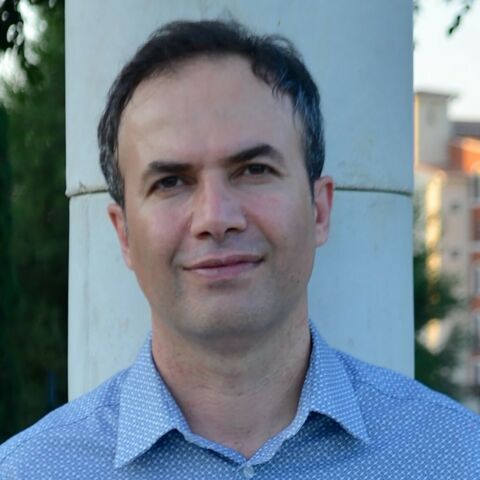
Rahman Azari
· Associate Professor of ArchitectureVerifiedPennsylvania State University · Education
Active 1988–2026
About
Rahman Azari is an architect, associate professor, and the founding director of the Resource and Energy Efficiency (RE2) Lab within the Department of Architecture at Penn State. He is also a co-funded faculty member at the Institutes of Energy and the Environment. His research focuses on the life cycle environmental impacts of built environments, innovative construction materials for energy production and carbon sequestration, and building energy and carbon efficiency. Azari has contributed to advancing sustainable building practices through his work on energy and environmental life cycle assessment, novel construction materials, and net-zero energy buildings. Prior to his current position, Azari served as an assistant professor and interim director of the architecture doctorate program at the Illinois Institute of Technology in Chicago, and as an assistant professor at the University of Texas San Antonio. He holds a Ph.D. in the Built Environment from the University of Washington in Seattle. His research has been widely published in prominent journals, and he has received multiple awards and grants, including the AIA Upjohn Research Grant and recognition as a Researcher to Know by the Illinois Science and Technology Coalition. Azari's work emphasizes sustainable construction technologies and environmental performance, contributing significantly to the field of environmentally conscious architecture and building design.
Research topics
- Simulation
- Environmental science
- Process engineering
- Automotive engineering
- Engineering
- Civil engineering
- Computer Science
- Meteorology
- Waste management
- Environmental engineering
- Electrical engineering
- Inorganic chemistry
- Materials science
- Chemistry
- Biology
- Physical chemistry
- Ecology
- Architectural engineering
- Geography
- Organic chemistry
- Botany
Selected publications
Data-Driven Outdoor Thermal Comfort Model via Support Vector Regression
Zenodo (CERN European Organization for Nuclear Research) · 2026-01-01
otherOpen accessSenior authorData-Driven Outdoor Thermal Comfort Model via Support Vector Regression
Zenodo (CERN European Organization for Nuclear Research) · 2026-01-01
otherOpen accessSenior authorSelf-Powered dynamic Façades using thermoelectric generators and phase change materials
Energy and Buildings · 2026-01-26 · 1 citations
articleSenior authorSSRN Electronic Journal · 2025-01-01
preprintOpen accessJournal of Building Engineering · 2025-05-13 · 10 citations
articleA calibration chamber framework for low-cost indoor air quality sensor validation
Building and Environment · 2025-10-11 · 2 citations
articleSenior authorEnergy Policy · 2025-03-30 · 7 citations
articleSmart Building Skins for Urban Heat Island Mitigation: A Review
Journal of Architectural Engineering · 2024-08-09 · 4 citations
reviewSenior authorThe urban heat island (UHI) effect has detrimental impacts on building cooling demand, public and ecological health, and climate change. Because UHIs are caused by the concentration of construction materials that absorb and retain heat, buildings in urban areas present challenges and opportunities to mitigate them. Specifically, innovative building skin solutions, such as those covered with smart materials (SMs) that respond to environmental stimuli with their dynamic time and temperature-dependent behaviors, have significant potential to reduce the UHI effect. This research provides a review of the state-of-the-art applications of SMs in building skins for urban heat island mitigation (UHIM). It highlights the knowledge gaps and opportunities for future research with an extensive literature review and in-depth analysis. This research classifies the application of skin-integrated smart materials (SISMs) for UHIM into five main groups that included thermal, light, air pollution, humidity and ventilation control, and energy generation, and highlights their challenges and prospects.
Buildings · 2024-06-23 · 12 citations
articleOpen access1st authorThe need to design buildings in compliance with the Paris Agreement goal requirements is urgent, and architects and engineers need to consider energy use and operational and embodied carbon requirements in doing so. Building envelopes will be an important element in the next generation of high-performance buildings and there have been significant advancements in recent years to develop building envelopes that help mitigate the building carbon emissions through energy-conserving low-embodied carbon or carbon-sequestering solutions. The key objective of this article is to present an overview of the state-of-the-art in the field of energy-efficient low-carbon buildings with a focus on envelope systems. This article provides a survey of the literature on energy use and carbon emissions of the United States building stock, presents recent advancements in energy-conserving building envelopes, and highlights reuse–reduce–sequester strategies that mitigate the embodied carbon of buildings. As materials are critical in reducing the energy consumption and carbon emissions of buildings, this paper also presents developments on diverse materials and building envelope solutions that have been effective in creating high-performance buildings, from insulation materials to phase-change materials and aerogels. Finally, the characteristics of a selected number of progressive net-zero-energy guidelines such as Passive House Institute (PHI) standards, Passive House Institute US (Phius) standards, the PowerHouse standard, and the BENG standard are discussed. The findings of this work highlight the increased focus on the design, construction, and engineering strategies that aim to mitigate the carbon emissions of buildings based on a holistic whole-life carbon mitigation approach.
Low-Cost IoT-based Indoor Air Quality Monitoring
Technology|Architecture + Design · 2024-07-02 · 6 citations
article
Frequent coauthors
- 39 shared
Ellen B. Gold
University of California, Davis
- 37 shared
Klea D. Bertakis
University of California, Davis
- 33 shared
Martha R. Harkey
University of California, Davis
- 33 shared
Barbara Sternfeld
Kaiser Permanente
- 33 shared
Shelley R. Adler
University of California, San Francisco
- 33 shared
Gail A. Greendale
University of California, Los Angeles
- 33 shared
Yali A. Bair
Planned Parenthood
- 25 shared
Edward J. Callahan
University of California, Davis
Education
- 2013
PhD in Built Environment, College of Built Environments
University of Washington
Awards & honors
- AIA Upjohn Research Grant (2019, 2020)
- Researcher to Know by the Illinois Science and Technology Co…
- COTE Top Ten student awards (2016, 2017)
- Dean’s Outstanding Teaching Award, College of Architecture,…
- President’s Distinguished Achievement Award – Teaching Excel…
- Resume-aware match score
- Save to shortlist
- AI-drafted outreach
See your match with Rahman Azari
PhdFit ranks faculty by your research interests, methods, and publications — grounded in their actual work, not templates.
- Free to start
- No credit card
- 30-second signup