
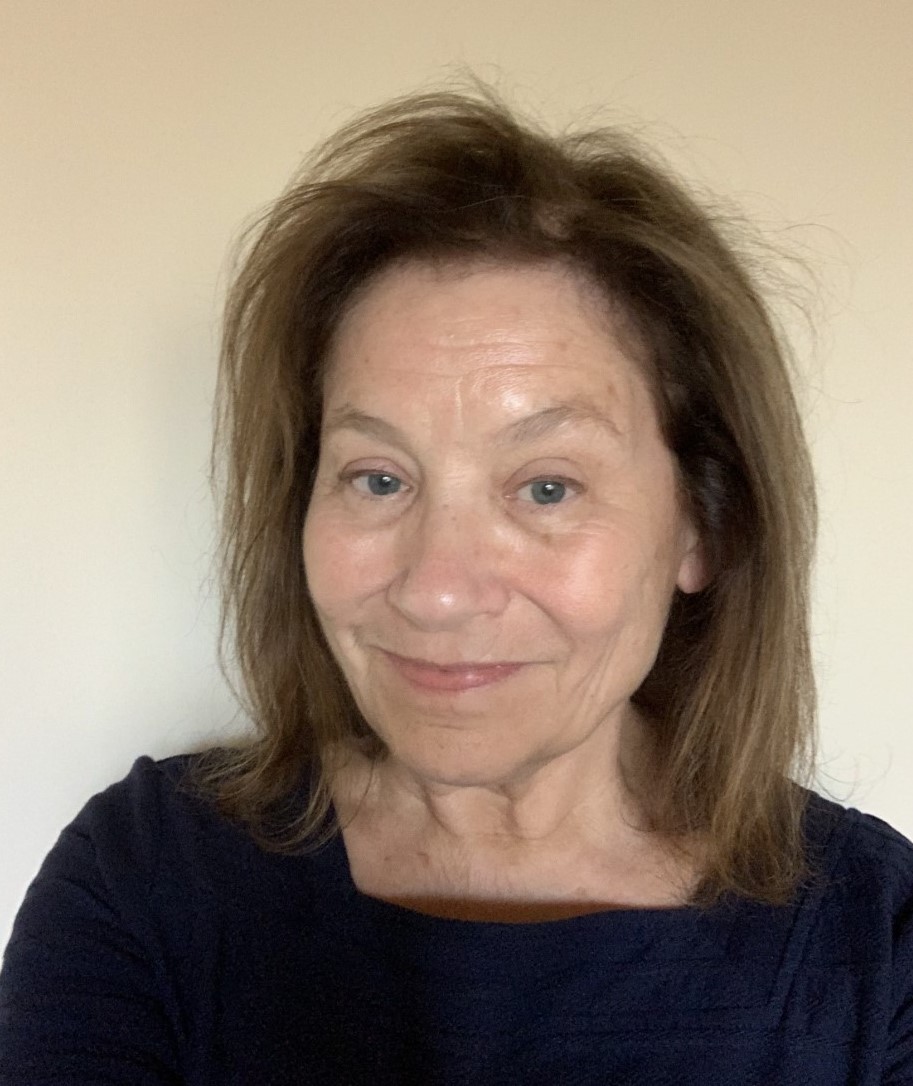
Rachel Mayberry
· ProfessorUniversity of California, San Diego · Linguistics
Active 1973–2026
Academic metrics are sourced from OpenAlex and public funding records; values may differ from Google Scholar.
About
The provided page text does not contain a specific professional biography of Professor Rachel Mayberry. It includes general information about the UC San Diego Department of Linguistics, its research focus, faculty, and interdisciplinary collaborations, but does not detail individual faculty members' backgrounds, research focuses, or key contributions. Therefore, the biography for Professor Rachel Mayberry cannot be extracted from the given content.
Research topics
- Computer Science
- Linguistics
- Psychology
- Natural Language Processing
- Cognitive psychology
- Neuroscience
- Developmental psychology
Selected publications
Proceedings of the National Academy of Sciences · 2023 · 36 citations
Senior authorCorresponding, 171-178 (2016)]. Restricted language experience in early childhood was associated with negative changes in adjusted grey matter volume and/or cortical thickness in bilateral fronto-temporal regions. No evidence of anatomical differences was observed in any of these regions when deaf signers with infant sign language experience were compared with hearing speakers with infant spoken language experience, showing that the effects of early language experience on the brain language system are supram…
Developmental Science · 2020 · 31 citations
Senior authorCorrespondingLimited language experience in childhood is common among deaf individuals, which prior research has shown to lead to low levels of language processing. Although basic structures such as word order have been found to be resilient to conditions of sparse language input in early life, whether they are robust to conditions of extreme language delay is unknown. The sentence comprehension strategies of post-childhood, first-language (L1) learners of American Sign Language (ASL) with at least 9 years o…
Journal of Cognitive Neuroscience · 2021 · 21 citations
Senior authorCorrespondingAbstract Areas within the left-lateralized neural network for language have been found to be sensitive to syntactic complexity in spoken and written language. Previous research has revealed that these areas are active for sign language as well, but whether these areas are specifically responsive to syntactic complexity in sign language independent of lexical processing has yet to be found. To investigate the question, we used fMRI to neuroimage deaf native signers' comprehension of 180 sign stri…
Impoverished language in early childhood affects the development of complex sentence structure
Developmental Science · 2023-05-31 · 18 citations
articleOpen access1st authorCorrespondingThe hypothesis that impoverished language experience affects complex sentence structure development around the end of early childhood was tested using a fully randomized, sentence-to-picture matching study in American Sign Language (ASL). The participants were ASL signers who had impoverished or typical access to language in early childhood. Deaf signers whose access to language was highly impoverished in early childhood (N = 11) primarily comprehended structures consisting of a single verb and…
Sentence Repetition in American Sign Language
2025-12-19 · 16 citations
article1st authorCorrespondingIn the United States, about 90% of deaf children have parents who hear normally (Schein and Delk, 1974). The figure suggests that most deaf adults who use sign language learned it for the first time from teachers or peers in classrooms and on playgrounds rather than at home around their parent’s knees. Thus we are interested in the relationship between how old a person is when she first begins to learn a language and the fluency with which she can produce and understand that language in adulthoo…
Recent grants
Age of acquisition effects on sign language development and brain processing
NIH · $5.6M · 2012–2024
NSF · $19k · 2019–2021
NSF · $11k · 2020–2022
Frequent coauthors
- 13 shared
Eric Halgren
University of California, San Diego
- 10 shared
Marla Hatrak
University of California, San Diego
- 8 shared
Matthew L. Hall
UConn Health
- 8 shared
Naja Ferjan Ramírez
- 8 shared
Denise Klein
McGill University
- 8 shared
Qi Cheng
Seattle University
- 8 shared
Jen‐Kai Chen
McGill University
- 8 shared
Matthew K. Leonard
University of California, San Francisco
Similar researchers at University of California, San Diego
- Resume-aware match score
- Save to shortlist
- AI-drafted outreach
See your match with Rachel Mayberry
PhdFit ranks faculty by your research interests, methods, and publications — grounded in their actual work, not templates.
- Free to start
- No credit card
- 30-second signup