Resume-aware faculty matching

Find professors who actually fit you

Upload your resume. Four AI agents analyze your background, rank the faculty who fit, inspect their recent research, and help you draft outreach — grounded in their actual work, not templates.

Free to startNo credit cardCancel anytime
Top matches Balanced preset
Dr. Sarah Chen
Stanford · Interpretability · NLP
91
Dr. Marcus Holloway
MIT · Robotics · RL
84
Dr. Aisha Okonkwo
CMU · Fairness · HCI
82
Nova · Professor Researcher · re-ranking top 20…
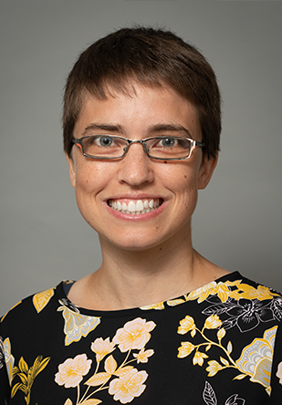
Rachel Kurchin

Rachel Kurchin

· Courtesy Research Faculty

Carnegie Mellon University · Physics

Active 2015–2026

h-index14
Citations1.8k
Papers4321 last 5y
Funding
See your match with Rachel Kurchin — sign in to PhdFit.Sign in

About

Rachel Kurchin is an assistant research professor in the Department of Materials Science and Engineering at Carnegie Mellon University, with a courtesy appointment in Physics. She is a computational materials scientist who employs electronic structure theory, data science, and energy device modeling to address the climate crisis. She leads the Accelerated Computation of Materials for Energy (ACME) group and is actively involved in developing and contributing to scientific codes, serving as an editor of the Journal of Open Source Software. Kurchin holds a BS in physics from Yale University, an MPhil in materials science and metallurgy from Cambridge University supported by a Gates Cambridge Scholarship, and a Ph.D. in materials science and engineering from MIT supported by a Blue Waters Graduate Fellowship. Her postdoctoral research was conducted at Carnegie Mellon University from 2019 to 2022, supported by fellowships from CMU's Manufacturing Futures Initiative and the Molecular Sciences Software Institute (MolSSI). She joined CMU's faculty in Fall 2022 and is also a faculty affiliate of the Scott Institute for Energy Innovation and a member of the Pittsburgh Quantum Institute. Her research interests include artificial intelligence, materials computation and informatics, and sustainable energy production, conservation, and storage. Kurchin has received notable recognition, including the Scientific Software Research Faculty Award from the Simons Foundation in 2024 and her selection as a MolSSI Faculty Fellow. She is involved in projects such as developing alternative electrochemical methods for synthesizing ammonia using renewable energy, and she has been featured in media outlets discussing topics like thermal analysis, solar power inverters, and research retractions.

Research topics

  • Computer Science
  • Programming language
  • Systems engineering
  • Physics
  • Engineering

Selected publications

  • Kinetics studies on $κ$ to $β$-Ga$_2$O$_3$ phase transformations via in-situ high temperature X-ray diffraction

    arXiv (Cornell University) · 2026-04-05

    preprintOpen access

    The kinetics of the $κ$ to $β$-Ga$_2$O$_3$ phase transformation were investigated in five batches of nominally phase-pure $κ$-Ga2O3 thin films heteroepitaxially grown on c-plane sapphire, with film thickness ranging from 700 to 1100 nm, using in-situ high-temperature X-ray diffraction. Phase fractions were quantitatively extracted through modified Rietveld refinement that accounts for preferred orientation, and the transformation kinetics were analyzed using the Johnson-Mehl-Avrami-Kolmogorov (JMAK) model. The applicability of the JMAK model to thin-film materials was evaluated and its lower and upper bounds for thin films and bulk materials were established. Based on this analysis, a method specifically suited for thin-film kinetic studies was developed and yielded reproducible and robust results across all five sample batches. The results indicate that the $κ$ to $β$ phase transformation in ~700-1100 nm films is best described as an interface-controlled, site-saturated nucleation with thickness-limited or effectively two-dimensional growth.

  • Supplementary Material

    AIP Publishing · 2026-03-20

    otherOpen accessSenior author

    supplemental material for article

  • First-Principles Study of Mg-Induced Phase Stabilization in Ga$_2$O$_3$ polymorphs

    arXiv (Cornell University) · 2026-01-21

    preprintOpen accessSenior author

    In this study, we investigate the effect of Mg incorporation on the relative phase stability of the four primary Ga$_2$O$_3$ polymorphs using density functional theory (DFT) calculations, with the goal of rationalizing experimental observations suggesting that diffusion from MgAl$_2$O$_4$ substrates contributes to relative stabilization of the $γ$ phase. Mg incorporation is modeled up to 25% of Ga sites within supercells derived from fully relaxed unit cells of each polymorph. Our results show that while $β$-Ga$_2$O$_3$ remains the thermodynamically most stable phase, the enthalpic differences between polymorphs decrease with increasing Mg content. The inherently disordered $γ$ phase, with its high configurational entropy, becomes less energetically unfavorable under Mg substitution, suggesting that entropy-driven stabilization may facilitate its formation under high-temperature and/or nonequilibrium growth conditions such as those previously reported. These findings provide a thermodynamic rationale for the experimental observation of the $γ$ phase during epitaxial growth on MgAl$_2$O$_4$ spinel substrates.

  • Supplementary Material

    AIP Publishing · 2026-03-20

    otherOpen accessSenior author

    supplemental material for article

  • Analysis and Uncertainty Quantification of Thermal Transport Measurements through Bayesian Parameter Estimation

    AIP Publishing · 2026-03-20

    otherOpen access

    The thermal transport community is increasingly interested in rigorous uncertainty quantification (UQ) of their measurements. In this work, we argue that Bayesian parameter estimation (BPE) represents a powerful framework for both analysis/fitting and UQ. We provide a detailed walkthrough of the technique (including code to duplicate our results) and example analysis based on measuring the thermal conductance of a gold/sapphire interface with FDTR. Comparisons are made against traditional analysis/UQ techniques adopted by the thermal transport community. Notable advantages of BPE include the interpretability of its results, including the capacity to indicate incorrect input assumptions, as well as a way to balance overall goodness of fit against prior knowledge of feasible parameter values. In some cases, incorporating this additional information can affect not only the magnitude of error bars but the inferred values themselves.

  • Analysis and Uncertainty Quantification of Thermal Transport Measurements through Bayesian Parameter Estimation

    AIP Publishing · 2026-03-20

    otherOpen access

    The thermal transport community is increasingly interested in rigorous uncertainty quantification (UQ) of their measurements. In this work, we argue that Bayesian parameter estimation (BPE) represents a powerful framework for both analysis/fitting and UQ. We provide a detailed walkthrough of the technique (including code to duplicate our results) and example analysis based on measuring the thermal conductance of a gold/sapphire interface with FDTR. Comparisons are made against traditional analysis/UQ techniques adopted by the thermal transport community. Notable advantages of BPE include the interpretability of its results, including the capacity to indicate incorrect input assumptions, as well as a way to balance overall goodness of fit against prior knowledge of feasible parameter values. In some cases, incorporating this additional information can affect not only the magnitude of error bars but the inferred values themselves.

  • Kinetics studies on $κ$ to $β$-Ga$_2$O$_3$ phase transformations via in-situ high temperature X-ray diffraction

    arXiv (Cornell University) · 2026-04-05

    articleOpen access

    The kinetics of the $κ$ to $β$-Ga$_2$O$_3$ phase transformation were investigated in five batches of nominally phase-pure $κ$-Ga2O3 thin films heteroepitaxially grown on c-plane sapphire, with film thickness ranging from 700 to 1100 nm, using in-situ high-temperature X-ray diffraction. Phase fractions were quantitatively extracted through modified Rietveld refinement that accounts for preferred orientation, and the transformation kinetics were analyzed using the Johnson-Mehl-Avrami-Kolmogorov (JMAK) model. The applicability of the JMAK model to thin-film materials was evaluated and its lower and upper bounds for thin films and bulk materials were established. Based on this analysis, a method specifically suited for thin-film kinetic studies was developed and yielded reproducible and robust results across all five sample batches. The results indicate that the $κ$ to $β$ phase transformation in ~700-1100 nm films is best described as an interface-controlled, site-saturated nucleation with thickness-limited or effectively two-dimensional growth.

  • First-Principles Study of Mg-Induced Phase Stabilization in Ga$_2$O$_3$ polymorphs

    ArXiv.org · 2026-01-21

    articleOpen accessSenior author

    In this study, we investigate the effect of Mg incorporation on the relative phase stability of the four primary Ga$_2$O$_3$ polymorphs using density functional theory (DFT) calculations, with the goal of rationalizing experimental observations suggesting that diffusion from MgAl$_2$O$_4$ substrates contributes to relative stabilization of the $γ$ phase. Mg incorporation is modeled up to 25% of Ga sites within supercells derived from fully relaxed unit cells of each polymorph. Our results show that while $β$-Ga$_2$O$_3$ remains the thermodynamically most stable phase, the enthalpic differences between polymorphs decrease with increasing Mg content. The inherently disordered $γ$ phase, with its high configurational entropy, becomes less energetically unfavorable under Mg substitution, suggesting that entropy-driven stabilization may facilitate its formation under high-temperature and/or nonequilibrium growth conditions such as those previously reported. These findings provide a thermodynamic rationale for the experimental observation of the $γ$ phase during epitaxial growth on MgAl$_2$O$_4$ spinel substrates.

  • Analysis and Uncertainty Quantification of Thermal Transport Measurements through Bayesian Parameter Estimation

    ArXiv.org · 2025-12-16

    preprintOpen accessSenior author

    The thermal transport community is increasingly interested in rigorous uncertainty quantification (UQ) of their measurements. In this work, we argue that Bayesian parameter estimation (BPE) represents a powerful framework for both analysis/fitting and UQ. We provide a detailed walkthrough of the technique (including code to duplicate our results) and example analysis based on measuring the thermal conductance of a gold/sapphire interface with FDTR. Comparisons are made against traditional analysis/UQ techniques adopted by the thermal transport community. Notable advantages of BPE include the interpretability of its results, including the capacity to indicate incorrect input assumptions, as well as a way to balance overall goodness of fit against prior knowledge of feasible parameter values. In some cases, incorporating this additional information can affect not only the magnitude of error bars but the inferred values themselves.

  • Gold Sapphire Interface 4-Parameter Modeled Data w/ Uncertainty

    KiltHub Repository · 2025-01-01

    datasetOpen accessSenior author

    Simulated FDTR phase lag data for a gold on sapphire sample, for a range of possible values of 4 input parameters (laser spot size, substrate thermal conductivity, gold layer thickness, and interface thermal conductance). This dataset contains the primary simulation data of a research project, however it will not contain every post-processing file associated with the research. That will instead be stored on an associated GitHub repo, which will be linked here after it has been fully created. The data in this submission is analyzed and discussed in an associated research manuscript which is in preparation for submission.<br>

Frequent coauthors

Education

  • B.S., Physics

    Yale

    2013
  • Other, Materials Science and Metallurgy

    Cambridge

    2014
  • Ph.D., Materials Science and Engineering

    MIT

    2019

Awards & honors

  • Scientific Software Research Faculty Award from the Simons F…
  • MolSSI Faculty Fellow
  • Resume-aware match score
  • Save to shortlist
  • AI-drafted outreach

See your match with Rachel Kurchin

PhdFit ranks faculty by your research interests, methods, and publications — grounded in their actual work, not templates.

  • Free to start
  • No credit card
  • 30-second signup