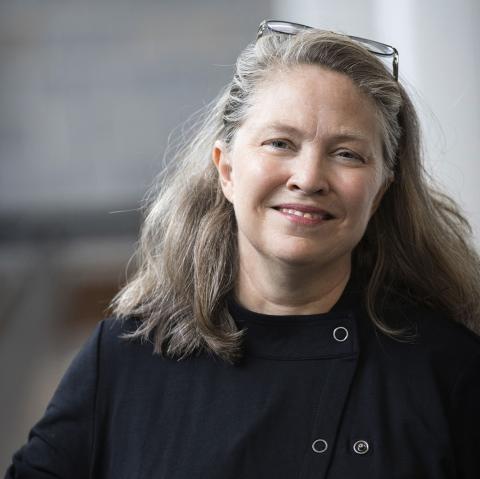
Phoebe Crisman
VerifiedUniversity of Virginia · Global Policy Studies
Active 2006–2023
About
Phoebe Crisman is a Professor of Architecture at the University of Virginia, where she teaches design studios and lectures on architectural theory, urbanism, and sustainability. She has directed the pan-university Global Studies program from 2019 to 2025 and currently directs the Global Environments + Sustainability concentration within Global Studies, along with the Minor in Global Sustainability and the larger Global Sustainability Initiative. Educated at the Harvard Graduate School of Design and Carnegie Mellon University, she conducted post-graduate research as a Fulbright Fellow in the Netherlands. With over thirty years of professional experience as a licensed architect and urbanist, Crisman has practiced in Chicago, Cambridge, and Hong Kong, and established Crisman+Petrus Architects. Her professional work includes projects such as the Massachusetts Museum of Contemporary Art (MASS MoCA), the Discovery Museum, and Urban Bridges, which have been widely published and awarded. Her research and practice focus on designing sustainable relationships between cultures and built environments, especially in overlooked places and with underserved populations. She employs ecological and cultural sustainability strategies across multiple scales, investigating complex relationships between human inhabitation, environmental restoration, and sustainability education. Her international research includes the India Initiative, which explores challenges and opportunities in Indian megacities and villages, working from city to architectural detail. Crisman has authored numerous peer-reviewed book chapters and essays on topics such as environmental education, urban wetlands, and architecture's social and ethical considerations. She has also co-edited books on climate action and the value of design, and co-authored a textbook on global sustainability. Crisman’s design practice explores eco-effective strategies involving infrastructure, land use, site specificity, and community engagement. Notable projects include sustainable waterfront revitalization efforts along Virginia’s Elizabeth River, the transformation of industrial complexes into cultural institutions, and off-the-grid structures like the Wetland Learning Lab and Beazley River Academy. She led the design and fabrication of the Learning Barge, a floating environmental education station, which has received multiple awards and is actively used for educational programs. Recognized for her innovative teaching, she has received awards from the AIA and other organizations, and has taught globally through programs like Semester at Sea. She has served in leadership roles within academic and professional organizations, including the ACSA and NAAB, and is involved with the UVA South Asia Center and the UVA Press Board of Directors.
Research topics
- Sociology
- Environmental planning
- Environmental resource management
- Geography
- Public relations
Selected publications
Teaching through an Indigenous Ecologies Lens: Co-designing with Dakota and Xhosa Communities
2023-01-01
articleOpen access1st authorCorrespondingHow can architectural pedagogy engage climate change and other global challenges as we teach our students to design specific, sustainable buildings and places where all species can thrive? How can we ethically collaborate across diverse disciplines, cultures, and geographies? This paper explores my experiences at the University of Virginia devel-oping an Indigenous Ecologies pedagogy, which combines place-based learning with participatory action research, Traditional Ecological Knowledge (TEK), and collaborative design methods. Students in my transdisciplinary seminars and studios collaboratively designed a Dakota Cultural Center with the Sisseton Wahpeton Oyate on their Lake Traverse Reservation in South Dakota, and The Black Power Station with a Xhosa artist/activist collective in Makhanda, South Africa. University students developed cultural competency, environmental literacy, and new ways of co-producing knowl¬edge, including participatory cultural mapping, storytelling, and practices of decolonization. Combining TEK with norma¬tive architectural knowledge and methods can produce richer epistemologies, informed choices about building materials, and holistic strategies for climate change adaptation. This paper compares pedagogical strategies and contributes to socio-ecological systems research in architecture. These teaching experiments through an Indigenous Ecologies lens sought to change the way students learn to make the world, through empathy, imagination, and activism.
2022-08-04
book-chapter1st authorCorrespondingArchitecture is inherently generous as an idea, since buildings provide shelter, support dwelling, and foster human gathering. Yet the practice of architecture and the buildings produced are often far from that ideal. In the case of co-design and other forms of collaborative practice, however, generosity is a foundational concept. University architecture programmes are perfectly positioned to share architectural knowledge and skills with communities that lack adequate resources and access to design. Engaged design research and live projects become reciprocal acts of sharing and generosity. This chapter examines the benefits and challenges of a co-design process developed by a transdisciplinary team of faculty and students at the University of Virginia. They collaborated with citizens of the Sisseton Wahpeton Oyate, a Native American Dakotah tribe, to co-design a sustainable Cultural Centre on their Lake Traverse Reservation. Beyond the architecture, they sought to contribute to the economic development, cultural flourishing, and political sovereignty of the tribe. The generosity embodied within this co-design project was not structured as a gift between benefactor and recipient, but rather as a process of exchange and mutual expansiveness between two diverse communities that each shared their knowledge about culture, geography, architecture, and ways of being in the world.
Confederate War Grief Transformed: the Openness of Memorials to New Meanings
2018-02-22
articleOpen access1st authorCorrespondingCivil War memorials in the United States represent the difficult national memory of a still contested internecine war over slavery, social equity, and public values. Today there is a heated debate about physical monuments honoring Confederate leaders and soldiers. For many, the original social memory has disappeared and meanings attributed to them have shifted from association with war dead, or the cult of the “lost cause,” to symbols of slavery and white supremacy. Their forms are open to new interpretations connected to human subjectivity and situatedness. Do these confederate memorials glorify racism or absorb the historical memory of grief? This paper examines the ongoing Confederate war memorial debate as evidence of the powerful role of monuments in the city and their changing meaning.
Il mutato lutto della Guerra di Secessione: l’apertura dei memoriali a nuovi significati
IN_BO. Ricerche e progetti per il territorio, la città e l'architettura · 2018-07-10
article1st authorCorrespondingI memoriali della Guerra Civile negli Stati Uniti rappresentano la complessa memoria nazionale di una guerra intestina, tutt’ora contestata, su questioni di schiavitu, equita sociale e valori pubblici. Oggi si assiste a un acceso dibattito sui monumenti che onorano i comandanti e i soldati confederati. Per molti, la memoria sociale originale e scomparsa e i significati ad essi attribuiti si sono spostati dalla relazione con i caduti di guerra, o dal culto della “causa persa”, a simboli di schiavitu e di supremazia bianca. Le loro forme sono aperte a nuove interpretazioni legate alla soggettivita umana e alla loro localizzazione. Questi memoriali glorificano il razzismo o assorbono la memoria storica del lutto? Questo articolo esamina il dibattito in corso sui memoriali della Guerra di Secessione, come prova del ruolo potente dei monumenti nella citta e del loro mutevole significato.
Designing for Urban Coastal Resilience
ODU Digital Commons (Old Dominion University) · 2017-01-01
article1st authorCorresponding2014-11-20 · 5 citations
book-chapter1st authorCorrespondingThis chapter is a critical examination of the architecture/s of informal cities. Informal cities will house the majority of the world’s urban population by the middle of this century. The scale of this new development is unprecedented in its scale, every week another million people arrive to set up home in the informal cities of the world. Each year, it is the equivalent of building a city the combined size of London, Paris, Rome, New York, Tokyo, Beijing and Sydney. Despite its superabundance, there is relatively little research on the architectural qualities of these settlements. The paper sets out some of the defining characteristics of informality from an architectural perspective, and some lessons learned that could be deployed in ‘formal’ architecture.
eScholarship (California Digital Library) · 2014-01-01
articleOpen access1st authorCorrespondingReflections on a Drawing Copyright Information: All rights reserved unless otherwise indicated. Contact the author or original publisher for any necessary permissions. eScholarship is not the copyright owner for deposited works. Learn more at http://www.escholarship.org/help_copyright.html#reuse Phoebe Crisman and Sanda Iliescu Reflections on a Drawing Every day for two-and-a-half years artist Sanda Iliescu made a selfportrait, observing her face in the reflective medium of a mirror, windowpane, or metal surface. Reflection—the world reversed—and self-reflection based on past and future events are essential to these self-portraits, which she has titled Timeline. While each is an artwork unto itself and fixed in time, together the portraits form a timeline of the artist’s ephemeral expressions and an investigation into ways of drawing. As a series, this project rejects the concept of the portrait as a static or definitive image: each drawing opens itself to interpretation through the memory of those that preceded it. Nostalgia, originating in the Greek neisthai, means “to return.” Iliescu’s series of self-portraits return again and again to the subject matter of self, but a self that is ever-changing. “Even after many years and much aging, an essence endures,” she says. “Each face carries a sort of unique weight—a unique way of looking at the world. This essence remains, while features, movements, and attitudes shift.” Titled “Monday, June 18, 1996,” the portrait reproduced here is a palimpsest. By literally drawing over and over the same piece of paper, Iliescu transforms it, each new layer of drawing adding new readings, memories, and interpretations. Iliescu is fascinated with the human face. 163 Phoebe Crisman and Sanda Iliescu The same could be said of buildings, and that is why we visit buildings again and again. Each building carries a sort of unique weight – a unique way of looking at the world. This essence remains, while features, movements, and attitudes shift. Buildings, like faces, express and record changes over time. While human occupation, material weathering and collective memories may transform their outward appearance, their essence remains and compels us to both reflect on and experience them anew. Charlottesville, VA January 12, 2014 [Chapter figure on title page by Sanda Iliescu, Timeline: June 18, 1996 ink, watercolor & gouache on paper 12 x 10 inches (collection: London, UK) courtesy of Gallery MOLLY KROM, New York, NY. Chapter figure from deviantART.com by Retoucher07030]
Health and the Environment: Shaping Policy and Place through Community Academic Partnerships
ARCC Conference Repository (Architectural Research Centers Consortium) · 2013-01-01
articleOpen access1st authorCorrespondingInnovative pedagogical models in architectural education can educate practitioners, policymakers, and the public about the crucial relationship between public health and the built environment. This paper describes an interdisciplinary design research methodology that works with community partners to identify opportunities, design sustainable projects that inspire environmental stewardship, and develop implementation strategies. Civic engagement to influence public policy is an essential aspect of this approach to academic research. In collaboration with the City of Portsmouth, non-profit environmental groups, Portsmouth public schools and community partners, University of Virginia faculty and students from architecture, art and medicine investigated the complex relationship between human health, environmental restoration, and sustainability education through the design of a forty-acre wetland park. The Paradise Creek Nature Park will co-exist with contaminated industrial sites and an economically challenged and racially diverse neighborhood. Students designed the Park and its Wetland Learning Lab and Rainwater Filtration Pavilion to engage urban kids in hands-on learning. There were several research goals: create a place that increases the sense of well-being, economic vitality and opportunity for outdoor exploration for all ages; design green pavilions that educate visitors about sustainability; make a place where citizens may rediscover the healing respite of a healthy river; and create strategies for industry and natural ecosystem to co-exist in harmony. The research considered complex social, economic, ecological and architectural issues across scales. The design manifests an inventive educational agenda that teaches about sustainabledwelling, environmental restoration and human health. This design research project establishes a model for university and community collaboration that is capable of changing public policies, while fostering a commitment to environmental ethics and sustainable practices by connecting academic learning with the students’ desire to make a positive difference in the world.
Global Cultures and Architecture Education: The Case of the India Initiative
ARCC Conference Repository (Architectural Research Centers Consortium) · 2013-07-29
articleOpen access1st authorCorrespondingHow is architectural education enriched by the seemingly peripheral voices of diverse global cultures?How does the process of creating design propositions within unfamiliar cultures and sites unknown encourage students to question their own assumptions and methods?In order to explore these questions, a research project methodology was created to shift the normative architecture studio pedagogical structure, content and location to specifically examine transformations in student learning.Several theoretical concepts support this work, including spatial dislocation, experiential learning and the bodily senses, reflection, and constructed knowledge.University of Virginia Professors Phoebe Crisman and Peter Waldman established the India Initiative as an interdisciplinary research and teaching program to study environments constructed by the diverse cultures of India and develop sustainable strategies for future development.A complex mix of religions, ethnicities, languages, geographies, arts and architecture, India is a crucial location for the contemporary study of architecture and urban sustainability.India is the world's largest democracy with a burgeoning population experiencing massive rural to urban migration and growing economic disparity.Widespread environmental degradation and natural resource depletion plague the country.Nevertheless, there is much to be learned from a close study of effective practices that have emerged from a combination of necessity and ingenuity in the Indian built environment.Each year of the five-year study will focus on one of Hindu elements or panchabhuta: earth, water, air, fire and ether.From the enduring village to the emergent megacity, and across scales from city to the architectural detail, the research seeks a deep and synthetic understanding of sustainable approaches to infrastructure systems, landscapes and architecture.The long-term research goal is a study of the intertwined aspects of environmental design and social equity.This paper formulates findings from the first year of the India Initiative.
2011-10-09
article1st authorCorresponding
Frequent coauthors
- 1 shared
Sanda Iliescu
- 1 shared
Carla Lynne Jones
Education
- 1991
Master of Architecture in Urban Design, with distinction, Graduate School of Design
Harvard University
- 1984
Bachelor of Architecture, Architecture, College of Fine Arts
Carnegie Mellon University
Awards & honors
- Journal of Architectural Education Best Design as Scholarshi…
- Crisman+Petrus Architects received the EDRA/Places Planning…
- NCARB Prize for Creative Integration of Practice and Educati…
- National Student Collaborative Design Award from the America…
- Go Green Honor Award from the James River Green Building Cou…
- Resume-aware match score
- Save to shortlist
- AI-drafted outreach
See your match with Phoebe Crisman
PhdFit ranks faculty by your research interests, methods, and publications — grounded in their actual work, not templates.
- Free to start
- No credit card
- 30-second signup