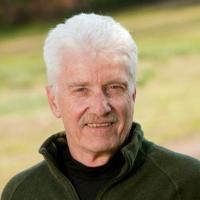
Philip J. Cook
· ITT/Terry Sanford Distinguished Professor Emeritus of Public Policy StudiesVerifiedDuke University · Social Policy
Active 1951–2024
Research topics
- Medicine
- Computer Science
- Political Science
- Sociology
- Criminology
- Psychology
- Psychiatry
- Law
- Geography
- Business
- Mathematics education
- Economic growth
- Environmental health
- Engineering
- Economics
- Medical education
Selected publications
Not Too Late: Improving Academic Outcomes among Adolescents
American Economic Review · 2023 · 67 citations
- Computer Science
- Mathematics education
- Psychology
Improving academic outcomes for economically disadvantaged students has proven challenging, particularly for children at older ages. We present two large-scale randomized controlled trials of a high-dosage tutoring program delivered to secondary school students in Chicago. One innovation is to use paraprofessional tutors to hold down cost, thereby increasing scalability. Participating in math tutoring increases math test scores by 0.18 to 0.40 standard deviations, and increases math and nonmath course grades. These effects persist into future years. The data are consistent with increased personalization of instruction as a mechanism. The benefit-cost ratio is comparable to many successful early childhood programs. (JEL H75, I21, I24, I26, I32, J13, J15)
Oxford University Press eBooks · 2020 · 28 citations
1st authorCorresponding- Political Science
- Sociology
- Political Science
No topic is more polarizing than guns and gun control. From a gun culture that took root early in American history to the mass shootings that repeatedly bring the public discussion of gun control to a fever pitch, the topic has preoccupied citizens, public officials, and special interest groups for decades. In this thoroughly revised second edition of The Gun Debate: What Everyone Needs to Know® noted economist Philip J. Cook and political scientist Kristin A. Goss delve into the issues that Americans debate when they talk about guns. With a balanced and broad-ranging approach, the authors thoroughly cover the latest research, data, and developments on gun ownership, gun violence, the firearms industry, and the regulation of firearms. The authors also tackle sensitive issues such as the impact of gun violence on quality of life, the influence of exposure to gun violence on mental health, home production of guns, arming teachers, the effect of concealed weapons on crime rates, and the ability of authorities to disarm people who aren’t allowed to have a gun. No discussion of guns in the U.S. would be complete without consideration of the history, culture, and politics that drive the passion behind the debate. Cook and Goss deftly explore the origins of the American gun culture and the makeup of both the gun rights and gun control movements. Written in question-and-answer format, this updated edition brings the debate up-to-date for the current political climate under Trump and will help readers make sense of the ideologically driven statistics and slogans that characterize our national conversation on firearms. This book is a must-read for anyone interested in getting a clear view of the issues surrounding guns and gun policy in America.
Children drinking private well water have higher blood lead than those with city water
Proceedings of the National Academy of Sciences · 2020 · 92 citations
Senior authorCorresponding- Environmental health
- Business
- Medicine
< 0.01) of elevated blood Pb, compared with children in houses served by a community water system that is regulated under the Safe Drinking Water Act. This increased Pb exposure is likely a result of corrosion of household plumbing and well components, because homes relying on private wells rarely treat their water to prevent corrosion. In contrast, corrosion control is required in regulated community water systems. These findings highlight the need for targeted outreach to prevent Pb exposure for the 42.5 million Americans depending on private wells for their drinking water.
Frequent coauthors
- 145 shared
Jens Ludwig
National Bureau of Economic Research
- 29 shared
Anthony A. Braga
University of Pennsylvania
- 24 shared
Charles T. Clotfelter
Duke University
- 15 shared
Kenneth A. Dodge
Center for Child and Family Health
- 14 shared
Kristin A. Goss
Case Western Reserve University
- 14 shared
Clara G. Muschkin
Duke University
- 13 shared
Michael J. Moore
Tulane University
- 13 shared
Harold A. Pollack
Chicago Department of Public Health
Similar researchers at Duke University
- Resume-aware match score
- Save to shortlist
- AI-drafted outreach
See your match with Philip J. Cook
PhdFit ranks faculty by your research interests, methods, and publications — grounded in their actual work, not templates.
- Free to start
- No credit card
- 30-second signup