
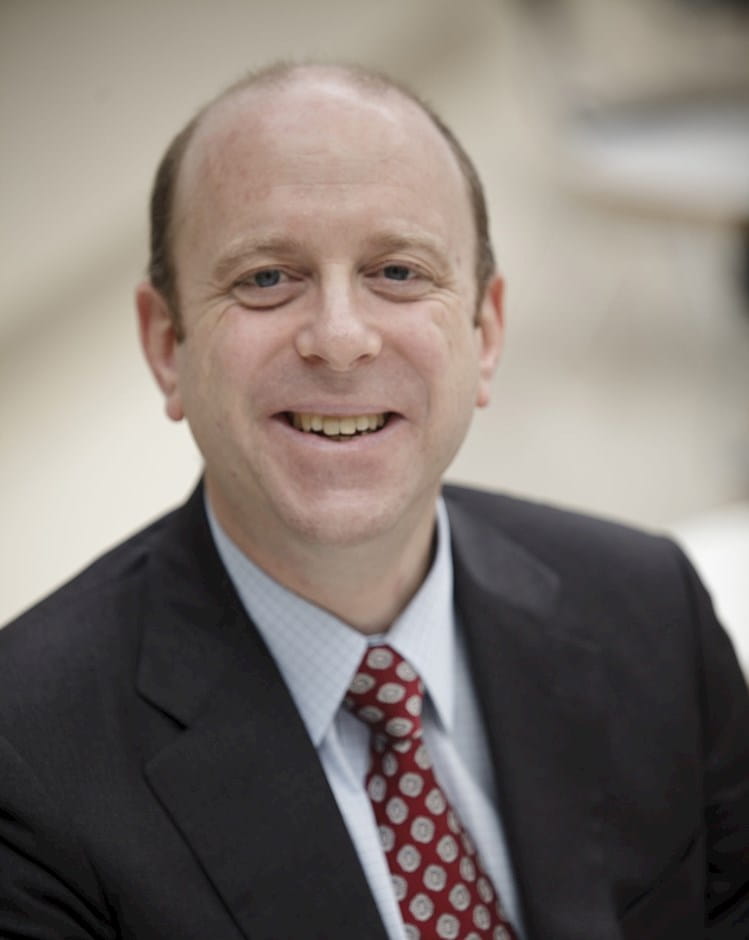
Philip G. Berger
· Wallman Family Professor of AccountingUniversity of Chicago · Accounting
Active 1993–2025
Academic metrics are sourced from OpenAlex and public funding records; values may differ from Google Scholar.
About
Philip G. Berger is the Wallman Family Professor of Accounting at the University of Chicago Booth School of Business. He served on the faculty of the Wharton School from 1991 to 2002, including as a tenured Associate Professor, before joining Booth as a tenured Full Professor on July 1, 2002. His research focuses on financial reporting and corporate finance, and he has published in all the top peer-reviewed accounting and finance journals. Berger has been an editor of the Journal of Accounting Research for 23 years and has chaired or served on the dissertation committees of many top accounting students from Booth, who now work at leading institutions such as MIT, Wharton, Stanford, Columbia, Yale, NYU, Ohio State, Washington University, UCSD, among others. He was awarded the 2025 FARS Distinguished PhD Mentoring Award. Berger has held leadership roles including Deputy Dean for Booth’s part-time MBA programs and Director of Booth’s Chookaszian Accounting Research Center. His teaching interests encompass accounting for entrepreneurs, financial accounting, and empirical accounting research, with experience teaching undergraduate, MBA, executive, and Ph.D. courses. He has received numerous teaching awards, including the 2011 Phoenix Prize at Chicago Booth.
Research topics
- Political Science
- Business
- Accounting
- Actuarial science
- Economics
- Law
- Finance
- Management
Selected publications
Segment Profitability and the Proprietary and Agency Costs of Disclosure
The Accounting Review · 2007-07-01 · 494 citations
article1st authorCorrespondingWe exploit the change in U.S. segment reporting rules (from SFAS No. 14 to SFAS No. 131) to examine two motives for managers to conceal segment profits: proprietary costs and agency costs. Managers face proprietary costs of segment disclosure if the revelation of a segment that earns high abnormal profits attracts more competition and, hence, reduces the abnormal profits. Managers face agency costs of segment disclosure if the revelation of a segment that earns low abnormal profits reveals unres…
Journal of Accounting and Economics · 2011-01-13 · 208 citations
article1st authorCorrespondingCommercial lending concentration and bank expertise: Evidence from borrower financial statements
Journal of Accounting and Economics · 2017-09-08 · 147 citations
articleOpen access1st authorDid the Dodd–Frank Whistleblower Provision Deter Accounting Fraud?
Journal of Accounting Research · 2022 · 81 citations
1st authorCorrespondingABSTRACT We examine the deterrence effect of the Dodd–Frank whistleblower provision on accounting fraud. To facilitate causal inference, we use state False Claims Acts (FCAs), under which whistleblowing about accounting fraud at a firm invested in by a state's pension fund can result in monetary rewards from that state's government. We divide our sample into firms exposed and not exposed to whistleblowing risk from a state FCA during the 2008–2010 period that preceded the 2011 SEC implementation…
SSRN Electronic Journal · 2009-01-01 · 77 citations
articleOpen access
Frequent coauthors
- 13 shared
Eli Ofek
New York University
- 8 shared
Rebecca N. Hann
University of Maryland, College Park
- 6 shared
Andrew W. Alford
Goldman Sachs (United States)
- 3 shared
Jung Ho Choi
Stanford University
- 3 shared
Steven J. Monahan
University of Utah
- 3 shared
Sorabh Tomar
Southern Methodist University
- 3 shared
Daniel A. Bens
- 2 shared
Charles Ham
Indiana University Bloomington
Education
Ph.D.
University of Chicago
Other
University of Chicago
B.A.
University of Saskatchewan
Awards & honors
- 2011 Phoenix Prize
- 2025 FARS Distinguished PhD Mentoring Award
- Honoree of the Distinguished Alumni Award
Similar researchers at University of Chicago
- Resume-aware match score
- Save to shortlist
- AI-drafted outreach
See your match with Philip G. Berger
PhdFit ranks faculty by your research interests, methods, and publications — grounded in their actual work, not templates.
- Free to start
- No credit card
- 30-second signup