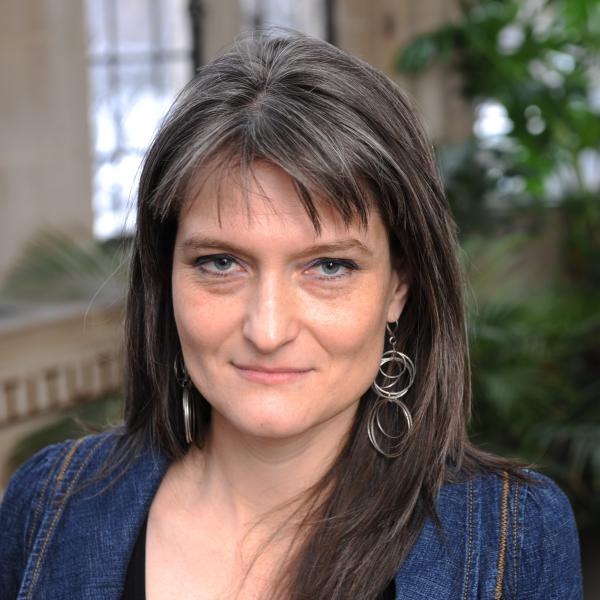
Petra Goedegebuure
· Associate Professor of HittitologyUniversity of Chicago · Middle Eastern Studies
Active 1999–2026
About
Petra Goedegebuure is a faculty member at the University of Chicago, affiliated with the Institute for the Study of Ancient Cultures and the Department of Near Eastern Languages and Civilizations (NELC). Her research interests encompass four fields of linguistics, primarily applied to the Anatolian languages and to a lesser extent to West-Semitic languages. She focuses on discourse cohesion, deixis, and information structure, often exploring their interrelations. Additionally, she investigates language change in contact situations involving Hattic-Hittite, Hattic-Akkadian, Hittite-Luwian, and Hittite-Hurrian interactions. Goedegebuure aims to describe Hittite at the level of pragmatics, especially information structure and deixis, to enhance understanding of texts and the communicative goals of their authors. She studies how word order and sentence structure in Hittite reflect principles of information structure, such as the positioning of corrective and additive focus constituents. Her work also seeks to develop methods for applying modern linguistic theories to dead languages, thereby allowing these languages to inform and refine linguistic theory. Her research includes philological analysis, typological studies, and the examination of language contact phenomena, contributing to the broader understanding of Anatolian linguistics and its historical development.
Research topics
- History
- Humanities
- Philosophy
- Geography
- Art
- Classics
- Ancient history
- Linguistics
Selected publications
Bad Hittite, Good Hattian: Linguistic Interference in the Old Hittite Oracle KBo 18.151
Proceedings of the Annual UCLA Indo-European Conference · 2026-01-21
articleOpen access1st authorCorrespondingThe establishment of the Hittite-speaking court in Hattusa in the 17th century BCE must have led to close contact of speakers of Hattian, Luwian, and newly introduced Hittite in and around Hattusa, if not beyond. In such a situation we would expect influence from Hattian onHittite beyond borrowed lexemes. However, there is no evidence of Hattian interference with the grammar of Hittite that can be extracted from the documents of the court, our main source of Hittite. Nonetheless, a rare document, the oracle inquiry KBo 18.151, does exhibit such influence from Hattian. As has generally been accepted, this document, dated to Hattusili I’s reign, contains orthographic anomalies pointing to Hattian phonetic interference reflecting the speech of a native speaker of Hattian, perhaps representing the general populace. But there is more interference. The current study reveals how the incorrect use of Hittite case endings is best explained as resulting from pattern imposition of the Hattian case system. The language of KBo 18.151 might thus reflect the type of Hittite that resulted from acquisition of Hittite as a second language. This implies that Old Hittite society was diglossic, with Hittite predominantly as the elite language, while Hattian and possibly Luwian were spoken by the general populace. KBo 18.151 provides an invaluable glimpse into the initial phase of Hittite-Hattian language contact from the perspective of a native Hattian speaker.
The Luwian word for ‘city, town’
Anatolian Studies · 2024 · 1 citations
1st authorCorresponding- History
- Geography
- Linguistics
Abstract The Luwian corpus written in Anatolian hieroglyphs consists of about 300 inscriptions. Though this is sufficiently large that Luwian is mostly understood, not all words are known in full writing. One of those is the word for ‘city, town’. Since cities play an important role in Luwian monumental inscriptions, it is remarkable that the word for such a central concept is still unknown. Using a multi-modal approach, combing orthographic, morphological, iconographical and archaeological analysis, I argue that the word for ‘city’ is /allamminna/i-/ ‘fortified settlement > city tout court ’, and that the hieroglyph for ‘city’ depicts a merlon, a raised section of a fortification’s battlement, thus linking it to the Hittite tower-vessels that express the relationship between city and fortifications in a material way. The identification of /allamminna/i-/ also impacts the analysis of other Hittite and Luwian words that are hitherto not well understood or not understood at all. Furthermore, it increases our understanding of aspects of the material world and of the cultural and linguistic interactions between Anatolian and Syrian societies. Finally, it illustrates the impact of Luwian and Luwians on Hittite society.
The Encyclopedia of Ancient History · 2023-06-13
other1st authorCorrespondingAbstract Hattic was spoken by the pre‐Hittite population of Central Anatolia of the late third to mid‐second millennium bce. Never recorded in writing by its native speakers, it was only preserved by the Hittites for cultic purposes. With the help of a few bilingual texts, the language has been only partially deciphered and many questions of lexicon and grammar remain. Both its syntactic alignment and its genetic affiliation are under debate: Hattic is classified as accusative, ergative, active, or combinations thereof, and it is considered an isolate, Northwest Caucasian, or a branch of Sino‐Caucasian.
The Encyclopedia of Ancient History · 2023-06-13
other1st authorCorrespondingAbstract Labarna, with its variant Tabarna, was a royal title borne by all Hittite kings, with the exception of Suppiluliuma I and Mursili II. As of the mid‐late thirteenth century bce it was written with a special Anatolian hieroglyph on royal seals and in Luwian inscriptions. Its etymology is still under debate. Both Hattic and Luwian origins have been proposed.
Anatolian Studies · 2020 · 48 citations
1st authorCorresponding- Humanities
- Ancient history
- Art
Abstract In this article, the authors present a first edition of the recently found inscription TÜRKMEN-KARAHÖYÜK 1, propose an eighth-century dating and explore some of the consequences of this date for the group of inscriptions mentioning Hartapu, son of Mursili.
ANK volume 70 Cover and Back matter
Anatolian Studies · 2020-01-01
paratextOpen accessAn abstract is not available for this content so a preview has been provided. As you have access to this content, a full PDF is available via the ‘Save PDF’ action button.
Journal of Near Eastern Studies · 2017-03-29
article1st authorCorrespondingThe texts, presented in chapter 2, are organized according to genre: bilinguals, funerary and commemorative inscriptions, building inscriptions, dedicatory inscriptions, and miscellanea (such as the AŠŠUR letters). Payne’s focus on the texts as literary works is also visible in the individual introductions, footnotes, and especially the grouping of sentences in paragraphs in the translations. The translations are fortunately executed in idiomatic English instead of following the original Luwian sentence structure (a practice which is relatively common in specialist publications but which may obscure the meaning of the text as intended by the ancient author). CHLI often leaves words untranslated but still provides translations in the commentaries. Payne has usually incorporated these suggestions in her translation, duly provided with questions marks. This too has increased text comprehension. She additionally has improved the translations based on her own insights and post-CHLI literature.
2015-01-02 · 44 citations
book1st authorCorrespondingThe Hittite Demonstratives: Studies in Deixis, Topics and Focus
2014-09-01 · 10 citations
bookOpen access1st authorCorrespondingZeitschrift für Assyriologie und Vorderasiatische Archäologie · 2013-01-01 · 55 citations
article1st authorCorresponding
Frequent coauthors
- 1 shared
W.H. van Soldt
- 1 shared
Beate Pongratz‐Leisten
- 1 shared
Nicole Brisch
- 1 shared
Fatma Şahin
- 1 shared
D.J.W. Meijer
- 1 shared
Ben Haring
- 1 shared
D. T. Potts
New York University
- 1 shared
Cécile Michel
Awards & honors
- Several projects have been awarded fellowships from the Neth…
- Resume-aware match score
- Save to shortlist
- AI-drafted outreach
See your match with Petra Goedegebuure
PhdFit ranks faculty by your research interests, methods, and publications — grounded in their actual work, not templates.
- Free to start
- No credit card
- 30-second signup