Resume-aware faculty matching

Find professors who actually fit you

Upload your resume. Four AI agents analyze your background, rank the faculty who fit, inspect their recent research, and help you draft outreach — grounded in their actual work, not templates.

Free to startNo credit cardCancel anytime
Top matches Balanced preset
Dr. Sarah Chen
Stanford · Interpretability · NLP
91
Dr. Marcus Holloway
MIT · Robotics · RL
84
Dr. Aisha Okonkwo
CMU · Fairness · HCI
82
Nova · Professor Researcher · re-ranking top 20…
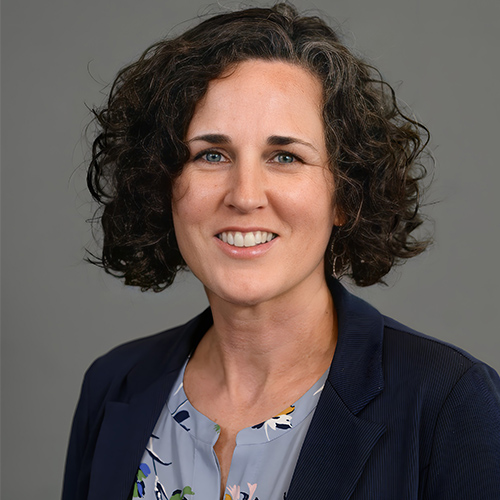
Paula McAvoy

Paula McAvoy

· Assoc ProfessorVerified

North Carolina State University · Health, Physical Education, and Recreation

Active 2008–2025

h-index8
Citations945
Papers4212 last 5y
Funding
See your match with Paula McAvoy — sign in to PhdFit.Sign in

About

Paula McAvoy is an associate professor in the College of Education at NC State University, where she serves as the PhD coordinator for the Social Studies Program Area of Study. She earned her PhD in philosophy of education in 2010 from the University of Wisconsin-Madison's Department of Educational Policy Studies. Her professional background includes work as an assistant professor at Illinois State, an associate program officer at the Spencer Foundation, and as the Director of the Center for Ethics and Education at UW-Madison. Prior to her university career, she taught high school social studies for ten years at the Foothill Middle College Program in Los Altos, California. Her research focuses on philosophical and empirical questions concerning the relationship between schools and democratic society, particularly addressing educational aims and practices suitable for preparing young people for non-ideal democratic conditions and how teachers and administrators make professional judgments amid such challenges. Dr. McAvoy has contributed to the field through her work on democratic education, political discussions in classrooms, and ethical considerations in teaching, and she has received multiple awards including the Grawemeyer Award in Education and the Outstanding Book Award from AERA.

Research topics

  • Sociology
  • Political Science
  • Social Science
  • Psychology
  • Law
  • Social psychology
  • Public administration
  • Public relations
  • Applied psychology
  • Mathematics education
  • Environmental ethics
  • Developmental psychology
  • Engineering
  • Engineering ethics

Selected publications

  • Productive Discussion across Political Differences: Understanding Students’ Experiences with Comfort and Discomfort within Structured Discussions of Public Policy Issues

    Democracy & Education · 2025-05-14 · 1 citations

    articleOpen access

    This study investigates the effectiveness of two pedagogical strategies—deliberation and debate—in fostering productive political discussions among high school students, with a focus on overcoming affective polarization. Paying attention to students’ comfort, engagement, and willingness to participate, this study employs a mixed-method approach using data from surveys, observations, and interviews with students participating in a civic immersion program in Washington, DC. Using deliberative theory and the concept of “productive classroom discussion across political differences,” the research explores the extent to how students perceive each strategy as productive, as well as their experiences of comfort and productive and unproductive discomfort. Additional attention was paid to how identity factors such as ideology, gender, race/ethnicity, and social class influence student experiences. Results of the study indicate that deliberations tend to enhance feelings of comfort and mutual respect, while debate garnered more participation and disagreement. We found that negative feelings with debate were often related to productive discomfort. Emphasizing the importance of discussion design in cultivating productive and unproductive discomfort, we provide insight into how teachers can support student engagement in political discourse and offer practical guidance in fostering inclusive learning environments as a means to overcome affective polarization.

  • Acknowledging the populist experience: Commentary on <i>Teaching Honesty in a Populist Era</i>

    Theory and Research in Education · 2025-06-09

    articleSenior author

    In Teaching Honesty in a Populist Era , Sarah Stitzlein identifies America’s recent ideological shift toward populism as the root of our crisis in truth and honesty. At the classroom level, Stitzlein proposes the pedagogical approach ‘pragmatist inquiry’, which she argues will resolve the contradictions between rational and emotional notions of truth and put Americans on a path toward authentic, collective truth-seeking. While we see value in pragmatist inquiry, we pose alternative approaches for teachers tackling populism in the post-truth epoch.

  • Experiencing Productive and Unproductive Discomfort in Classroom Discussion: A Study of Deliberation and Debate

    2024-01-01

    article1st authorCorresponding
  • Theorizing <i>to</i> Cases: A Methodological Approach to Qualitative Normative Cases

    Educational Theory · 2024-01-07 · 3 citations

    articleOpen accessSenior authorCorresponding

    Abstract In this article, Lauren Gatti and Paula McAvoy explain the interdisciplinary methods that they used for developing a theory of professional judgment for teachers that they call the Ethical Long View. In developing the theory, they engaged in empirical inquiry through the solicitation of dilemmas from practicing teachers using an online survey (N = 127) and follow‐up interviews with a subset of survey participants (N = 11). The interviews were developed into qualitative normative cases, which are richly described vignettes of a teacher's dilemma and thinking. In between analyzing the survey data and developing the cases was a philosophically oriented recursive process that was both iterative and interdisciplinary. The qualitative work helped the authors develop the conceptual framework for the Ethical Long View and, at the same time, positioned participants as co‐constructors of the ethical theory. This research draws on the tools of both applied philosophy and social science, but it belongs exclusively to neither.

  • Symposium Introduction: Education for Democratic Sustainability and Transformation

    Educational Theory · 2024-10-01

    articleOpen access1st authorCorresponding

    This symposium was initiated by Michele Moses to coincide with her term as President of the Philosophy of Education Society in 2023 under the conference theme “Democratic Education in Undemocratic Times.” In her 2023 Presidential Address, Moses urged philosophers of education to respond to what she framed as a democratic “crisis” in the United States and around the world.1 Moses was referring specifically to legislation coming from the political right that aims to halt efforts such as diversity, equity, and inclusion (DEI) programs seeking to create more inclusive schools and the teaching of race or other so-called “divisive issues.” She also expressed concern about the “post-truth” culture that undermines democracy by spreading misinformation in a (quite successful) strategy that leaves the public unable to agree on the facts that matter for solving our most complex social problems. In the address, Moses argued that “As scholars we have a special responsibility to use our expertise to counter antidemocratic forces like these. In particular, as philosophers of education we can do what we do so well: analyze the debates, clarify key concepts, and offer recommendations towards democracy-sustaining — or perhaps more importantly — democracy-transforming education.”2 This symposium takes up Moses's call. Papers in the symposium were selected from those submitted through a call for proposals. Early drafts were developed through a preconference workshop cosponsored by Educational Theory and the Philosophy of Education Society at the society's 2023 annual conference in Chicago, Illinois. The preconference was led by Paula McAvoy, Rebecca M. Taylor, and Terri S. Wilson. In addition to Paula McAvoy, Li-Ching Ho, Demetri Morgan, and Tony Laden served as lead discussants on the paper drafts. Following the preconference, and formal comments from its leaders, authors revised and resubmitted their papers for final review. The resulting collection addresses the following questions: In the context of “undemocratic times,” what are the aims and practices of democracy-sustaining education? What responsibilities do educators have to enact these forms of democratic education? What ethical challenges emerge for teachers and what does good judgment require? The authors approach these questions from a diverse array of philosophical foundations, including pragmatism, liberal political philosophy, capabilities theory, queer theory, epistemic injustice, ancient philosophy, and womanism. Together, they consider democratic education across the life span, with attention to early childhood, K–12, higher education, and adult education. The first set of papers addresses the aims of democratic education. The opening article by Sarah Stitzlein offers a pragmatist view of citizenship education in the context of rising populism. Stitzlein investigates an underexamined area in citizenship education: the nature of truth.3 Comparing populist truth with pragmatist truth, she argues for an understanding of pragmatic truth that broadens citizenship education to include helping students understand the populist critique of liberal democracy and to develop the civic habit of inquiry. Next, Sheron Fraser-Burgess and Chris Higgins reject the idea that political polarization is a new phenomenon and instead interrogate whether the concept sets up “false choice” between civic unity and a fractured society.4 Instead, they draw upon views of pluralism and citizenship to argue for a form of “deep pluralism” that is attentive to psychological and social challenges of trying to be an individual within a social order. They argue for a conception of pluralism that “communicate[s] our common interest in confronting our incommensurabilities” as a path through these apparent contradictions. Last, Josh Coleman and Jon Wargo present an analysis of two policies that bear on queer civics education: one that bans LGBTQ+ content from public spaces for young children and another that requires inclusion of LGBTQ+ content in the public school history curriculum.5 By reading across these two policies, they identify hermeneutical injustices that arise in relation to both exclusionary policies and policies that aim to be inclusive. They argue that “the (Queer) Child is an organizing logic that aligns civic education with the cis-straight state.” Their critical analysis points to possibilities for reimagining queer civics education. The next set turns to the work of teachers in schools. Joy Dangora Erickson and Winston Thompson address so-called “divisive concepts” legislation and the ways in which these mandates create ethical challenges for early childhood educators.6 Their paper frames civic education as moral education and argues that early childhood is an important moment for teaching about bias and racism. They then present a qualitative case example of a kindergarten teacher navigating between a state mandate that prohibits “teaching discrimination” and what she regards as appropriate strategies for developing an inclusive civic culture in the classroom. The authors shape their analysis through a discussion of the professional, personal, and pedagogical risks that one teacher confronts as she makes decisions about her classroom practices. In an analysis of the political rhetoric surrounding so-called “anti-CRT” legislation, Jane Lo and candace moore trace the ways in which distrust of public schools is cultivated through the exploitation of natural disagreements among parents over what is taught.7 The result of this heightened distrust is that teachers and administrators often want to retreat from the democratic purposes of schools. The authors report findings from a qualitative study to discuss the ways in which teachers draw upon relational trust from the community to maintain institutional trust and continue to engage students in discussions of controversial issues. Last, Eric Torres addresses a long-standing question for teachers and philosophers: which questions should be presented to students as controversial (open for discussion), and what should be taught directively (presented as true).8 This question has increasing salience within a hyperpolarized, “post-truth” climate, because what might look like obvious facts to the teacher may be viewed as partisan political disclosure to the students. Torres takes seriously the possibility that teachers might make “bad calls” about what ought to be taught directively and defends a “practice of epistemic refocusing that involves partially shifting student attention from the issues themselves to the social and epistemic conditions.” The final pair of papers looks at democratic education for college students and adults. Turning to the role of higher education institutions, Caitlin Murphy Brust and Hannah Widmaier focus on the duty of elite colleges and universities to promote civic equality.9 They argue that in order to fulfill this duty elite colleges and universities should offer training in informal political representation, teaching their students both when and how to take on this role and how to be appropriately responsive to others' engagement as informal political representatives. They also consider the role of informal political representation in potentially ameliorating injustices experienced by students from marginalized communities that arise within elite institutions. Tony DeCesare further expands on democratic education across the lifespan with attention to adult education.10 Efforts to sustain and transform our democracy in the midst of crisis should extend beyond PK–16 schooling to consider informal democratic education opportunities for adult citizens. DeCesare theorizes adult democratic education from a foundation in the capabilities approach. He argues for the importance of two capabilities: “democratic capability and the capability to participate in [adult democratic education].” It is often tempting for some in the public to look at the state of democracy around the world and think that the solution can be found in schools and civic education. By drawing on a variety of philosophical traditions and a diverse array of educational contexts, the papers in this symposium contribute to a nuanced understanding of both the limits and possibilities of schooling for sustaining and potentially transforming democratic life. The authors provide both philosophical insights and practical pathways for fostering a more equitable, inclusive, and critically engaged democratic society, while also reckoning seriously with contemporary challenges. In doing so, they advance Michele Moses's call for democratic education that responds to today's crises, not merely by preserving democracy but by reimagining it for a more just future. PAULA MCAVOY is Associate Professor in the Department of Teacher Education and Learning Sciences at North Carolina State University; email [email protected]. Her primary areas of scholarship are democratic education, ethics and teaching, and classroom discussion. REBECCA M. TAYLOR is Assistant Professor in the Department of Education Policy, Organization and Leadership at the University of Illinois at Urbana-Champaign; email [email protected]. She uses philosophy and philosophically grounded mixed methods to investigate questions of ethics and justice in educational policy and practice.

  • Debate and Deliberation in Democratic Education

    Cambridge University Press eBooks · 2023-04-20

    book-chapterSenior author

    Debate and deliberation are two commonly promoted strategies for democratic education. Both strategies are designed to unearth different points of view and then engage in reason-giving and argumentation; in other words, they help students to recognize pluralism. When done well, both also model inquiry and deepen understanding about the issues being investigated. In this chapter, we discuss the theoretical justification for each and show how the adversarial aspect of debate engages a different set of democratic skills than the more collaborative approach of deliberation. These differences require teachers to make judgments about how best to use these strategies in the classroom. We conclude by addressing some critiques of these strategies and discuss how alternative discussion designs might overcome some of the limitations of deliberation and debate.

  • Social studies education research for sustainable democratic societies: Addressing persistent civic challenges

    Theory & Research in Social Education · 2023 · 34 citations

    • Political Science
    • Sociology
    • Political Science

    Social studies education and research can and must play a central role in sustaining democratic societies. As we commemorate the 50th anniversary of this vital journal that aims to strengthen social studies education, democratic societies face numerous serious challenges. Although today’s circumstances are unique, many of our current challenges have existed (and will continue to exist) in some form throughout the history of democracy. In this article, scholars from various sub-fields of social studies education explore how research, scholarship, and practice in the field can address seven of these persistent civic challenges: ecological sustainability, media literacy, equity and inclusion, civic engagement, political pluralism, civic competency, and sociohistorical change. Essays on each of these topics analyze relevant prior research and offer suggestions for how future research and scholarship can explore how educators can help to address these persistent civic challenges, with the goal of supporting robust participatory democracy.

  • From “contained risk taking” to “required risk taking” <b>Hard questions: Learning to teach controversial issues</b> , by Judith L. Pace, Lanham, MD, Rowman &amp; Littlefield, 2021, 226 pp., $78.00 (hardback), $36.00 (paperback), ISBN-13: 978-1475851977

    Theory & Research in Social Education · 2021-09-09

    articleSenior author
  • Can Debate and Deliberation Reduce Partisan Divisions? Evidence from a Study of High School Students

    Peabody Journal of Education · 2021 · 28 citations

    1st authorCorresponding
    • Political Science
    • Political Science
    • Psychology

    This paper presents findings from a study of high school students (N = 165) engaged in discussions of controversial political issues within Close Up Washington’s civic education program. We report findings from pre- and post surveys to investigate how the group’s views about the issues were affected by the discussion strategy they experienced. We compare two strategies: a deliberative small group activity and a team debate. We find that the deliberative strategy promoted more participation, promoted more comfort with the discussion, and resulted in more consensus within the group as shown by comparing pre- and post surveys. In the debate strategy, students reported less participation, more discomfort during the activity, and more polarized views on the post-survey compared with the pre-survey. Despite these differences, students reported enjoying each activity at about the same rates, though girls were more likely to report negative experiences. The findings suggest that using deliberative strategies in social studies classes with high political diversity may be an effective approach for mitigating the divisive attitudes that dominate the hyperpartisan context within the United States.

  • How should schools teach kids about what happened at the US Capitol on Jan. 6? We asked 6 education experts

    2021-01-11

    articleSenior author

Frequent coauthors

  • Diana Heß

    University of Wisconsin–Madison

    17 shared
  • Li‐Ching Ho

    University of Wisconsin–Madison

    3 shared
  • Brett L. M. Levy

    Albany State University

    2 shared
  • Robert J. DeMeuse

    Policy Analysis (United States)

    2 shared
  • Jane C. Lo

    Michigan State University

    2 shared
  • Joseph Kahne

    University of California, Riverside

    1 shared
  • Arine Lowery

    1 shared
  • David Campbell Diana Hess

    1 shared

Awards & honors

  • 2017 Grawemeyer Award in Education for The Political Classro…
  • 2016 AERA Outstanding Book Award for The Political Classroom
  • 2011 Outstanding Dissertation Award in the Politics of Educa…
  • 2008 Spencer Foundation Dissertation Fellowship
  • 2023 NC State University Outstanding Teacher Award
  • Resume-aware match score
  • Save to shortlist
  • AI-drafted outreach

See your match with Paula McAvoy

PhdFit ranks faculty by your research interests, methods, and publications — grounded in their actual work, not templates.

  • Free to start
  • No credit card
  • 30-second signup