
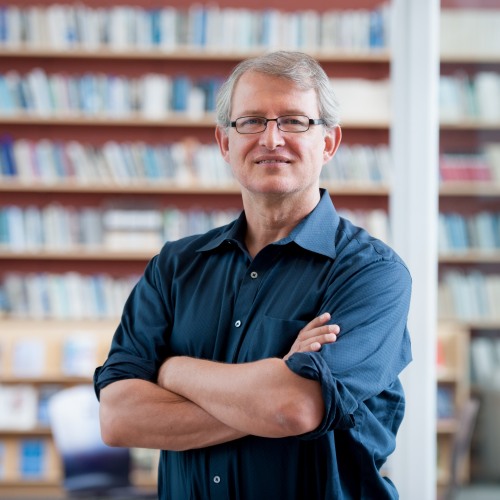
Patrick Heller
· Director, Saxena Center for Contemporary South Asia, Interim Director, Ph.D. Fellows Program, Lyn Crost Professor of Social Sciences, Professor of International and Public Affairs and SociologyBrown University · International and Public Affairs
Active 1994–2025
Academic metrics are sourced from OpenAlex and public funding records; values may differ from Google Scholar.
About
Patrick Heller is Lyn Crost Professor of Social Sciences in the Department of Sociology and the Watson Institute of International and Public Affairs at Brown University. His research focuses on the comparative study of social inequality and democratic deepening, with a particular interest in how democratic institutions and practices can foster more inclusive and participatory forms of development. Heller's work primarily examines contexts in Brazil, India, and South Africa, exploring themes such as comparative democracy, urban governance, social movements, development theory and policy, decentralization, the middle class, civil society, and state transformation. Through his extensive research, he investigates the dynamics of democratic deepening and the role of civil society and collective action in unequal societies, contributing to a deeper understanding of the political and social processes shaping development in the global South.
Research topics
- Political Science
- Sociology
- Social Science
- Computer Science
- Economics
- Law
- Geography
- Econometrics
- Mathematics
- Public administration
Selected publications
Stanford University Press eBooks · 2020 · 199 citations
This book investigates participatory budgeting—a mainstay now of World Bank, UNDP, and USAID development programs—to ask whether its reforms truly make a difference in deepening democracy and empowering civil society.
PLOS Global Public Health · 2023 · 31 citations
Senior authorCorrespondingDespite receiving less attention than high-income countries, low- and middle-income countries (LMICs) experienced more than 85% of global excess deaths during the first two years of the COVID-19 pandemic. Due to the unprecedented speed and scale of the COVID-19 pandemic, which placed large demands on government capacity, many LMICs relied on civil society organizations (CSOs) to assist in implementing COVID-19 response programs. Yet few studies have examined the critical role CSOs played in miti…
Annual Review of Sociology · 2022-04-18 · 15 citations
articleOpen access1st authorCorrespondingGiven the legacies of colonialism and the inequities of the global capitalist system, consolidated democracies in the Global South were the exception prior to the third wave of democratization in the 1970s. As democratization in the Global South grew, a first generation of work by sociologists challenged mainstream political science's preoccupation with electoral and liberal democracy and brought popular mobilization to the center of the analysis. This literature made key contributions to the de…
The social roots of the authoritarian turn in India
2021-12-13 · 7 citations
book-chapterOpen access1st authorCorrespondingIn explaining the authoritarian turn in India, analysts have pointed to electoral realignments and the rise of the BJP’s distinct brand of ethno-national populism. This chapter moves beyond these conjunctural factors on the political plane to focus on the deeper socio-cultural transformations at play. In India, democratic backsliding is fundamentally a reaction to the democratic empowerment of popular classes and lower castes of the last several decades. The authoritarian turn has been driven by…
Parties, Civil Society and Democratic Deepening: Comparing India, Brazil and South Africa
Studies in Indian Politics · 2023-06-01 · 6 citations
article1st authorCorrespondingDespite being among the most successful democracies in the Global South, India, Brazil and South Africa have all recently experienced democratic crises. I argue that these democratic crises result from the formation of social coalitions that have been willing to subvert democratic institutions and practices in order to preserve or restore their social and economic privileges. In structural terms, these reactions are tied to the unresolved problem of the incorporation of popular classes. This pro…
Frequent coauthors
- 80 shared
Gianpaolo Baiocchi
New York University
- 66 shared
Archon Fung
Harvard University Press
- 64 shared
Alejandro Velasco
University of Wisconsin–Madison
- 64 shared
Josh Lerner
Entrepreneurial Ecosystems
- 64 shared
Mareike Winchell
- 64 shared
Johana Londoño
- 64 shared
Pedro Cabán
Seton Hall University
- 64 shared
Kale Lustavali
Columbia University
Labs
Similar researchers at Brown University
- Resume-aware match score
- Save to shortlist
- AI-drafted outreach
See your match with Patrick Heller
PhdFit ranks faculty by your research interests, methods, and publications — grounded in their actual work, not templates.
- Free to start
- No credit card
- 30-second signup