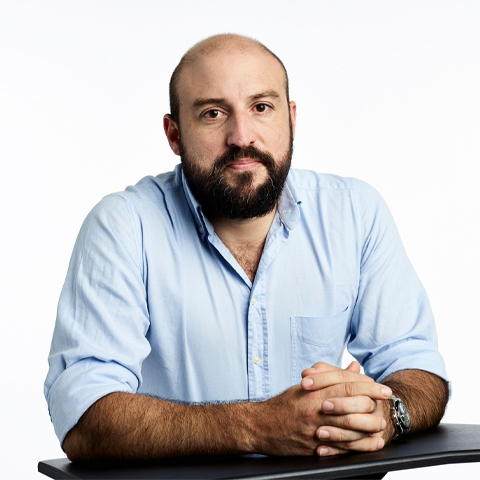
Otto Cordero
· Associate ProfessorVerifiedMassachusetts Institute of Technology · Civil & Environmental Engineering
Active 2002–2026
About
Otto X. Cordero is the principal investigator (PI) of the Cordero Lab, where his research focuses on microbial communities, eco-ecology, and the application of microbes for sustainability. His work centers on understanding the dynamics and interactions within microbial ecosystems and leveraging this knowledge to develop sustainable solutions. The lab investigates various aspects of microbial community assembly, resource utilization, and microbiome engineering, with applications ranging from human gut microbiome studies to sustainable food production in aquaculture. Otto Cordero leads a multidisciplinary team including PhD students, postdoctoral researchers, and research associates who explore topics such as spatiotemporal dynamics of microbial communities, mechanisms of polysaccharide utilization, niche partitioning, and synthetic biology approaches to augment microbial metabolism. Through this research, the Cordero Lab contributes to advancing the understanding of microbial ecology and developing innovative strategies for microbiome manipulation and sustainability.
Research topics
- Biology
- Ecology
- Evolutionary biology
- Genetics
Selected publications
Environmental Science & Technology · 2026-02-28 · 1 citations
articlePlastics are a major environmental concern due to their persistence in natural systems. Biodegradable plastics can mitigate this impact by reducing their residence time in the environment. To constrain the environmental lifetime of these materials, understanding the fundamental principles dictating their biodegradation is crucial. The work presented here probes this complexity by using a 30-member bacterial community enriched from the marine ecosystem to investigate how bacterial consortia mineralize polybutylene sebacate-co-terephthalate (PBSeT), a biodegradable aromatic aliphatic copolyester. Carbon dioxide quantification and isotopic tracing provided evidence of polymer mineralization, while monoculture phenotyping demonstrated no one bacterium could consume all polymer components. Further, coculture incubations revealed complementary functions between community members enhanced mineralization. To explain this enhanced mineralization, dissolved organic carbon and chemical product tracking were performed. Notably, depolymerization of the bulk polymer was dictated by a bacterium unable to consume all polymer components (Pseudomonas pachastrellae), requiring complementary bacteria to achieve enhanced mineralization (Pseudooceanicola nitratireducens or Peribacillus frigoritolerans). This yielded direct experimental evidence of the complementary bacterial transformations that may control polymer mineralization in the environment.
A universal surface functionalization technique to chemically enhance live microbial cells
Molecular Systems Biology · 2026-03-16
articleOpen accessSenior authorCorrespondingMicrobial surface functionalization is a powerful strategy for endowing microbes with novel, non-genetic functions. However, existing methods are often species-specific, limited in scope, and compromise cell viability. Here, we present a universal and modular platform for high-density, reproducible surface functionalization across diverse microbial species-including Gram-positive, Gram-negative, aerobic, and anaerobic bacteria-using multiple molecular classes such as fluorophores, enzymes, and nucleic acids. Our method preserves cell viability and achieves 50× higher functionalization efficiency than previous methods with a standardized protocol applicable to any azide-containing molecule. Applications of the method show reproducible and tunable phenotypic outcomes at the single-cell level: fluorophore labeling yielded adjustable fluorescence, β-lactamase conferred scalable antibiotic resistance, and DNA coatings modulated adhesion and aggregation. This platform provides quantitative, non-genetic control over microbial phenotypes and complements genetic engineering approaches. It enables new possibilities for microbial design in biotechnology, medicine, and environmental applications where genetic modification is impractical or undesirable.
Figshare · 2026-02-28
articlePlastics are a major environmental concern due to their persistence in natural systems. Biodegradable plastics can mitigate this impact by reducing their residence time in the environment. To constrain the environmental lifetime of these materials, understanding the fundamental principles dictating their biodegradation is crucial. The work presented here probes this complexity by using a 30-member bacterial community enriched from the marine ecosystem to investigate how bacterial consortia mineralize polybutylene sebacate-<i>co</i>-terephthalate (PBSeT), a biodegradable aromatic aliphatic copolyester. Carbon dioxide quantification and isotopic tracing provided evidence of polymer mineralization, while monoculture phenotyping demonstrated no one bacterium could consume all polymer components. Further, coculture incubations revealed complementary functions between community members enhanced mineralization. To explain this enhanced mineralization, dissolved organic carbon and chemical product tracking were performed. Notably, depolymerization of the bulk polymer was dictated by a bacterium unable to consume all polymer components (Pseudomonas pachastrellae), requiring complementary bacteria to achieve enhanced mineralization (Pseudooceanicola nitratireducens or Peribacillus frigoritolerans). This yielded direct experimental evidence of the complementary bacterial transformations that may control polymer mineralization in the environment.
Endemic within endemics: the microbiota of the Galapagos marine iguanas
ISME Communications · 2026-01-01
articleOpen accessAbstract The ecological processes shaping host-associated microbial communities in geographically isolated ecosystems remain poorly understood—particularly the interplay between dispersal, selection, and microbial speciation. Here, we characterize the fecal microbiota of the Galápagos marine iguana (Amblyrhynchus cristatus), an iconic endemic vertebrate that depends on its microbiota to digest an algae-based diet. We analyzed fecal samples from 111 individuals across three remote colonies and found that fecal microbial composition is dominated by Clostridia, closely following a neutral dispersal model. Yet, ecological and phylogenetic analyses revealed novel, host-restricted Clostridia clades—spanning species to family level—that appear to have diversified within marine iguanas. These lineages are consistently retained across host populations through strong purifying selection, resulting in striking microbiota homogenization. Our findings demonstrate that endemic hosts can support microbially distinct lineages shaped by stochastic dispersal and parallel selection, advancing our understanding of microbial community assembly in obligate host–microbiota systems.
Data accompanying "Synergistic degradation of fucoidans in the ocean"
Zenodo (CERN European Organization for Nuclear Research) · 2026-04-15
datasetOpen accessThe tables provided on this repository accompany the analysis presented in the Global_ocean_microbial_fucoidan_degrader_analysis GitHub repository. The analysis and these accompanying tables are a component of the manuscript 'Synergistic degradation of fucoidans in the ocean'.Description of tables: isolates.env_samples_detected.tsv.gz = information on the samples where isolate-matched references have been detected (including samples, data source, locations and the strategy used to match the isolate to a reference)The remaining tables encompass information on predicted fucoidan degrading species derived from the mOTUs database. Fucoidan degraders were defined as encoding at least 5 fucoidanase genes in their genome. motus.fucoidan_degraders.gene_annotations.tsv.gz = Annotations of genes encoded within fucoidan degrader species representative genomes (derived from mOTUs database). motus.fucoidan_degraders.PULs.tsv.gz = Polysaccharide Utilisation Loci annotations of fucoidan degrader species representative genomes motus.fucoidan_degraders.summary.tsv.gz = Summary of fucoidan degradation potential and taxonomic classification of fucoidan degrader species representative genomes motus.fucoidan_degraders.community_profiles.tsv.gz = Abundances of fucoidan degraders and co-occuring species (mOTUs) across ocean metagenomes For more information on the analysis, see the associated GitHub Repository - Global_ocean_microbial_fucoidan_degrader_analysis
A universal surface functionalization technique to chemically enhance live microbial cells
Repository for Publications and Research Data (ETH Zurich) · 2026-01-01
otherOpen accessSenior authorMicrobial surface functionalization is a powerful strategy for endowing microbes with novel, non-genetic functions. However, existing methods are often species-specific, limited in scope, and compromise cell viability. Here, we present a universal and modular platform for high-density, reproducible surface functionalization across diverse microbial species-including Gram-positive, Gram-negative, aerobic, and anaerobic bacteria-using multiple molecular classes such as fluorophores, enzymes, and nucleic acids. Our method preserves cell viability and achieves 50 & times; higher functionalization efficiency than previous methods with a standardized protocol applicable to any azide-containing molecule. Applications of the method show reproducible and tunable phenotypic outcomes at the single-cell level: fluorophore labeling yielded adjustable fluorescence, beta-lactamase conferred scalable antibiotic resistance, and DNA coatings modulated adhesion and aggregation. This platform provides quantitative, non-genetic control over microbial phenotypes and complements genetic engineering approaches. It enables new possibilities for microbial design in biotechnology, medicine, and environmental applications where genetic modification is impractical or undesirable.
Data accompanying "Synergistic degradation of fucoidans in the ocean"
Open MIND · 2026-04-15
datasetOpen accessThe tables provided on this repository accompany the analysis presented in the Global_ocean_microbial_fucoidan_degrader_analysis GitHub repository. The analysis and these accompanying tables are a component of the manuscript 'Synergistic degradation of fucoidans in the ocean'.Description of tables: isolates.env_samples_detected.tsv.gz = information on the samples where isolate-matched references have been detected (including samples, data source, locations and the strategy used to match the isolate to a reference)The remaining tables encompass information on predicted fucoidan degrading species derived from the mOTUs database. Fucoidan degraders were defined as encoding at least 5 fucoidanase genes in their genome. motus.fucoidan_degraders.gene_annotations.tsv.gz = Annotations of genes encoded within fucoidan degrader species representative genomes (derived from mOTUs database). motus.fucoidan_degraders.PULs.tsv.gz = Polysaccharide Utilisation Loci annotations of fucoidan degrader species representative genomes motus.fucoidan_degraders.summary.tsv.gz = Summary of fucoidan degradation potential and taxonomic classification of fucoidan degrader species representative genomes motus.fucoidan_degraders.community_profiles.tsv.gz = Abundances of fucoidan degraders and co-occuring species (mOTUs) across ocean metagenomes For more information on the analysis, see the associated GitHub Repository - Global_ocean_microbial_fucoidan_degrader_analysis
Niche partitioning by resource size in the gut microbiome
bioRxiv (Cold Spring Harbor Laboratory) · 2025-11-13 · 2 citations
preprintOpen accessSenior authorNiche partitioning promotes diversity of the human gut microbiota. However, the molecular basis of resource specialization and niche separation in the gut remains poorly understood. Here we show that structural differences in glycan transporters drive members of the genus Bacteroides, common human gut commensals, to specialize on distinct chain lengths of the same fructan molecule. While species encoding canonical SusCD systems for glycan import formed by a membrane-embedded barrel capped with a lipoprotein lid specialized in long-chain fructans, species with smaller lidless transporters, not previously described in Bacteroides, specialized in short-chain fructans. Strikingly, we found that a ~140-amino acid domain in the SusC barrel is a structural feature that governs substrate preference: deleting it does not impair transport but instead shifts uptake preferences from long- to short-chain fructans. These structural differences predict competitive outcomes in vivo on fructans of varying lengths, suggesting that glycan uptake mechanisms shape ecological niches in the gut and can inform fiber-based dietary interventions. Similar small lidless transporters exist across the Bacteroidota, expanding the paradigm of glycan utilization in this phylum beyond the canonical SusCD architecture.
A division of labor controls the degradation of fucoidans in the ocean
bioRxiv (Cold Spring Harbor Laboratory) · 2025-08-13
preprintFucoidans, complex polysaccharides produced by brown algae and diatoms, contribute to long-term carbon sequestration due to their resistance to microbial degradation1,2. While individual microbes can break down portions of these polymers3,4,5, it remains unclear whether complete breakdown is possible in nature and, if so, by what mechanisms. Here we show that fucoidans are degraded through synergistic interactions between specialized bacteria with conserved metabolic functions. Using metabolomic analysis of a reconstructed marine consortium, we uncovered functional guilds of bacteria that target either the sulfated fucose backbone or the side-branches of rare monomers. This division of labor leads to an unexpectedly high number of positive interactions between different degraders that enhanced degradation efficiency up to 97.1%. Despite variation in fucoidan structure across different types of algae, the metabolic functions of degraders remained conserved, enabling quantitative prediction of degradation outcomes based on community composition. Our findings suggest that the environmental turnover of complex macromolecules depends not only on individual metabolic capabilities but also on ecological interactions shaped by substrate architecture. This work provides a mechanistic framework for understanding carbon cycling in the ocean and for engineering synthetic microbial consortia to degrade recalcitrant polysaccharides.
A universal surface functionalization technique to chemically enhance live microbial cells
bioRxiv (Cold Spring Harbor Laboratory) · 2025-09-17
preprintOpen accessSenior authorCorrespondingAbstract Microbial surface functionalization is a powerful strategy for endowing microbes with novel, non-genetic functions. However, existing methods are often species-specific, limited in scope, and compromise cell viability. Here, we present a universal and modular platform for high-density, reproducible surface functionalization across diverse microbial species—including Gram-positive, Gram-negative, aerobic, and anaerobic bacteria—using multiple molecular classes such as fluorophores, enzymes, and nucleic acids. Our method preserves cell viability, and achieves 50x higher functionalization efficiency than previous methods with a standardized protocol applicable to any azide-containing molecule. Applications of the method show reproducible and tunable phenotypic outcomes at the single-cell level: fluorophore labeling yielded adjustable fluorescence, β-lactamase conferred scalable antibiotic resistance, and DNA coatings modulated adhesion and aggregation. This platform provides quantitative, non-genetic control over microbial phenotypes and complements genetic engineering approaches. It enables new possibilities for microbial design in biotechnology, medicine, and environmental applications where genetic modification is impractical or undesirable.
Frequent coauthors
- 37 shared
Julia Schwartzman
Southern California University for Professional Studies
- 29 shared
Ali Ebrahimi
Geosyntec Consultants (United States)
- 29 shared
Tim N. Enke
Massachusetts Institute of Technology
- 18 shared
Andreas Sichert
Massachusetts Institute of Technology
- 17 shared
Matti Gralka
- 14 shared
Akshit Goyal
Massachusetts Institute of Technology
- 14 shared
Gabriel E. Leventhal
- 13 shared
Shaul Pollak
Massachusetts Institute of Technology
Labs
Microbial communities, eco-eco, microbes for sustainability.
Education
- 2005
Ph.D., Environmental Engineering
Massachusetts Institute of Technology
- 2001
M.S., Environmental Engineering
Massachusetts Institute of Technology
- 1999
B.S., Environmental Science
University of California, Santa Barbara
Awards & honors
- 2023 Simons Investigators in Aquatic Microbial Ecology
- Resume-aware match score
- Save to shortlist
- AI-drafted outreach
See your match with Otto Cordero
PhdFit ranks faculty by your research interests, methods, and publications — grounded in their actual work, not templates.
- Free to start
- No credit card
- 30-second signup