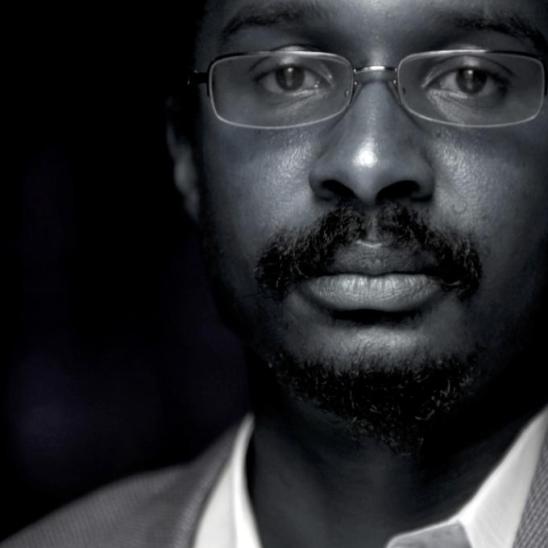
Omar McRoberts
· Associate ProfessorUniversity of Chicago · Sociology
Active 1999–2022
About
Omar M. McRoberts is an Associate Professor in the Department of Sociology and The College at the University of Chicago. He holds a B.A. from the University of Chicago (1994), an M.A. from Harvard University (1997), and a Ph.D. from Harvard University (2000). His scholarly and teaching interests include the sociology of religion, urban sociology, urban poverty, race, and collective action. His first book, Streets of Glory: Church and Community in a Black Urban Neighborhood, is based on an ethnographic study of religious life in Four Corners, a poor, predominantly black neighborhood in Boston containing twenty-nine congregations. The book explains the high concentration, wide variety, and ambiguous social impact of religious activity in the neighborhood, and it received the 2005 Distinguished Book Award from the Society for the Scientific Study of Religion. Currently, McRoberts is conducting a study of black religious responses to, and influences on, social welfare policy since the New Deal, culminating with George W. Bush's Office of Faith Based and Community Initiatives. He is also initiating an ethnographic project on cultures of death and dying among black congregations in low-income urban contexts.
Research topics
- Political Science
- Sociology
- Law
- Ethnology
- Religious studies
- Criminology
- Philosophy
Selected publications
Of Movements and Markets: Religious Competition and the Problem of Black Church Relevance
Midwest Social Sciences Journal · 2022-12-20 · 1 citations
articleOpen access1st authorCorrespondingWhy do cross-denominational public religious movements such as the Southern Christian Leadership Conference appear, despite the market-like competitive behavior of churches? Religious economy theory offers one set of explanations, based on a supply-side approach to the dynamics of numeric religious growth and decline. Namely, ecumenical movements are engaged by denominations, or religious firms, in membership decline. The history of national Black ecumenical movements, however, points to ways that religious economic theorizing fails to account for the multiple modes of social consciousness regarding church survival that motivate institutional religious activity. Black churches have existed not merely as a market but as a field where market consciousness transforms into movement consciousness at historic moments of perceived political opportunity. At such moments, unified public religious action on behalf of “the people” is understood as more important than the competitive dominance of individual firms in a private religious market.
Religion and the Boston Miracle: The Effect of Black Ministry on Youth Violence
Routledge eBooks · 2021 · 32 citations
- Political Science
- Sociology
- Political Science
In Boston, the key community group working with the police has been a set of black churches known as the Ten Point Coalition. Rival gangs turned to firearms to protect and defend their turf and gang identity. Boston's faith-based organizations did not begin working together as a group until 1992. The ministers' message to the youths, nevertheless, is quite different. Public awareness of such "moral realities" translates into a special variety of political capital that allows clergy to transcend stale partisan political debates, even while injecting their political views into those debates. In traditional political discourse, emphases on structural determinacy and individual responsibility are at odds. The New Testament demands action on behalf of others. Hundreds of organizations around the country, including the Ten Point Coalition, have taken this mandate seriously, developing a plethora of "faith-based" responses to human suffering in urban cores. Ministers may possibly be ideal partners.
American Journal of Sociology · 2020-07-01
paratextOpen access2. Civil Religion and Black Church Political Mobilization
New York University Press eBooks · 2020 · 22 citations
1st authorCorresponding- Political Science
- Political Science
- Sociology
2 Civil Religion and Black Church Political Mobilization
New York University Press eBooks · 2020
1st authorCorresponding- Political Science
- Political Science
- Sociology
Stanford University Press eBooks · 2008-10-08
book-chapter1st authorCorresponding2005 SSSR Presidential Address: On Being a Community of Scholars—Practicing the Study of Religion
Journal for the Scientific Study of Religion · 2006-05-18 · 1 citations
articleSenior authorH. Richard Niebuhr Meets “The Street”
Harvard University Press eBooks · 2005-12-31
book-chapter1st authorCorrespondingContexts · 2004-02-01
article1st authorCorrespondingBeyond Mysterium Tremendum: Thoughts toward an Aesthetic Study of Religious Experience
The Annals of the American Academy of Political and Social Science · 2004-08-25 · 55 citations
article1st authorCorrespondingMuch sociological ethnography of religion values an objective distance between observer and subject to the point of reducing religion to a catalogue of doctrines and rituals, failing all the while to take seriously the subjective experiences of believers and the experiences of ethnographers themselves. The association of religious experience with transcendent feelings of awe or ecstasy, coupled with the methodological impossibility of perfect empathy, further drives the ethnography of religion away from the consideration of religious experience. I offer thoughts toward an aesthetics-oriented method of studying lived religiosity, whereby the ethnographer becomes sensitive to aspects of religious experience that are precognitive but not necessarily spiritual.
Frequent coauthors
- 1 shared
Rebecca Ewert
Northwestern University
- 1 shared
Terry Clark
Mount Royal University
- 1 shared
Pranathi Diwakar
University of Chicago
- 1 shared
Sandra A. Allan
- 1 shared
Karin Knorr Cetina
Bielefeld University
- 1 shared
Jenny Berrien
- 1 shared
Alessandra Lembo
University of Chicago
- 1 shared
Dingxin Zhao
University of Chicago
Awards & honors
- 2005 Distinguished Book Award from the Society for the Scien…
- Resume-aware match score
- Save to shortlist
- AI-drafted outreach
See your match with Omar McRoberts
PhdFit ranks faculty by your research interests, methods, and publications — grounded in their actual work, not templates.
- Free to start
- No credit card
- 30-second signup