
Resume-aware faculty matching

Find professors who actually fit you

Upload your resume. Four AI agents analyze your background, rank the faculty who fit, inspect their recent research, and help you draft outreach — grounded in their actual work, not templates.

Free to startNo credit cardCancel anytime
Top matches Balanced preset
Dr. Sarah Chen
Stanford · Interpretability · NLP
91
Dr. Marcus Holloway
MIT · Robotics · RL
84
Dr. Aisha Okonkwo
CMU · Fairness · HCI
82
Nova · Professor Researcher · re-ranking top 20…
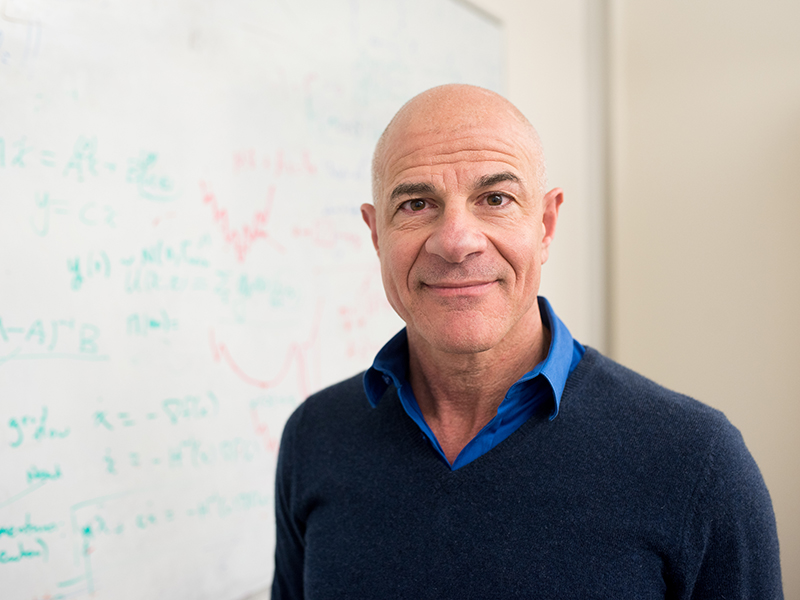
Omar Ghattas

Omar Ghattas

· ProfessorVerified

University of Texas at Austin · Mechanical Engineering

Active 1985–2026

h-index52
Citations8.9k
Papers26484 last 5y
Funding$5.3M
See your match with Omar Ghattas — sign in to PhdFit.Sign in

About

Omar Ghattas is the John A. and Katherine G. Jackson Chair in Computational Geosciences, a Professor of Geological Sciences and Mechanical Engineering, and the Director of the Center for Computational Geosciences at the Institute for Computational Engineering and Sciences (ICES) at The University of Texas at Austin. He also serves as a faculty member in the Computational Science, Engineering, and Mathematics (CSEM) interdisciplinary Ph.D program in ICES, and holds courtesy appointments in Computer Science, Biomedical Engineering, the Institute for Geophysics, and the Texas Advanced Computing Center. Prior to his tenure at UT Austin starting in 2005, he was a professor at Carnegie Mellon University for 16 years. Ghattas earned his BS, MS, and Ph.D degrees from Duke University in 1984, 1986, and 1988 respectively. His research interests encompass the simulation and modeling of complex geophysical, mechanical, and biological systems on supercomputers, with a particular focus on inverse problems and uncertainty quantification for large-scale systems. His center's current research includes large-scale forward and inverse modeling of Earth's mantle convection, seismic wave propagation, polar ice sheet dynamics, and subsurface flows, employing advanced computational, mathematical, and statistical techniques to address the challenges of complex problems on parallel supercomputers. Ghattas has received numerous awards for research excellence, including the 1998 Allen Newell Medal, the 2003 IEEE/ACM Gordon Bell Prize, and the 2008 TeraGrid Capability Computing Challenge award. He has served extensively on editorial boards, conference organizations, and professional committees, and has delivered invited keynote and plenary lectures at numerous international conferences. He is a Fellow of SIAM.

Research topics

  • Computer Science
  • Artificial Intelligence
  • Machine Learning
  • Mathematics
  • Political Science
  • Applied mathematics
  • Management science
  • Algorithm
  • Mathematical optimization
  • Physics
  • Theoretical computer science
  • Geometry
  • Data science
  • Mathematical analysis
  • Engineering ethics
  • Engineering

Selected publications

  • Advancing aquifer characterization through the integration of satellite geodesy, geomechanics, and Bayesian inference

    2026-03-26

    articleOpen accessSenior author
  • Goal-Oriented Real-Time Bayesian Inference for Linear Autonomous Dynamical Systems With Application to Digital Twins for Tsunami Early Warning

    Journal of Computational Physics · 2026-01-01

    articleSenior author
  • Shape Derivative-Informed Neural Operators with Application to Risk-Averse Shape Optimization

    arXiv (Cornell University) · 2026-03-03

    preprintOpen accessSenior author

    Shape optimization under uncertainty (OUU) is computationally intensive for classical PDE-based methods due to the high cost of repeated sampling-based risk evaluation across many uncertainty realizations and varying geometries, while standard neural surrogates often fail to provide accurate and efficient sensitivities for optimization. We introduce Shape-DINO, a derivative-informed neural operator framework for learning PDE solution operators on families of varying geometries, with a particular focus on accelerating PDE-constrained shape OUU. Shape-DINOs encode geometric variability through diffeomorphic mappings to a fixed reference domain and employ a derivative-informed operator learning objective that jointly learns the PDE solution and its Fréchet derivatives with respect to design variables and uncertain parameters, enabling accurate state predictions and reliable gradients for large-scale OUU. We establish a priori error bounds linking surrogate accuracy to optimization error and prove universal approximation results for multi-input reduced basis neural operators in suitable $C^1$ norms. We demonstrate efficiency and scalability on three representative shape OUU problems, including boundary design for a Poisson equation and shape design governed by steady-state Navier-Stokes exterior flows in two and three dimensions. Across these examples, Shape-DINOs produce more reliable optimization results than operator surrogates trained without derivative information. In our examples, Shape-DINOs achieve 3-8 orders-of-magnitude speedups in state and gradient evaluations. Counting training data generation, Shape-DINOs reduce necessary PDE solves by 1-2 orders-of-magnitude compared to a strictly PDE-based approach for a single OUU problem. Moreover, Shape-DINO construction costs can be amortized across many objectives and risk measures, enabling large-scale shape OUU for complex systems.

  • Neural Operator-Enabled Aerodynamic Load Estimation for Hypersonics

    2026-01-08

    article

    This work expands on a strain-based aerodynamic sensing strategy for hypersonics to account for nonlinear temperature effects in real time. The sensing strategy uses sparse strain observations to infer the aerodynamic pressure loads, which is mathematically posed as a partial differential equation (PDE)-constrained inverse problem. In previous work, this inverse problem was shown to have a closed-form solution, where offline computation of the operations requiring the PDE solution was exploited to enable real-time evaluation speeds. In this work, the temperature effects preclude the offline pre-computation acceleration because the PDE operator is nonlinearly temperature dependent. To address this challenge, the recently developed neural matrix operator (NEMO) approach is employed to account for the temperature dependence. The NEMO method explicitly incorporates the physics structure of the governing equations, and thus preserves the availability of a closed-form inverse solution that can be computed rapidly onboard the vehicle. This work further considers the tasks of estimating the temperature field from sparse temperature measurements, and compensation for the thermal strain. The overall performance is demonstrated on the Initial Concept 3.X hypersonic vehicle. The results show strong approximation performance of NEMO and corresponding inverse solution accuracy, but further work is necessary to reduce errors in the thermal strain compensation.

  • Shape Derivative-Informed Neural Operators with Application to Risk-Averse Shape Optimization

    ArXiv.org · 2026-03-03

    articleOpen accessSenior author

    Shape optimization under uncertainty (OUU) is computationally intensive for classical PDE-based methods due to the high cost of repeated sampling-based risk evaluation across many uncertainty realizations and varying geometries, while standard neural surrogates often fail to provide accurate and efficient sensitivities for optimization. We introduce Shape-DINO, a derivative-informed neural operator framework for learning PDE solution operators on families of varying geometries, with a particular focus on accelerating PDE-constrained shape OUU. Shape-DINOs encode geometric variability through diffeomorphic mappings to a fixed reference domain and employ a derivative-informed operator learning objective that jointly learns the PDE solution and its Fréchet derivatives with respect to design variables and uncertain parameters, enabling accurate state predictions and reliable gradients for large-scale OUU. We establish a priori error bounds linking surrogate accuracy to optimization error and prove universal approximation results for multi-input reduced basis neural operators in suitable $C^1$ norms. We demonstrate efficiency and scalability on three representative shape OUU problems, including boundary design for a Poisson equation and shape design governed by steady-state Navier-Stokes exterior flows in two and three dimensions. Across these examples, Shape-DINOs produce more reliable optimization results than operator surrogates trained without derivative information. In our examples, Shape-DINOs achieve 3-8 orders-of-magnitude speedups in state and gradient evaluations. Counting training data generation, Shape-DINOs reduce necessary PDE solves by 1-2 orders-of-magnitude compared to a strictly PDE-based approach for a single OUU problem. Moreover, Shape-DINO construction costs can be amortized across many objectives and risk measures, enabling large-scale shape OUU for complex systems.

  • Goal-oriented real-time Bayesian inference for linear autonomous dynamical systems with application to digital twins for tsunami early warning

    Journal of Computational Physics · 2026-01-14 · 2 citations

    preprintOpen accessSenior author
  • Fast and Scalable FFT-Based GPU-Accelerated Algorithms for Block-Triangular Toeplitz Matrices with Application to Linear Inverse Problems Governed by Autonomous Dynamical Systems

    SIAM Journal on Scientific Computing · 2025-10-09 · 2 citations

    articleSenior author
  • Accelerating seismic inversion and uncertainty quantification with efficient high-rank Hessian approximations

    ArXiv.org · 2025-07-14

    preprintOpen accessSenior author

    Efficient high-rank approximations of the Hessian can accelerate seismic full waveform inversion (FWI) and uncertainty quantification (UQ). In FWI, approximations of the inverse of the Hessian may be used as preconditioners for Newton-type or quasi-Newton algorithms, reducing computational costs and improving recovery in deeper subsurface regions. In Bayesian UQ, Hessian approximations enable the construction of Markov chain Monte Carlo (MCMC) proposals that capture the directional scalings of the posterior, enhancing the efficiency of MCMC. Computing the exact Hessian is intractable for large-scale problems because the Hessian is accessible only through matrix-vector products, and performing each matrix-vector product requires costly solution of wave equations. Moreover, the Hessian is high-rank, which means that low-rank methods, often employed in large-scale inverse problems, are inefficient. We adapt two existing high-rank Hessian approximations -- the point spread function method and the pseudo-differential operator probing method. Building on an observed duality between these approaches, we develop a novel method that unifies their complementary strengths. We validate these methods on a synthetic quadratic model and on the Marmousi model. Numerical experiments show that these high-rank Hessian approximations substantially reduce the computational costs in FWI. In UQ, MCMC samples computed using no Hessian approximation or a low-rank approximation explore the posterior slowly, providing little meaningful statistical information after tens of thousands of iterations and underestimating the variance. At the same time, the effective sample size is overestimated, providing false confidence. In contrast, MCMC samples generated using the high-rank Hessian approximations provide meaningful statistical information about the posterior and more accurately assess the posterior variance.

  • Mixed-Precision Performance Portability of FFT-Based GPU-Accelerated Algorithms for Block-Triangular Toeplitz Matrices

    2025-11-07 · 1 citations

    articleOpen accessSenior author

    The hardware diversity in leadership-class computing facilities, alongside the immense performance boosts from today’s GPUs when computing in lower precision, incentivizes scientific HPC workflows to adopt mixed-precision algorithms and performance portability models. We present an on-the-fly framework using hipify for performance portability and apply it to FFTMatvec—an HPC application that computes matrix-vector products with block-triangular Toeplitz matrices. Our approach enables FFTMatvec, initially a CUDA-only application, to run seamlessly on AMD GPUs with excellent performance. Performance optimizations for AMD GPUs are integrated into the open-source rocBLAS library, keeping the application code unchanged. We then present a dynamic mixed-precision framework for FFTMatvec; a Pareto front analysis determines the optimal mixed-precision configuration for a desired error tolerance. Results are shown for AMD Instinct™ MI250X, MI300X, and the newly launched MI355X GPUs. The performance-portable, mixed-precision FFTMatvec is scaled to 4,096 GPUs on the OLCF Frontier supercomputer.

  • Derivative-Informed Fourier Neural Operator: Universal Approximation and Applications to PDE-Constrained Optimization

    arXiv (Cornell University) · 2025-12-16

    preprintOpen accessSenior author

    We present approximation theories and efficient training methods for derivative-informed Fourier neural operators (DIFNOs) with applications to PDE-constrained optimization. A DIFNO is an FNO trained by minimizing its prediction error jointly on output and Fréchet derivative samples of a high-fidelity operator (e.g., a parametric PDE solution operator). As a result, a DIFNO can closely emulate not only the high-fidelity operator's response but also its sensitivities. To motivate the use of DIFNOs instead of conventional FNOs as surrogate models, we show that accurate surrogate-driven PDE-constrained optimization requires accurate surrogate Fréchet derivatives. Then, we establish (i) simultaneous universal approximation of continuously differentiable operators and their Fréchet derivatives by FNOs on compact sets, and (ii) universal approximation of continuously differentiable operators by FNOs in weighted Sobolev spaces with input measures that have unbounded supports. Our theoretical results certify the capability of FNOs for accurate derivative-informed operator learning and for the solution of PDE-constrained optimization problems. Furthermore, we develop efficient training schemes that leverage dimensionality reduction and multi-resolution techniques to significantly reduce memory and computational costs in Fréchet derivative learning. Numerical examples on nonlinear diffusion--reaction, Helmholtz, and Navier--Stokes equations demonstrate that DIFNOs are superior in sample complexity for operator learning and solving infinite-dimensional PDE-constrained inverse problems, achieving high accuracy at low training sample sizes.

Recent grants

Frequent coauthors

  • Georg Stadler

    68 shared
  • Noémi Petra

    University of California, Merced

    36 shared
  • Tan Bui‐Thanh

    32 shared
  • Umberto Villa

    The University of Texas at Austin

    32 shared
  • Carsten Burstedde

    University of Bonn

    30 shared
  • Peng Chen

    29 shared
  • Thomas O’Leary-Roseberry

    The University of Texas at Austin

    29 shared
  • Karen Willcox

    The University of Texas at Austin

    29 shared

Labs

Education

  • Ph.D.

    Duke University

    1988
  • M.S.

    Duke University

    1986
  • B.S.

    Duke University

    1984

Awards & honors

  • 1998 Allen Newell Medal for Research Excellence
  • 2004/2005 CMU College of Engineering Outstanding Research Pr…
  • SC2002 Best Technical Paper Award
  • 2003 IEEE/ACM Gordon Bell Prize for Special Accomplishment i…
  • SC2006 HPC Analytics Challenge Award
  • Resume-aware match score
  • Save to shortlist
  • AI-drafted outreach

See your match with Omar Ghattas

PhdFit ranks faculty by your research interests, methods, and publications — grounded in their actual work, not templates.

  • Free to start
  • No credit card
  • 30-second signup