
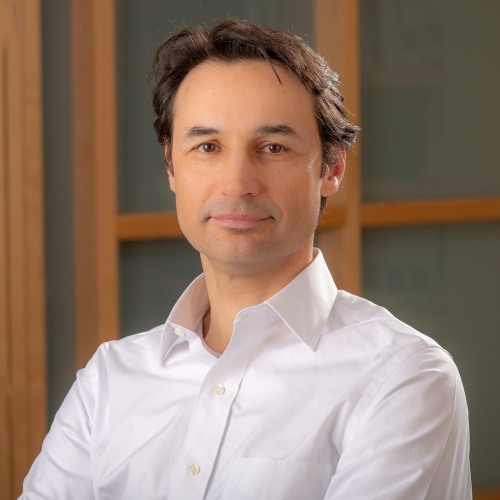
Nicola Neretti
· Associate Professor of Molecular Biology, Cell Biology, and Biochemistry, Associate Director for the Center on the Biology of AgingVerifiedBrown University · Microbiology and Immunology
Active 1998–2026
About
Our research group combines genomics and computational biology to study the biology of aging and age-associated diseases
Research topics
- Biology
- Genetics
- Cell biology
- Medicine
- Immunology
- Computational biology
- Gerontology
- Internal medicine
- Neuroscience
Selected publications
Comet Protocol for FFPE slides - Benchmarking Project SenNet v1
2026-04-27
articleOpen access1st authorCorrespondingThis protocol describes a workflow for highly multiplexed protein measurements using the Comet machine from Lunaphore. This method is optimized for formalin-fixed paraffin-embedded (FFPE) tissue sections and enables repeated cycles of staining, imaging and antibody elution using conventional primary and secondary antibodies. By sequentially eluting antibodies between imaging rounds, this approach allows the detection of a large number of protein targets within the same tissue section while preserving spatial context. This protocol was adapted from methods developed in the laboratory of Dr Joao Passos made for iterative indirect immunofluorescence imaging (4i).
Advancing senescence translation through the Senotherapeutics Biomarker Consortium
Nature Aging · 2026-03-03
articleGeometric Diagrams of Genomes: constructing a visual grammar for 3D genomics
Genome biology · 2025-06-26 · 1 citations
articleOpen accessAdvances in the field of three-dimensional (3D) genomics have revealed an ever-expanding array of architectural features that were unknown only a few years ago. Just as ribbon diagrams integrate spatial and symbolic representation to communicate the shape of a protein, the representation of genomes in 3D space requires the development and use of new cartographic symbols and visual conventions. Here, we propose a conceptualized grammar that makes it easier to create visual 3D representations of genomes.
Zenodo (CERN European Organization for Nuclear Research) · 2025-12-01
datasetOpen accessThis Zenodo deposition contains normalized coverage tracks (bigWig) and peak calls (narrowPeak) associated with our study investigating and comparing the performance of improved short nascent strand sequencing (SNS-seq) and traditional SNS-seq for DNA replication origin mapping in Saccharomyces cerevisiae. The raw data is deposited separately in the European Nucleotide Archive (ENA) at EMBL-EBI under accession number PRJEB95115.
Cytosolic DNA crosstalk in senescence: a new axis of inflammatory signaling?
The EMBO Journal · 2025-08-29 · 7 citations
articleOpen accessCellular senescence is a form of stable growth arrest that contributes to aging and age-related diseases, in part through the senescence-associated secretory phenotype (SASP). Recent studies show that senescent cells accumulate several species of cytosolic DNAs, including mitochondrial DNA (mtDNA), cytoplasmic chromatin fragments (CCFs), and retrotransposable element cDNAs, which collectively activate the cGAS–STING pathway and drive SASP expression. Surprisingly, downregulating any one of these DNA species is often enough to suppress the SASP, raising key questions about their functional interactions. We propose that these cytosolic DNA species do not act in isolation but instead either follow a coordinated sequence or engage in synergistic crosstalk to amplify and sustain inflammatory signaling. While therapeutic approaches directly targeting the cGAS–STING pathway are being developed, we argue that blocking the sources of cytosolic DNA might be a more specific and safer strategy to target the deleterious effects of senescent cells. In particular, this approach should enable reducing chronic inflammation without impairing important immune functions, offering a new direction for therapies aimed at promoting healthy aging.
Senescence-Associated Chromatin Rewiring Promotes Inflammation and Transposable Element Activation
bioRxiv (Cold Spring Harbor Laboratory) · 2025-06-17 · 3 citations
preprintOpen accessSenior authorCorrespondingCellular senescence is a stable form of cell cycle arrest that contributes to aging and age-associated diseases through the secretion of inflammatory factors collectively known as the senescence-associated secretory phenotype (SASP). While senescence is driven by transcriptional and epigenetic changes, the contribution of higher-order genome organization remains poorly defined. Here, we present the highest-resolution Hi-C maps (~3 kb) to date of proliferating, quiescent, and replicative senescent (RS) human fibroblasts, enabling a comprehensive analysis of 3D genome architecture during senescence. Our analyses reveal widespread senescence-associated remodeling of chromatin architecture, including extensive compartment and subcompartment switching toward transcriptionally active states, and a dramatic increase in unique chromatin loops. These structural features correlate with local DNA hypomethylation and are largely independent of canonical CTCF binding. The altered 3D genome landscape supports expression of SASP genes, inflammation-related pathways, and neuronal gene signatures consistent with age-associated epigenetic drift. We further demonstrate that architectural changes at multiple levels, including compartments, subcompartments, and loops, facilitate the derepression of LINE-1 retrotransposons, linking 3D chromatin structure to activation of proinflammatory transposable elements. Interestingly, quiescent cells, commonly used as senescence controls, exhibited substantial overlap in inflammatory gene expression with senescent cells, raising important considerations for experimental design. Structural analysis of cell cycle genes showed distinct chromatin configurations in senescence versus quiescence, despite similar transcriptional repression. Together, our results establish a high-resolution framework for understanding how genome architecture contributes to the senescent state.
Skin health and biological aging
Nature Aging · 2025-06-17 · 34 citations
reviewOpen accessbioRxiv (Cold Spring Harbor Laboratory) · 2025-12-24
articleOpen accessAbstract Identifying DNA replication origins in human and other metazoan genomes has been challenging, as highlighted by the fact that various methods for mapping them have produced conflicting results. A popular method, short nascent strand sequencing (SNS-seq or NS-seq), enriches newly replicated short single-stranded DNA by size selection and λ exonuclease ( λ -exo) digestion of parental DNA. Surprisingly, SNS-seq has never been validated in Saccharomyces cerevisiae where origins have been well characterized genome-wide. We improved the SNS-seq protocol through biochemical optimization and benchmarked its origin-mapping sensitivity and precision with traditional SNS-seq in asynchronous populations of S. cerevisiae . The improved SNS-seq protocol significantly enhanced the enrichment of origin-derived DNA. S trikingly, the traditional SNS-seq failed to detect known origins and instead enriched non-origin DNA, likely arising from RNA:DNA hybrids. These findings have important implications for the interpretation of previously p ublished datasets that rely on λ -exo for origin mapping. Overall, our biochemical and genomic analyses help unravel the mystery of the inconsistencies between SNS-seq and other techniques used to map DNA replication origins genome-wide.
Zenodo (CERN European Organization for Nuclear Research) · 2025-12-01
datasetOpen accessThis Zenodo deposition contains normalized coverage tracks (bigWig) and peak calls (narrowPeak) associated with our study investigating and comparing the performance of improved short nascent strand sequencing (SNS-seq) and traditional SNS-seq for DNA replication origin mapping in Saccharomyces cerevisiae. The raw data is deposited separately in the European Nucleotide Archive (ENA) at EMBL-EBI under accession number PRJEB95115.
Innovation in Aging · 2024-12-01
articleOpen access1st authorCorrespondingAbstract Cellular senescence is a state of irreversible cell cycle arrest, contributing to age-associated tissue function decline due to the accumulation of senescent cells. The Senescence Associated Secretory Phenotype (SASP), a collection of signaling molecules and growth factors secreted by these cells, plays a significant role in the sterile inflammation seen in aging tissues. Recent studies, both in vivo and in vitro, have demonstrated that senescence is a heterogeneous phenotype, varying based on cell type, induction method, and duration of senescence. An important aspect of this heterogeneity is the distinction between primary and secondary senescence; primary senescent cells can induce nearby cells into a secondary senescent state, which shares some markers with primary senescence but differs significantly in others, such as the SASP. In this study, we explore the evolution of primary and secondary senescence over time by profiling individual cells during the early stages of senescence establishment using single-cell transcriptomics. We have developed an AI/ML methodology capable of classifying cells into primary and various forms of secondary senescence. This methodology is compared with existing methods like SenMayo and SenSig, and applied to time-course scRNA-seq data to determine the proportion of cells in different senescent states. Additionally, we present findings on the identification of senescent cells in vivo using spatial transcriptomics to study the aging mouse liver.
Recent grants
NIH · $45.2M · 2016–2026
The Role of Somatic Transposition in Age-associated Genomic Instability
NIH · $2.2M · 2017–2024
Brown University Training Program in the Molecular Biology of Aging
NIH · $2.9M · 2012–2027
NIH · $568k · 2017
NIH · $693k · 2013
Frequent coauthors
- 87 shared
John M. Sedivy
Brown University
- 79 shared
Nathan Intrator
- 65 shared
Stephen L. Helfand
Brown University
- 63 shared
Steven W. Criscione
AstraZeneca (United States)
- 53 shared
Yee Voan Teo
Brown University
- 48 shared
Shane A. Evans
Teikoku Pharma (United States)
- 36 shared
Marco De Cecco
Brown University
- 31 shared
Leon N. Cooper
University of Sydney
- Resume-aware match score
- Save to shortlist
- AI-drafted outreach
See your match with Nicola Neretti
PhdFit ranks faculty by your research interests, methods, and publications — grounded in their actual work, not templates.
- Free to start
- No credit card
- 30-second signup