
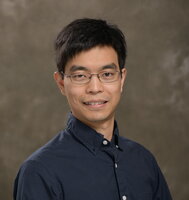
Nicholas Ching Hai Wu
· Associate ProfessorUniversity of Illinois Urbana-Champaign · Biophysics & Quantitative Biology
Active 1985–2026
Academic metrics are sourced from OpenAlex and public funding records; values may differ from Google Scholar.
About
Nicholas Ching Hai Wu is an Associate Professor of Biochemistry and Biomedical and Translational Sciences at the University of Illinois. He is also an affiliate of the Carl R. Woese Institute for Genomic Biology. Professor Wu's research focuses on understanding the constraints of virus evolution, predicting antibody specificity, and improving the quality and speed of vaccine design. His lab primarily studies influenza virus and SARS-CoV-2, employing a multidisciplinary approach that includes molecular virology, protein biochemistry, next-generation sequencing, high-throughput assays, x-ray crystallography, cryo-electron microscopy, and machine learning. Professor Wu completed his postdoctoral training at The Scripps Research Institute in 2020, earned his Ph.D. from the University of California, Los Angeles in 2015, and obtained his B.S. from the University of Virginia in 2010. His work has been recognized with numerous awards, including the NIH Director's New Innovator Award, the Searle Scholar Award, the Vallee Scholar Award, and several honors from the University of Illinois, reflecting his contributions to the fields of immunology, virology, molecular evolution, protein structure, and bioinformatics. His research addresses critical questions in infectious diseases, particularly focusing on the molecular mechanisms underlying virus-host interactions and immune responses.
Research topics
- Biology
- Medicine
- Computational biology
- Genetics
- Virology
- Internal medicine
- Computer Science
- Immunology
- Mathematics
- Evolutionary biology
Selected publications
Sequence signatures of two public antibody clonotypes that bind SARS-CoV-2 receptor binding domain
Nature Communications · 2021 · 76 citations
Senior authorCorrespondingSince the COVID-19 pandemic onset, the antibody response to SARS-CoV-2 has been extensively characterized. Antibodies to the receptor binding domain (RBD) on the spike protein are frequently encoded by IGHV3-53/3-66 with a short complementarity-determining region (CDR) H3. Germline-encoded sequence motifs in heavy chain CDRs H1 and H2 have a major function, but whether any common motifs are present in CDR H3, which is often critical for binding specificity, is not clear. Here, we identify two pu…
High-throughput identification of prefusion-stabilizing mutations in SARS-CoV-2 spike
Nature Communications · 2023 · 41 citations
Senior authorCorrespondingDesigning prefusion-stabilized SARS-CoV-2 spike is critical for the effectiveness of COVID-19 vaccines. All COVID-19 vaccines in the US encode spike with K986P/V987P mutations to stabilize its prefusion conformation. However, contemporary methods on engineering prefusion-stabilized spike immunogens involve tedious experimental work and heavily rely on structural information. Here, we establish a systematic and unbiased method of identifying mutations that concomitantly improve expression and sta…
Science Advances · 2022 · 31 citations
Senior authorCorrespondingIncreasing the expression level of the SARS-CoV-2 spike (S) protein has been critical for COVID-19 vaccine development. While previous efforts largely focused on engineering the receptor-binding domain (RBD) and the S2 subunit, the amino-terminal domain (NTD) has been long overlooked because of the limited understanding of its biophysical constraints. In this study, the effects of thousands of NTD single mutations on S protein expression were quantified by deep mutational scanning. Our results r…
SARS-CoV-2 wastewater genomic surveillance: approaches, challenges, and opportunities
Genome biology · 2026-01-12 · 4 citations
articleOpen accessWastewater-based genomic surveillance (WWGS) has proven effective for monitoring SARS-CoV-2 and other viruses within communities. It enables rapid detection of known and emerging mutations and provides insights into circulating lineages. Despite its advantages, WWGS faces challenges in sample processing and computational analysis, particularly in distinguishing similar lineages and identifying novel ones. Recent methods for wastewater sequencing (WWS) analysis remain largely untested amid declin…
Science Translational Medicine · 2025-09-03 · 4 citations
articleOpen accessSenior authorCorrespondingAntibody discovery is crucial for developing therapeutics and vaccines and for understanding adaptive immunity. However, the lack of approaches to synthesize antibodies with defined sequences in a high-throughput manner represents a major bottleneck in antibody discovery. Here, we present oPool + display, a high-throughput cell-free platform that combined oligo pool synthesis and mRNA display to rapidly construct and characterize hundreds to thousands of natively paired antibodies in parallel. A…
Recent grants
Sequence-function relationship of influenza broadly neutralizing antibodies
NIH · $2.5M · 2022–2026
Biophysical constraints of influenza neuraminidase evolution
NIH · $2.0M · 2022–2027
High-throughput identification of antibody features for sequence-based epitope prediction
NIH · $2.4M · 2021–2026
Frequent coauthors
- 112 shared
Ian A. Wilson
Scripps Research Institute
- 103 shared
Huibin Lv
- 62 shared
Chris Ka Pun Mok
Chinese University of Hong Kong
- 61 shared
Meng Yuan
Northeast Forestry University
- 59 shared
Timothy J.C. Tan
University of Illinois Urbana-Champaign
- 56 shared
Yiquan Wang
University of Illinois Urbana-Champaign
- 55 shared
Qi Wen Teo
University of Illinois Urbana-Champaign
- 51 shared
Ren Sun
Labs
People
Education
- 2015
Ph.D. Molecular Biology, Molecular Biology Interdepartmental Doctoral Program
University of California Los Angeles
- 2010
B.S. Biochemistry, Department of Chemistry
University of Virginia
Awards & honors
- UIUC I.C. Gunsalus Scholar Award (2025)
- UIUC Distinguished Promotion Award (2025)
- UIUC MCB Outstanding Graduate Student Mentor Award (2024)
- Vallee Scholar Award (2024)
- Viruses Early Career Investigator Award (2022)
Similar researchers at University of Illinois Urbana-Champaign
- Resume-aware match score
- Save to shortlist
- AI-drafted outreach
See your match with Nicholas Ching Hai Wu
PhdFit ranks faculty by your research interests, methods, and publications — grounded in their actual work, not templates.
- Free to start
- No credit card
- 30-second signup