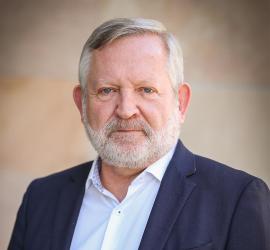
Nelson Phillips
University of California, Santa Barbara · Technology Management Program
Active 1958–2024
About
Nelson Phillips is a Vice Chair for Academic Affairs, Ph.D. Faculty Advisor, and Distinguished Professor of Technology Management in the College of Engineering at the University of California Santa Barbara. Originally from Canada, he holds a B.Sc. in Electrical Engineering and an MBA from the University of Calgary, as well as a Ph.D. in Organizational Analysis from the University of Alberta. His academic career includes positions at Imperial College Business School in London, UK, where he was Professor of Innovation and Strategy, Associate Dean of External Relations, and Co-Director of the Centre for Responsible Leadership. He also served as the Beckwith Professor of Management Studies at Cambridge University’s Judge Business School and was a faculty member at McGill University. Phillips's research interests span organization theory, innovation, and technology, with a focus on social-symbolic work, institutional change, and the co-evolution of language, cognition, and sociality in management. He has published widely in leading academic journals and has authored several books, including 'Constructing Organizational Life,' which received the 2021 George R. Terry Book Award. Phillips is actively involved in editorial roles, serves on various boards and advisory committees, and is a Research Fellow at the Cambridge Centre for Social Innovation. He teaches leadership, strategy, and digital business at both graduate and undergraduate levels and is active in executive education, delivering modules for numerous corporate clients.
Research topics
- Political Science
- Sociology
- Development economics
- Economics
- Law
- Political economy
Selected publications
Authoritarianism, Populism, and the Global Retreat of Democracy: A Curated Discussion
Journal of Management Inquiry · 2022 · 63 citations
- Political Science
- Sociology
- Political economy
To the surprise of many in the West, the fall of the USSR in 1991 did not lead to the adoption of liberal democratic government around the world and the much anticipated “end of history.” In fact, authoritarianism has made a comeback, and liberal democracy has been on the retreat for at least the last 15 years culminating in the unthinkable: the invasion of a democratic European country by an authoritarian regime. But why does authoritarianism continue to spread, not only as an alternative to liberal democracy, but also within many liberal democracies where authoritarian leaders continue to gain strength and popularity? In this curated piece, contributors discuss some of the potential contributions of management scholarship to understanding authoritarianism, as well as highlight a number of directions for management research in this area.
Frequent coauthors
- 55 shared
Thomas B. Lawrence
University of Oxford
- 43 shared
Cynthia Hardy
- 27 shared
Paul Tracey
University of Melbourne
- 19 shared
Markus Perkmann
Imperial College London
- 18 shared
Sorah Seong
- 9 shared
Henning Piezunka
University of Pennsylvania
- 9 shared
Mark Dodgson
- 9 shared
Bryan Kaiser Stroube
London Business School
Education
- 1995
PhD, Faculty of Business
University of Alberta
Awards & honors
- George R. Terry Book Award (2021)
- Joanne Martin Trailblazer Award (2018)
- European Group for Organization Studies award for the best p…
- SO! What award for the best paper published in Strategic Org…
- Journal of Management Studies award for the best paper publi…
Similar researchers at University of California, Santa Barbara
- Resume-aware match score
- Save to shortlist
- AI-drafted outreach
See your match with Nelson Phillips
PhdFit ranks faculty by your research interests, methods, and publications — grounded in their actual work, not templates.
- Free to start
- No credit card
- 30-second signup