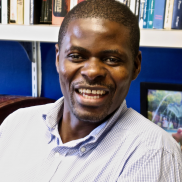
Moses Khisa
VerifiedNorth Carolina State University · Political Science
Active 2011–2026
About
Moses Khisa is an Associate Professor of Political Science and Africana Studies at NC State University, affiliated with the School of Public and International Affairs. His teaching and research focus on Comparative Politics and International Political Economy, with a particular emphasis on Africa. Khisa is a Research Associate with the Centre for Basic Research in Kampala, Uganda, and contributes as a weekly columnist for Uganda's Daily Monitor newspaper. His scholarly work explores contemporary political development in Africa, civil-military relations, democratization, and authoritarianism. Khisa has authored and co-edited several books, including 'Autocratization in Contemporary Uganda' and 'Rethinking Civil-Military Relations in Africa.' His research articles analyze topics such as interstate relations, militarism, political fragmentation, and electoral politics in Uganda and the broader African context. With a Ph.D. in Political Science from Northwestern University, Khisa's contributions significantly advance understanding of African political thought, civil-military relations, and institutional transformation.
Research topics
- Sociology
- Political Science
- Law
- Political economy
- Public administration
- Business
- Advertising
Selected publications
Introduction to ELgar Encyclopedia of African Politics
2026-03-01
article‘This is an ambitious collection of over ninety essays on African politics covering a wide range of topics that are seldom captured in the same volume. Although the concepts and ideas are universal, the contributors tailor them to African contexts. In addition to typical themes and debates that dominate the study of African politics such as corruption, coups, democracy and elections, the Encyclopedia captures issues relevant to contemporary times including: global value chains, green transitions, internet access, and natural resource governance. The editors have succeeded in blending established and emerging generations of Africanist scholars, bringing old and fresh perspectives on diverse subjects. The Encyclopedia will be useful to courses at both undergraduate and graduate levels in development and politics.’ – Gilbert Khadiagala, University of the Witwatersrand, Johannesburg, South Africa
African Studies Review · 2026-04-20
articleOpen access1st authorCorrespondingGeorge Roberts. Revolutionary State-Making in Dar es Salaam: African Liberation and the Global Cold War, 1961–1974. Cambridge University Press, 2022. xvi + 329 pp. Bibliography. Index. $28.30. Paperback. ISBN: 9781009281652.
Elgar Encyclopedia of African Politics
2026-03-01
article2025-09-30
book-chapter1st authorCorrespondingUganda’s domestic socioeconomic and political outlook was generally calm and stable during the year under review. The ruling party maintained a firm grip on the state and society with no signs of intra-party leadership transition as the country prepared for the 2025/26 elections season. Incumbent president Yoweri Kaguta Museveni remained firmly in charge, edging closer to the extraordinary feat of 40 years at the helm. After much activity and public statements that seemed to indicate he was poised to take over from his father, Museveni’s son General Muhoozi Kainerugaba announced that he would not contest the 2026 elections. Opposition parties continued to display fragmentation, internal disharmony, and leadership failings. The economy showed signs of full recovery from the Covid-19 disruptions, with GDP growth estimated at an annual average of about 6%. Headline inflation stood at 3.3%, while the country’s HDI ranking improved significantly. Uganda kept a military presence in Somalia as one of the troop-contributing countries as the AU peacekeeping mission transitioned to a new arrangement and a new name. Uganda’s military also remained in the DRC, fighting the rebel Allied Democratic Front (ADF) in partnership with the Congolese army. An estimated 1.8 m refugees lived in Uganda by year’s end, maintaining its position as the number one refugee-hosting nation on the continent.
Elites' Attitudes and Perceptions in Shaping Uganda-Rwanda Relations
2024-11-15
book-chapter1st authorCorrespondingOver the last two decades, Rwanda and Uganda have had relatively strained relations, oscillating between lukewarm, hostility, and outright war. The first and biggest fallout was during the Second Congo War (1998–2003) when the two countries’ military clashed in the city of Kisangani. From then on, the two respective governments have variously accused each other of wrongdoing even as they have worked on repairing relations. The most recent escalation saw the closure of the border post of Katuna, the most important overland link. At the centre of frosty relations have often been security matters, allegations of rebel activity, covert counterintelligence operations, and espionage. Given that the National Resistance Movement/Army in Uganda and the Rwandese Patriotic Front/Army in Rwanda have a common, or at a minimum shared, ideological and historical origin, we would expect relations to be friendly and constructive. We argue that it is precisely the shared history, social ties, and personal relations among the political, military, and intelligence elites that shape the contours of suspicion, mistrust, and hostility that feed into official foreign policy postures. This chapter analyses how shared ideological and historical origins, social relations, and kindred ties inform individual attitudes and shape perceptions among actors in Rwanda’s and Uganda’s government, military, and intelligence.
Conclusion: Uganda at political crossroads?
2024-01-01
other1st authorCorrespondingCivil Wars · 2024-11-25
articleSenior authorMilitarism and the Politics of Covid-19 Response in Uganda
Armed Forces & Society · 2023-04-17 · 12 citations
articleOpen access1st authorCorrespondingWithin the broader context of securitized responses to Covid-19 globally, Uganda experienced an oversized military role, ranging from law-and-order and lockdown enforcement, to managing food-relief supplies, medical operations, and partisan political repression. What explains this excessive militarization? To address this poser, the article draws on secondary sources and key-informant interviews to test the hypothesis that military involvement in pandemic responses depends on pre-pandemic militarism. The findings reveal direct links between pre-crisis militarism and Covid-19 responses, contrary to the view that exceptionality and novelty of Covid-19 informed overly militarized responses. Through pandemic framing and institutional morphing, pre-pandemic militarism foregrounded military roles because Covid-19 provided Uganda’s ruling elites with a public health pretext to heighten militaristic rule, clutch the political arena in the context of elections, and deepen military presence in civilian public health realms. This excessive militarization of public health seriously impacts civil–military relations, specifically command and control, reporting and accountability, and resources management.
Rethinking the Pan-African Agenda: Africa, the African Diaspora and the Agenda for Liberation
Africa Development · 2023-01-10 · 1 citations
articleOpen access1st authorCorrespondingThe original Pan-African ideal had, as its programmatic agenda, the struggle to free Africans in the diaspora from slave bondage and to liberate the African continent from the despicable occupation by European imperial powers. This article revisits this agenda for liberation, placing it in the current crisis of globalisation and examining the continued marginal place of Africa in the global capitalist political economy. The article sketches out the genealogy and contours of the liberation agenda that looped the African diaspora to developments on the African continent, dating back to the antislavery struggles at the end of the eighteenth century through to the era of independent Africa. I argue that the highest point of the liberation agenda, the final defeat of apartheid in South Africa, ironically coincided with the deepening of Africa’s place on the lowest rungs of the global capitalist system. Today, globalisation has fastened rather than loosened Africa’s position on the ladder of the global political economy. To push back against Africa’s continued marginal position perforce requires returning to the original motivation of the Pan-African agenda and ideal: the unity of purpose and collective action of Africans on the continent and in the diaspora for radical liberation.
Campaign financing and revenue bargaining in Tanzania and Uganda
2023-12-21
book-chapterOpen access1st authorCorrespondingAbstract This chapter analyses the link between campaign financing and revenue bargaining. We argue that campaign financing, especially for the incumbent president, provides more bargaining power for campaign donors than paying taxes. Because increased electoral competition makes ruling parties more dependent on private campaign funding and use of government budgets, such dependency enhances the bargaining power of campaign funders. Our findings show that presidential campaign costs in Uganda, where elite fragmentation is considerable, increased significantly in the election cycles of the 2010s compared to Tanzania. What is more, in both countries, expenditures are higher for the incumbents than for opposition candidates, and the government budget is a much more important source of funding for presidential elections in Uganda than in Tanzania. Also, private sources for the ruling party are mainly individuals and domestic companies who successfully bargain for reduced taxation and access to rents.
Frequent coauthors
- 9 shared
Rita Kiki Edozie
- 8 shared
Sabastiano Rwengabo
- 3 shared
Christopher Day
College of Charleston
- 2 shared
Richard Vokes
University of Western Australia
- 2 shared
Gerald Bareebe
- 2 shared
Sam Wilkins
RMIT University
- 2 shared
Christopher Day
- 1 shared
Xolela Mangcu
University of Cape Town
Labs
Research and EngagementPI
Education
- 2016
PhD, Political Science
Northwestern University
- Resume-aware match score
- Save to shortlist
- AI-drafted outreach
See your match with Moses Khisa
PhdFit ranks faculty by your research interests, methods, and publications — grounded in their actual work, not templates.
- Free to start
- No credit card
- 30-second signup