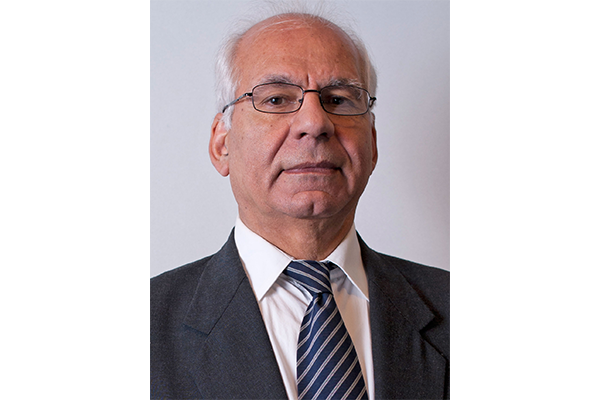
Mohammad E. Taslim
VerifiedNortheastern University · Engineering Management and Systems Engineering
Active 1981–2025
About
Mohammad E. Taslim is a professor in the Mechanical and Industrial Engineering Program at Northeastern University College of Engineering. His research focuses on Computational Fluid Dynamics and Heat Transfer, particularly related to plasma torches used in additive manufacturing technology, fluid-surface interactions for Newtonian and non-Newtonian liquid droplets, droplets in levitated states and vacuum, and nano-sensors. He has contributed to experimental and numerical studies on heat transfer, droplet impact on super-hydrophobic surfaces, and the characterization of airborne droplets of petro-hydrocarbon liquids. Professor Taslim holds a PhD from the University of Arizona, earned in 1981. He has been recognized with several honors, including the 2022 Faculty Research Team Award, and is a Fellow of the American Society of Mechanical Engineers and an Associate Fellow of the American Institute of Aeronautics and Astronautics. His work includes developing innovative solutions in complex fluids, multiphase and multiscale matter, energy systems, sustainability, and environmental protection. He has also been awarded patents related to carbon nanotube separation and wind energy generation.
Research topics
- Physics
- Mechanics
- Thermodynamics
- Atomic physics
- Chemistry
- Acoustics
- Structural engineering
- Engineering
- Composite material
- Materials science
- Optics
- Geometry
Selected publications
Harmonic resonance of acoustically levitated two-phase droplets
2025-04-29
articleOpen accessA droplet of a mixture of immiscible water and oil is levitated in a standing acoustic wave and is set into resonance.The in-situ recording of the resonating droplet allows one to determine the mode number (or number of equatorial lobes) at characteristic frequencies which depends on the fluid viscosity, surface tension, and droplet size.Since the mixture is immiscible, the surface wave is distinctly different from the pure liquid, and the resonance frequency falls in between the values of pure components.
Lecture notes in networks and systems · 2025-01-01
book-chapterSenior author2025-09-15
articleSenior authorSilicon-on-insulator microring resonators have attracted significant research in recent decades for their capability as highly sensitive biosensors. However, adoption in point-of-care medical devices remains limited due to challenges including complex sample preparation, reliance on bulky and expensive tunable lasers or optical spectrum analyzers, high limits of detection, and slow microfluidics that depend on particle diffusion to the sensor’s active area. We propose and model a platform which achieves binding of over 99% of target analytes to manipulable magnetic nanoparticles/nanobeads within 15 minutes, rapid transport of these labeled analytes to the functionalized microring surface, and detection with enhanced sensitivity via direct intensity interrogation rather than conventional resonant wavelength shift detection. The last advancement enables use of a broadband light source (e.g., SLED) and a simple photodiode, eliminating the need for a tunable laser and spectrum analyzer. Ultimately, we demonstrate through multiple numerical modeling methods that as few as five magnetic nanoparticles can induce a 5 dB transmission attenuation in a cascaded microring resonator configuration. This corresponds to a detection threshold on the order of five particles per milliliter, enabled by high binding effiency and specificity. Preliminary numerical studies suggest that further improvements may be achieved using magnetic nanoparticles modified or coated with materials that have a high imaginary refractive index (e.g., gold) or a high real refractive index (e.g., germanium).
Liquid surface depression and bubble generation by acoustic radiation
Droplet · 2024-04-30 · 8 citations
articleOpen accessSenior authorCorrespondingAbstract Liquid surfaces can be depressed by applying acoustic radiation force. The balance between the acoustic radiation force, surface tension force, and buoyant force sustains the stable dimple depression. Beyond a certain threshold, higher acoustic radiation force leads to instability and bubble formation. The bubble size is determined by the acoustic radiation force and the liquid surface tension. Effective management of bubble generation can be achieved by controlling acoustic radiation waves. A novel method for creating depression on liquid surfaces and generating bubbles is described, which requires neither gas supply nor direct contact with equipment.
Experiential Learning: Dialogue of Civilization, Fluid Mechanics in Vietnam
2024-02-06 · 1 citations
articleOpen access1st authorCorrespondingEvaporation of acoustically levitated ouzo droplets
Physics of Fluids · 2024-03-01 · 6 citations
articleOpen accessAn ouzo droplet is a multicomponent liquid comprising ethanol, water, and anise oil, each possessing distinct thermophysical properties, volatility, and mutual miscibility. Evaporation leads to the complex physicochemical process of coupled mass and heat transfer, spontaneous emulsification, and liquid–liquid phase separation, known as the ouzo effect. An acoustically levitated ouzo droplet undergoes five characteristic stages of evaporation based on temporal temperature variation. Such levitated droplet shows a significantly longer lifespan upon evaporation because of the thermal isolation in air, as well as a drastic initial cooling. Sessile droplets, on the other hand, have heat transferred from the surroundings via the substrate to replenish latent heat of vaporization. A conductive substrate thus helps the droplet to stay close to the ambience and a shorter lifespan. A rudimentary theoretical model based on dimensional analysis is developed and shows consistency with measurements.
Tourism Experience and Tourist Satisfaction of Domestic Tourists in Pagar Alam
Journal La Bisecoman · 2023-12-31
articleOpen access1st authorCorrespondingThis study aims to discuss tourist experiences and tourist satisfaction during a vacation or tour in Pagar Alam. The study used a quantitative method with simple linear regression analysis. The sampling technique used a simple random sampling method with primary data collected through a questionnaire to 130 respondents. The memorable tourism experience variable is represented by seven indicators in the form of hedonism, local culture, novelty, refreshment, involvement, knowledge, and meaningfulness, while the tourism satisfaction variable is represented by four indicators in the form of price, product convenience, service treatment, and positive feeling. The study results showed that the memorable tourism experience variable positively and significantly influences the tourist experience. The desire of tourists to always share their travel experiences through social media provides the highest indication that this has two impacts at once, both positive and negative. The level of sharing positive experiences is a strong indicator of the success of achieving tourist satisfaction during travel.
International Journal of Rotating Machinery · 2022-05-09 · 5 citations
articleOpen accessSenior authorCorrespondingFilm cooling technology is a commonly used method for thermal protection of gas turbines’ hot sections. A new, shaped, film cooling hole is proposed in this study. The geometry is made of a straight-through cylindrical feed hole at an inclination angle of 30° followed by an expansion section. The expansion section is created by the rotation of the same circular hole on the inclination plane about an axis normal to that plane which passes through the center of the feed hole exit area. This shape was designed to decrease the deteriorating effects of kidney vortices by proper distribution of the coolant flow emerging from the hole exit area. Cases with four rotation angles (7°, 14°, 17.5°, and 21°) were studied both experimentally and numerically and for the blowing ratios of 0.5, 1, and 2.0. For comparisons, the commonly used 7°-7°-7° diffusion hole geometry was also tested under otherwise identical conditions. For data collection, the pressure-sensitive paint (PSP) technique was used to measure the film cooling effectiveness. Streamwise- and spanwise-averaged film effectiveness results were obtained to compare the performance of different geometries. The main conclusions were that the case of 21° rotation angle produced the highest film effectiveness and outperformed the 7°-7°-7° diffusion hole geometry.
Film Effectiveness Downstream the Trenches with Tilted Target Wall
International Journal of Rotating Machinery · 2022-10-07
articleOpen accessSenior authorCorrespondingFilm cooling is a commonly-accepted effective way to protect the gas turbine hot sections from the high temperature products of the combustion chamber. Numerous film hole geometries have been the subject of investigation by many researchers over the past three decades with the aim of keeping the target wall under the maximum allowable temperature with the least amount of precious cooling air and minimum aerodynamic losses. In this study, we are proposing a new trench geometry that is fed by 30°-inclined embedded circular film holes entering from the trench sidewall. The cooling jets impinge on the opposite wall of the trench which is tilted towards the jets and then is pushed over the coverage wall by the main flow. Three trench geometries with the same exit area and tilt angles (the angle between the trench side- and top-wall) of 75°, 90°, and 105° degrees are tested for three blowing ratios of 0.5, 0.75, and 1.0, and the film effectiveness results are compared using the adiabatic pressure sensitive paint technique. CFD analyses are also performed using the realizable <a:math xmlns:a="http://www.w3.org/1998/Math/MathML" id="M1"> <a:mi>k</a:mi> <a:mo>−</a:mo> <a:mi>ε</a:mi> </a:math> turbulence model with the enhanced wall function option. Major conclusions of this study were that the trench geometry with the trench tilt angle of 75°, corresponding to the smallest trench volume, had the best performance at the lowest blowing ratio, and good agreement was observed between the CFD and test results.
Sloshing Resonance of an Acoustically Levitated Air-in-Liquid Compound Drop
Langmuir · 2022 · 7 citations
- Mechanics
- Chemistry
- Acoustics
= 4-9. Waveforms of the inner and outer liquid-air interfaces conform to the classical Saffren model. Resonance peaks and their harmonics in the frequency spectrum are found to be a function of drop dimension and resonance modes. Drops with multiple small air bubbles do not resonate in sync because of asymmetry. This work has significant implications in the dynamics of core-shell compound drops.
Frequent coauthors
- 25 shared
S. D. Spring
Bern University of Applied Sciences
- 10 shared
Kai‐Tak Wan
Northeastern University
- 9 shared
T. Li
University of Massachusetts Chan Medical School
- 9 shared
Zahra Borzooeian
Northeastern University
- 9 shared
Zilong Fang
Northeastern University
- 7 shared
D. M. Kercher
- 7 shared
Giti Borzooeian
Brock University
- 5 shared
Saina Rezvani
Worcester Polytechnic Institute
Awards & honors
- 2022 Faculty Research Team Award
- Fellow, American Society of Mechanical Engineers
- Associate Fellow, American Institute of Aeronautics and Astr…
- Member, IGTI Heat Transfer Committee
- Patent for Length-based carbon nanotube ladders
- Resume-aware match score
- Save to shortlist
- AI-drafted outreach
See your match with Mohammad E. Taslim
PhdFit ranks faculty by your research interests, methods, and publications — grounded in their actual work, not templates.
- Free to start
- No credit card
- 30-second signup