
Resume-aware faculty matching

Find professors who actually fit you

Upload your resume. Four AI agents analyze your background, rank the faculty who fit, inspect their recent research, and help you draft outreach — grounded in their actual work, not templates.

Free to startNo credit cardCancel anytime
Top matches Balanced preset
Dr. Sarah Chen
Stanford · Interpretability · NLP
91
Dr. Marcus Holloway
MIT · Robotics · RL
84
Dr. Aisha Okonkwo
CMU · Fairness · HCI
82
Nova · Professor Researcher · re-ranking top 20…
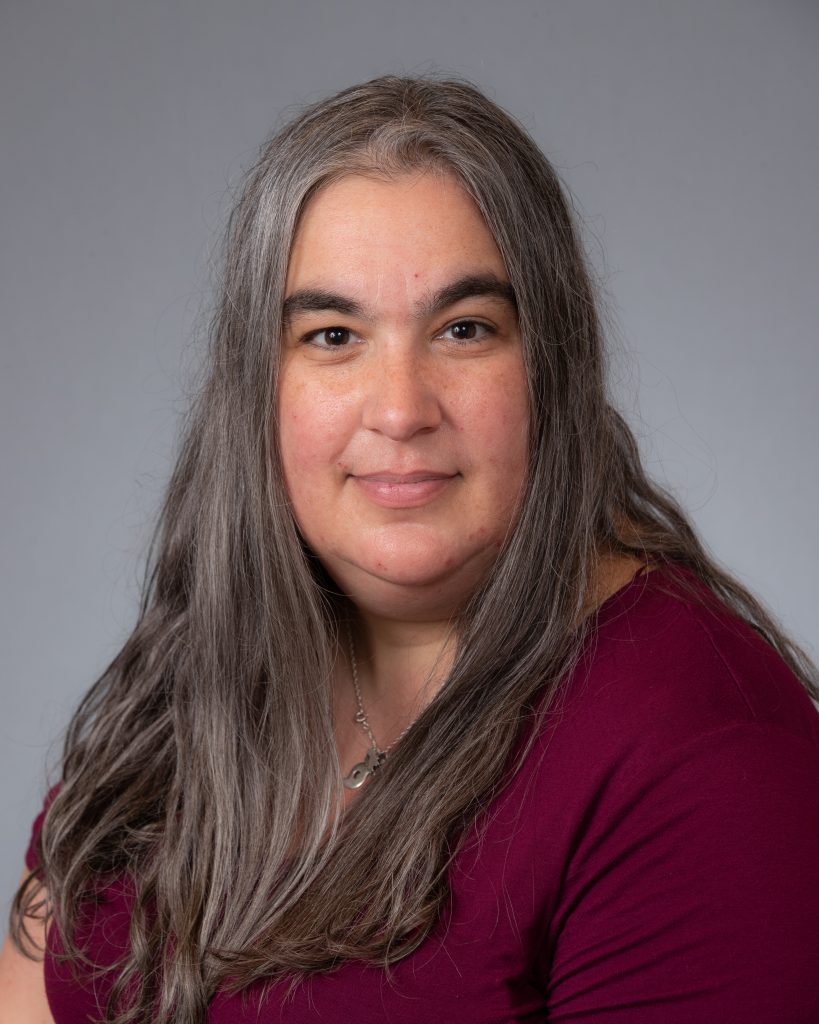
Mindy Bergman

Mindy Bergman

· Department Head, APA & SIOP Fellow, ProfessorVerified

Texas A&M University · Psychological & Brain Sciences

Active 1999–2025

h-index28
Citations3.1k
Papers10032 last 5y
Funding
See your match with Mindy Bergman — sign in to PhdFit.Sign in

About

Mindy Bergman is a Professor and Department Head in the Department of Psychological & Brain Sciences at Texas A&M University. She is an APA and SIOP Fellow with research interests that focus on diversity science and industrial/organizational psychology. Her research primarily investigates occupational health psychology and organizational commitment, with particular attention to how organizational climate affects workplace behaviors and individual well-being. Within her diversity research, she examines why people from underrepresented, minority, or lower power demographic groups are mistreated more often than the majority, and her work has influenced university service related to diversity and inclusion, especially within undergraduate programs. In the safety domain, Bergman collaborates with Stephanie Payne to study factors influencing safety climate and its relationship with unsafe workplace events. Her work also explores issues related to stigma, organizational climate, and well-being. She has contributed to understanding the effects of organizational structures on harassment, gender inequity in STEM, and race-related issues such as police shootings in the United States. Bergman’s research aims to inform practices that promote safety, equity, and well-being in organizational settings.

Research topics

  • Political Science
  • Psychology
  • Social psychology
  • Sociology
  • Epistemology

Selected publications

  • Evaluating Teaching Culture Change within a Mechanical Engineering Department

    2025-08-21

    article
  • There's nothing so testable as a strong theory

    Edward Elgar Publishing eBooks · 2025-12-09

    book-chapterSenior author
  • I-O psychology should not be extended to animals

    Industrial and Organizational Psychology · 2025-12-01

    articleOpen accessSenior authorCorresponding

    Hernandez et al. (2025) propose that I-O psychology should include animals as workers.We agree with Hernandez et al. on several points, including that some animals engage in work alongside humans and/or in place of humans, and like humans, animals have KSAOs that make animals suited to complete some tasks and not others.However, we disagree with Hernandez et al. that applying an approach to studying human work (i.e., I-O psychology) to animals will yield particularly interesting insights into working animals or into I-O psychology.This commentary has two main sections.First, we discuss philosophy of science principles relative to the application of one scientific project to another.Second, we examine two key differences between animals and humans to demonstrate that it is unlikely that I-O psychology will be a productive framework for understanding animal work. Applying a scientific framework to another phenomenonFrom a philosophy of science perspective, frameworks are general and highly flexible perspectives that typically can be applied to a broad range of phenomena.Disciplines in science (like I-O psychology) include a collection of similar and related frameworks, often called theories.Frameworks make scientists describe phenomena in a particular way and thereby direct the scientist to particular kinds of questions.Different frameworks lead to different research questions about the same phenomenon.For example, an economics framework would see a worker as an item that has costs and benefits to their employer (e.g., training costs, compensation, widgets produced) and leads inevitably to the question: does this worker produce a good return on investment?Hernandez et al. want I-O psychology to be extended to working animals.They draw parallels between their efforts and Bergman and Jean's (2016) paper that criticizes I-O psychology's overreliance on POSH (professional, office-based, safe from harm, in high-income countries) workers and underrepresenting employees who are earning wages, first-line, contract or gig, and low-to-medium skill.However, Hernandez et al.'s project is completely different from Bergman and Jean's.Hernandez et al. want to extend I-O psychology to what it has not previously covered to describe phenomena in new ways.In contrast, Bergman and Jean argued that a phenomenon (non-POSH workers) have always been within I-O psychology's framework, they were just underrepresented in empirical and theoretical work.Bergman and Jean argued that increased study of non-POSH workers would improve how much we know about them, including how they differ from POSH workers, thereby teaching us more about POSH workers too, resulting in a more robust and effective I-O psychology.

  • Living through the Culture Change: Faculty Perceptions of a Mechanical Engineering Departmental Teaching Culture Pre- and Post-Intervention

    2025-08-21

    article
  • WIP: Incremental innovation training as a means for percolating faculty teaching culture change-A First Look

    2024-02-06 · 1 citations

    articleOpen accessSenior author

    Abstract In this work in progress (WIP), we describe here the deployment of an "innovation mindset training" for faculty and preliminary findings on the evolution of faculty mindset at a large traditional Mechanical Engineering Department at Texas A&M University, which is a research focussed university which nevertheless has a very large undergraduate program (1500 students from the sophomore to senior yea) r and with more than 500 graduate students. We seek to study (a) how do faculty at typically approach pedagogical or curricular changes? (b) to what extent are student outcomes focused (c) how well do they plan their changes (d) are their changes incremental and easily implementable or is it a large one off change with no feedback? (e) Whether and how does a workshop with specific focus on the iterative build-measure-learn-share (B-M-L-S) cycles of learning change how faculty approach teaching innovations. This first look focuses on what changes occurred in the faculty plans. This effort was funded through National Science Foundation (NSF) IUSE/PFE: Revolutionizing Engineering and Computer Science Departments (IUSE/PFE: RED): Adaptation and implementation (A&I) grant (referred to as RED grant). This is an adaptation of the "Additive innovation" model proposed by Arizona State University. Our project, called Teams for Creating opportunities for Revolutionizing the Preparation of Students (TCORPS), is focused almost entirely on faculty development and empowerment and changing teaching culture. To help initiate the culture change, faculty were invited to form teams to propose small changes that they would like to implement into existing course curricula. In return, the teams would receive training on incremental innovation and change management. oOver 10 teams applied and Four project teams were selected. All applicants were invited to attend a summer workshop for the training. The summer workshop was composed of six 2-hour training sessions and several optional informal working sessions. The topics included pedological measurement toolkits, inclusivity, and team psychology. Additionally, iterative experimentation, goal-setting, and innovation business process workshop sessions were led by former industry leaders experienced with culture change in a business environment. To study the effect of the workshop in modifying the faculty planning/behavior, two activities are underway. First, the innovation idea submission form will be repopulated by each team to determine if the goals and plans have changed to align with iterative learning practices taught in the workshop. A rubric will be developed to score the faculty's responses on a number of facets with the goal of elucidating the answers to the questions listed above. Additionally, each team will provide monthly updates on their projects over the academic year where metrics will be applied to determine how well the different teams are applying the iterative methodology taught in the workshop. This WIP paper describes the workshop and the pre and post results and future work on innovation training. We propose to present this as a Lightning Talk

  • WIP: Teams for Creating Opportunities for Revolutionizing the Preparation of Students (TCORPS) at the Department of Mechanical Engineering, Texas A&M University

    2024-02-06

    articleOpen access

    Abstract WORK IN PROGRESS: Teams for Creating Opportunities for Revolutionizing the Preparation of Students (TCORPS) This work in progress (WIP) paper describes a National Science Foundation funded RED (Revolutionizing Engineering Departments) Adaptation and Implementation (A&I) grant focussed on changing the culture of a large traditional mechanical engineering department at Texas A&M University (TAMU) and is an adaptation of the "Additive Innovations" model developed by Arizona State University in their RED project. The TAMU project is focused entirely on culture change via faculty development; this culture change is aimed at teaching. Specifically, the goal is to shift from a culture where teaching is deprioritized and courses change via sporadic, undocumented, individual intuitive innovations to one that values teaching and its role in both faculty and student success and encourages a sustained process of incremental improvement and responsiveness to student learning through experimentation, measurement, and sharing. Ultimately, the goal of this project is to enhance a departmental culture in Mechanical Engineering where faculty regularly dialogue about current curricular effectiveness, and are empowered to set student learning outcomes that enable all students to thrive. The major objectives of the project are Extend the iterative build-test-learn-share mentality of the maker culture that exists for research to curricular and pedagogical improvements. The logic of this goal is that faculty are already used to experimental approaches to improvement and knowledge generation (even for teaching faculty, who have advanced degrees), but this experimental approach and, particularly, the data that are collected in experiments are rarely collected for teaching innovation. Without these data, it is difficult to know if the changes were fruitful. Empower the faculty to create their own bottom-up team structure based on mutual trust and sharing where the faculty work in soft-wired groups. By soft-wired, we mean that across semesters, some faculty rotate in and out of the groups depending on who is teaching and who is engaged in the experimentation and innovation cycle; additionally, faculty from other courses could be added to the team to collect assessment data (e.g., pre-requisite courses or next level courses). This effort is focused on breaking the sense that courses are "handed down" in a set structure that faculty cannot deviate from, even if they have a lay hypothesis of a change that might be beneficial for student learning. . Support the soft-wired teams and their iterative course development by means of a distributed change percolation approach rather than a centralized broadcast of training. By emphasizing proactive innovation, we plan to change the faculty mindset from "identifying, mitigating and fixing problems in teaching" to a sense of experimentation and excitement in iteratively innovating all aspects of curricula so that faculty are prepared to think of pedagogical changes as being experimental, iterative, and incremental rather than comprehensive and episodic. That is, the goal is to distribute change both across people and over time, rather than through major and rare overhauls of courses and curricula. 4. Encourage team members to participate and contribute at their pace and according to their comfort level. The main objective is to reduce the faculty effort and risk of curricular and pedagogical change. Restructure the departmental annual evaluations of faculty in order to recognize and reward pedagogical risk-taking and iterative improvement. To evaluate the success of the project, we evaluate several key hypotheses: 1) that facilitation of small-batch iterative experimentation and sharing among peers will lower risk and time commitment and increased documentation and systematic incorporation of innovations; 2) that change can be better achieved in a large department through the distributed percolation based upon trained facilitators and change agents, supported by departmental resources and revised faculty performance evaluation criteria; 3) that an improved shared vision can be achieved through use of the new Educational Value Canvas facilitated using the Antigua Forum meeting format; and 4) that if we as faculty, model proactive innovation behavior in both our research and teaching, then we will improve this capability in our students as well. In this work in progress paper we will describe our milestones, activities and learnings in year one and future plans for the subsequent two years . We plan to present this as a five minute Lightning Talk

  • Sampling

    Edward Elgar Publishing eBooks · 2024-07-23

    book-chapter1st authorCorresponding
  • Work in Progress: The Antigua Forum Format: Increasing Information Flow for Increased Pedagogical Innovation

    2024-02-07

    articleOpen access

    Abstract This Work-in-Progress presentation will detail work in progress as part of an NSF Revolutionizing Engineering Departments (RED) Grant, Teams for Creating Opportunities for Revolutionizing the Preparation of Students (TCORPS). It is an Adaptation and Implementation grant based upon the "Additive innovation" model proposed by Arizona State University. The vision is to focus on faculty development and culture change to reduce the effort and risk experienced by faculty in implementing pedagogical changes and to increase iterative, data-driven changes in teaching. The efforts include annual teaching retreats, faculty development workshops, facilitation of the innovation process, and creating a community of practice for sharing learning. One of the changes, more specifically, has been initiation and then refinement of an annual departmental teaching retreat. As an Adaptation and Implementation grant, the original intent for the retreat was to follow the learning of the ASU RED team and develop a common vision and mission for teaching in department using the Education Value Canvas [1]. The first retreat was conducted during the Covid 19 pandemic using the Mural co-creation platform. Mural did enable engagement in the process and a vision and education value canvas were developed. As the first cohort of teaching innovators approached the one-year point, however, we realized that the sharing, learning, and frameworks that helped scaffold the innovation process were engaging faculty more than the mission and value canvas. In addition, inspired by Petland's work showing that increasing and improving information flow can lead to increased innovation and idea generation, in our second year we pursued the Antigua Forum Format to increase and improve information flow in our annual teaching retreats [2]. The Antigua Forum Format, developed by a team at Universidad Francisco Marroquin, is a co-creation version of an unconference [3]. Based upon the idea that the some of the highest value at a conference comes from the technical discussions with colleagues at breaks in between talks, the format emphasizes extremely short presentations and a great deal more time for discussion and collaboration. Space is laid out for collaboration and co-creation. Project owners and facilitators lead stations where purpose driven outcomes are sought and displayed on a project board. Participation within the forum is self-organizing in that people can move from station to station as their interest dictates. Note taking is visual with Post-It Notes on the project boards. Facilitators and "ground rules" encourage listening, building on others' ideas, sharing the air, and making thinking visible. Our hypothesis is that this format increases interaction and discussion about teaching among the faculty and will therefore increase idea generation. Our study of this format anonymously tracks and records interactions among faculty and includes surveys covering idea generation and participant engagement. As a first look, network maps of interactions show high levels of interaction and decreased centrality. Surveys show high levels of idea generation and engagement. References [1] McKenna et al. Instigating a Revolution of Additive Innovation: An Educational Ecosystem of Making and Risk Taking. ASEE's 123rd Annual Conference and Exposition. https://www.researchgate.net/publication/331135800_Instigating_a_Revolution_of_Additive_Innovation_An_Educational_Ecosystem_of_Making_and_Risk_Taking [2] Pentland, Alex. Social Physics. Penguin Books. 2014 [3] K. Maeyens, personal communication, October 23, 2020.

  • Innovation Training and Its Impact on Faculty Approach to Curricular and Pedagogical Changes

    2024-02-07 · 2 citations

    articleOpen access

    Abstract This Evidence-Based Practice paper presents the results of an innovation mindset training effort as part of a National Science Foundation funded RED (Revolutionizing Engineering Departments) Adaptation and Implementation (A&I) grant focused on changing the culture of a large traditional mechanical engineering department at Texas A&M University (TAMU). The goal of this project is to shift the departmental culture from one that generally devalues teaching and relies on sporadic, undocumented individual intuitive innovations to one that values and focuses on identified student outcomes achieved through a sustained process of incremental experimentation, measurement, and sharing. Based on the substantial literature on institutional change, we investigated the effectiveness of a different strategy based on assisting faculty with curricular or pedagogical changes through an innovation training workshop series and the creation of a learning, sharing community of practice so that they can self-regulate their teaching innovations. We introduced a workshop on educational innovation, to improve faculty approaches to curricular or pedagogical changes. This included the initiation of educational innovation teams and the framework to encourage innovation. Faculty were asked to create groups and propose changes to their curriculum or pedagogy before the innovation training workshop. They were asked to resubmit their proposed changes after the workshop. We evaluated the changes in their approach by scoring their proposals based on a rubric that was created for assessing the evolution of faculty's mindset and behavioral changes. The results were used to inform what changes were needed to the innovation training. In this paper, we report on the results of two rounds of innovation training (with approximately 11 faculty in 4 teams in the first round and 15 faculty in 5 teams in the second round) that were performed in the summer of 2020 and 2021 and the resulting changes in the workshop structure. From the assessment scores, it is found that faculty consciously follow the innovator mindset methodology to formulate their teaching plans and each team has a common sense of iterative teaching innovation. However more work is needed in other aspects including the ability to develop measurable formative "lead indicators" of the teams' progress (as opposed to a final evaluation of whether they achieved their goals) and also on the faculty's ability to explicitly consider how inclusive their pedagogical changes were.

  • Survey indicates addressing workplace environment, work-life balance, and flexibility are key to attracting and retaining veterinarians in academia

    American Journal of Veterinary Research · 2024-07-19 · 3 citations

    articleOpen access

    OBJECTIVE: Referencing growing concerns over the recruitment and retention of faculty in academic veterinary medicine, the authors hypothesized that among surveyed veterinary residents and early-career faculty, work-life balance and workplace climate and culture are stronger motivators than financial considerations, regardless of demographic factors such as gender, race/ethnicity, and area of specialization. SAMPLE: 541 participants were included in data analysis. METHODS: A mixed methods approach was utilized, incorporating both quantitative data and qualitative, free-text responses to better understand veterinary career choices by contextualizing factors associated with academic medicine. RESULTS: Factors underpinning career-related decision-making were ranked by level of importance as (1) workplace environment/culture, (2) personal well-being/work-life balance, (3) salary and bonuses, (4) geographic location, (5) facilities and resources, (6) benefits, and (7) schedule flexibility. Desires for workload balance, schedule flexibility, support from leadership, and mentorship and collaboration were among the top themes of qualitative responses for both residents and early career faculty respondents. Factors influencing career decision-making for resident and early-career faculty are varied. Workplace environment, work-life balance, and schedule flexibility are areas that academic institutions can address and continue to improve and that are likely to positively impact entry into academia and the desire to stay. CLINICAL RELEVANCE: This study sought to understand factors related to career decision-making and interest in academic veterinary medicine among residents and early-career faculty. Understanding these factors can support efforts to recruit and retain faculty in academic veterinary medicine.

Frequent coauthors

  • David Seets

    Mitchell Institute

    34 shared
  • Arun R. Srinivasa

    34 shared
  • Rujun Gao

    University of California, Berkeley

    32 shared
  • M. Cynthia Hipwell

    Texas A&M University

    31 shared
  • Guillermo Aguilar

    Technische Universität Berlin

    31 shared
  • Stephanie C. Payne

    23 shared
  • Karan Watson

    Mitchell Institute

    22 shared
  • Luis Alfredo Jiménez Rodríguez

    Universidad del Norte

    22 shared

Education

  • PhD, Psychology

    University of Illinois at Urbana-Champaign

    2001
  • A.M., Psychology

    University of Illinois at Urbana-Champaign

    1999
  • B.S. (Honors), Psychology

    University of Oklahoma

    1996

Awards & honors

  • APA Fellow
  • SIOP Fellow
  • Resume-aware match score
  • Save to shortlist
  • AI-drafted outreach

See your match with Mindy Bergman

PhdFit ranks faculty by your research interests, methods, and publications — grounded in their actual work, not templates.

  • Free to start
  • No credit card
  • 30-second signup