Upload your resume. PhdFit's six research agents compare your background with faculty profiles, recent publications, lab focus, and outreach opportunities, then rank professors with evidence you can review.
Ask how her lab is extending interpretability methods into fairness audits for real-world AI systems.
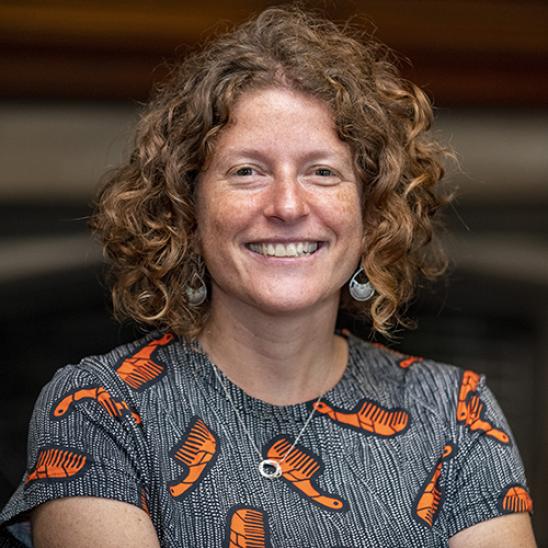
University of Chicago · History of Science, Medicine, and Technology
Active 2008–2025
Michele Friedner is a medical anthropologist researching deaf and disabled peoples’ social, moral, religious, and economic practices, with a primary focus on deafness in India. Her work explores how disability as a category and experience has become increasingly salient in the international policy arena and in everyday life. She analyzes emerging technologies, such as cochlear implants, and their role in rendering disability malleable and in shaping notions of normalcy. Friedner examines the relationship between stigma and value, particularly how disability enables the creation of different forms of value under late liberalism, and investigates sensory infrastructures associated with technologies that normalize and erase disability. Her research on deafness emphasizes questions of language, personhood, and sociality, and she has contributed to scholarly conversations about the state, senses, urban development, and disability. Her second book, 'Sensory Futures: Cochlear Implants and Sensory Infrastructures in India' (2022), was awarded the 2023 Rachel Carson Prize and focuses on the emergence of cochlear implantation programs in India, analyzing how the Indian state has shifted from distributing aids to surgically implanting senses, creating complex dependencies between families, the state, and multinational corporations. Friedner’s earlier work, 'Valuing Deaf Worlds in Urban India' (2015), examines how deaf young adults in urban India work toward 'deaf development' through social practices, institutions, and spaces that foster new identities and critiques of societal norms. Her ongoing projects include longitudinal studies of cochlear implantation, research on communication practices in carceral institutions, and analyses of how categories like disability intersect with other social identities in India. Friedner’s work combines sensory anthropology, medical anthropology, and science and technology studies to interrogate how technologies and policies shape perceptions of personhood, normalcy, and social value.
Deaf Joy: Recuperating the Present, Nuancing Potentiality, and Eating Ice Cream
Sign language studies · 2025-01-01 · 2 citations
Abstract: This commentary proposes deaf joy as a valuable mode of engagement with and between deaf people. Deaf joy is a corrective to deficit- and damage-focused narratives and research and it enables a habitable focus on the present. Foregrounding deaf joy also allows for critiques of aspirations for and research focused on normative accounts of potentiality as well as neoliberal ideas of deaf peoples' value because of what they contribute to society. These critiques are important because potentiality as a concept is often weaponized and used to invalidate deaf children's and deaf peoples' lives as lived. Drawing on research conducted at an early intervention conference, media coverage of a cochlear implant "scandal" in South Australia, and a deaf-produced film, this article argues for cultivating deaf joy that is not just a reaction to damage and loss, and that is not just focused on what deaf people can contribute to the world.
Standard Grant: Cochlear Implants, (Re)Distribution, Maintenance, and Cures
NSF · $266k · 2020–2025
PostDoctoral Research Fellowship
NSF · $120k · 2011–2014
Anna Arstein-Kerslake
Ollscoil na Gaillimhe – University of Galway
Andrea Broderick
Tom Shakespeare
London School of Hygiene & Tropical Medicine
Piers Gooding
La Trobe University
Gérard Quinn
PhdFit ranks faculty by your research interests, methods, and publications — grounded in their actual work, not templates.
Deafness & Education International · 2024-05-28 · 1 citations
As cochlear implants become the gold standard in intervening on deafness around the world, teachers of deaf children are increasingly expected to have technological expertise and to ensure that cochlear implants, and other hearing technology, are being used and that they are working. Students are only considered "ready to learn" if they are using their technology. Drawing from ethnographic research and semi-structured interviews with educators, families, surgeons, speech and language therapists, and audiologists in Indian cities, this article mobilises two conceptual frameworks from medical anthropology and public health – the "biotechnical embrace" and the "structural competency framework" to argue that teachers of deaf children, both in India and internationally, need to think and work beyond technology. Ultimately, focusing on a child does not mean focusing (only) on technology but rather on seeing a child as enmeshed in social, political, educational, and economic structures and relations. Expanding educators' focus to consider micro and macro scales is especially urgent now, as countries around the world implement programmes in which technology is the goal.
Disability inclusion in Indian workplaces: Mapping the research landscape and exploring new terrains
IIMB Management Review · 2024-02-29 · 4 citations
In this commentary, we reflect upon twenty years of disability research in the Indian workplace and identify possibilities for new conversations and terrains of inquiry. We trace the key frames, theories, and methodological tendencies that demarcate this scholarship. We suggest that researchers can open new terrains of inquiry by situating disability in context, exploring heterogeneous forms of organising and workplace arrangements, and connecting workplace relations and interactions with wider institutional and sociopolitical discourses. We conclude with reflections on disability and inclusion otherwise.
Limn. · 2024-11-20
Cochlear implants deemed obsolete in one country become vital in another.
Review: <i>Diminished Faculties: A Political Phenomenology of Impairment</i>, by Jonathan Sterne
Journal of Popular Music Studies · 2023-06-01
Book Review| June 01 2023 Review: Diminished Faculties: A Political Phenomenology of Impairment, by Jonathan Sterne Jonathan Sterne. Diminished Faculties: A Political Phenomenology of Impairment. Durham, NC: Duke University Press, 2022. 304 pages. Michele Friedner, Michele Friedner University of Chicago Michele Friedner is an associate professor in the Department of Comparative Human Development at the University of Chicago. Email: michelefriedner@uchicago.edu Search for other works by this author on: This Site PubMed Google Scholar Ailsa Lipscombe Ailsa Lipscombe Ailsa Lipscombe Victoria University of Wellington Ailsa Lipscombe is a post-doctorate research fellow in the School of Information Management, and a teaching fellow in the Department of Music, at Te Herenga Waka—Victoria University of Wellington. She holds a Ph.D. in music from the University of Chicago, and her research draws together sound studies, ethnomusicology, and critical disability studies to amplify disabled knowledge and/or embodied forms of listening praxes. Email: ailsa.lipscombe@vuw.ac.nz Search for other works by this author on: This Site PubMed Google Scholar Email: michelefriedner@uchicago.edu Email: ailsa.lipscombe@vuw.ac.nz Journal of Popular Music Studies (2023) 35 (2): 119–122. https://doi.org/10.1525/jpms.2023.35.2.119 Views Icon Views Article contents Figures & tables Video Audio Supplementary Data Peer Review Share Icon Share Facebook Twitter LinkedIn Email Tools Icon Tools Get Permissions Cite Icon Cite Search Site Citation Michele Friedner, Ailsa Lipscombe; Review: Diminished Faculties: A Political Phenomenology of Impairment, by Jonathan Sterne. Journal of Popular Music Studies 1 June 2023; 35 (2): 119–122. doi: https://doi.org/10.1525/jpms.2023.35.2.119 Download citation file: Ris (Zotero) Reference Manager EasyBib Bookends Mendeley Papers EndNote RefWorks BibTex toolbar search Search Dropdown Menu toolbar search search input Search input auto suggest filter your search All ContentJournal of Popular Music Studies Search First things first: we write this review as disabled ethnographers working in the field of sound studies. Michele Friedner is a deaf anthropologist who writes about deafness in India and overlaps with sound studies, deaf studies, and disability studies. Ailsa Lipscombe is a blind ethnomusicologist who writes about traumatic listening, hospital acoustemologies, and intersections between sound studies and disability studies. This review draws from a Zoom conversation we had while Ailsa ran a scheduled nutrition infusion through her peripherally inserted central catheter (PICC) line, which she affectionately calls “Piccadilly the Third,” and Michele attempted to ignore her child, who kept on asking for a snack. We utilize a conversational style in this review of Diminished Faculties, Jonathan Sterne’s multi- and inter-disciplinary text written in the form of five substantive chapters and a conclusion that is a whimsical “user’s guide” to impairment theory. The book’s first chapter, “Degrees of Muteness” introduces... You do not currently have access to this content.
Duke University Press eBooks · 2023
PubMed · 2023-06-01 · 4 citations
In 2014, the Indian state revised a key program providing aids and appliances to disabled people to also include cochlear implants for children living below the poverty line. The program is remarkable in its targeting of the poorest of the poor to provide them with expensive technology made by multinational corporations and its development of new surgery and rehabilitation infrastructures throughout India. Based on interviews and participant observation with key stakeholders, this paper argues that in focusing only on "a right to hearing" and on cochlear implants as a solution for deafness, health care practitioners ignore the complex work required to maintain cochlear implant infrastructures, as well as the advocacy work done by disability activists in India and internationally to transform existing political, economic, educational, and social structures. Since cochlear implants are the "gold standard" in intervening on hearing loss and increasing numbers of countries in the Global South have started state-funded cochlear implant programs, an exploration of India's program provides an opportunity to analyze both the importance of infrastructure and the need to combat ableism within structural competency frameworks. Disability justice is part of structural competency. Ultimately what is at stake is expanding health practitioners' ideas of what it means to maximize potential, particularly in the face of new technological interventions around disability.
From Obsolescence to Abandonment: Exploring the Precarious Use of Cochlear Implants in India
Science Technology & Human Values · 2023-11-30
Cochlear implants are considered the gold standard in intervening on deafness and hearing loss. However, “success” is predicated upon routine and consistent use, which in turn is predicated on the ability to maintain devices. This essay considers what happens when use is partial and precarious and asks what happens when external implant processors become obsolete. Contributing to Science and Technology Studies scholarship on obsolescence and the binary between use and nonuse, I analyzes the ongoing aftermath of a central government program in India that provides children living below the poverty line with cochlear implants. Drawing on ethnography and interviews, the article analyzes how families struggle financially and logistically to maintain devices, resulting in cycles of partial use and precarious use. Ultimately, devices become obsolete, and families cannot afford compulsory upgrades. The state and corporations claim these families abandon the devices. In contrast to this claim, the article stresses that we must examine abandonment differently, by attending to how families are abandoned by the state and corporations. Arguing that obsolescence as a concept obscures relationality and functions apolitically, the concept of abandonment is instead put forward to analyze ruptures that occur when consistent and reliable biotechnology use is no longer possible.
Political, Economic, and Relational Production of Sense
2023-10-10
Cochlear implants (CIs) are increasingly considered the “gold standard” in intervening on deafness and countries around the world have started programs providing them to children. This chapter draws from ethnographic research conducted from 2016 to 2022 in Indian clinics, hospitals, schools, and therapy centers and interviews with families, surgeons, government administrators, cochlear implant corporation representatives, audiologists, and speech and language therapists, among other stakeholders. The chapter analyzes the distinct kinds of sensory infrastructures that bring a normative sensorium—through cochlear implanted hearing—into being and how relationships between the state, CI manufacturer, family, and individual change over time and produce different kinds of outcomes. The chapter argues for the importance of exploring how the sense of hearing—and other senses—are politically, economically, and socially produced and maintained over the life course. The chapter also argues for the importance of intersensory research and for seeing all research as intersensory.
From Hoping to Expecting: Cochlear Implantation and Habilitation in India
Cultural Anthropology · 2022-02-22 · 4 citations
While scholars have attended to disability as a new normal that is increasingly present as a category and experience in public spheres, this essay argues that technologies such as cochlear implants and accompanying therapeutics make it possible for children to “become normal.” Parents come to expect, rather than hope, that interventions will work. An analysis of habilitating children with cochlear implants in India—and habilitation as a process and practice in general—foregrounds the ways that potentiality attaches to certain kinds of devices, therapeutic methods, and people because of the presumed existence of malleability. Habilitation in the case of cochlear implants means developing a hearing brain and becoming a listening and speaking person. Potentiality and ideal habilitative trajectories wane with age and families must negotiate expectations in relation to sharply etched ideas of what is normal. This essay stresses that just as scholars have critically attended to rehabilitation, habilitation too is an important process of activating what is perceived to be latent and has future-oriented stakes. सारांश शोधकर्ताओं ने विकलांगता की खोज सार्वजनिक क्षेत्रों में तेजी से फैलता हुआ एक वर्ग एवं “ नये साधारण “ अनुभव के रूप में की हैं ।इस निबंध में यह तर्क दिया है कि “ कॉक्लियर इम्प्लांट “ जैसी टेकनोलोजि और उसके सहयोगी उपचारात्मक तंत्र बच्चो के नॉर्मल बनने की संभावना निर्माण करते हैं। माता-पिता आशा करने की बजाय अपेक्षा करने लगते हैं कि इस प्रकार के हस्तक्षेप सफल होंगे। भारत में “ कॉक्लियर इम्प्लांट “ का उपयोग करने वाले बच्चो के हॅबिलिटेशन एवं आम हाबिलिटेशन की प्रक्रिया और कार्यप्रणाली का विश्लेषण क्षमता विस्तार के उन विविध मागों को सामने लाता है , जो संस्कारक्षम प्रभाव का अस्तित्व मानने से , विशिष्ट प्रकार के उपकरण , उपचारात्मक तंत्र , मानव संसाधन के साथ जुड़े हुए हैं| “ कॉक्लियर इम्प्लांट “ के संदर्भ में हॅबिलिटेशन का मतलब श्रवणक्षम दिमाग विकसित करना एवं सुनने और बोलने वाली व्यक्ती बनाना । क्षमता विस्तार और हॅबिलिटेशन के आदर्श मार्ग उम्र के साथ धीरे-धीरे घटते हैं परिवार वालों ने इस बात को ध्यान में रखते हुए “नॉर्मल” की संकल्पना के बारे में अपनी धारणा तय करनी चाहिए । इस निबंध में यह बात अधोरेखित की है: शोधकर्ताओं ने रिहॅबिलिटेशन संकल्पना को गंभीरता से परखा हैं| हॅबिलिटेशन एक ऐसी प्रक्रिया है जो , हम जिसे कथित रूप में अव्यक्त समझते हैं उसे सक्रिय करता है और इसका भविष्य में महत्वपूर्ण योगदान हैं ।
Theresia Degener
Protestant University of Applied Sciences Rhineland-Westphalia-Lippe
Maria Bergh
University of Melbourne
Susan Schweik