
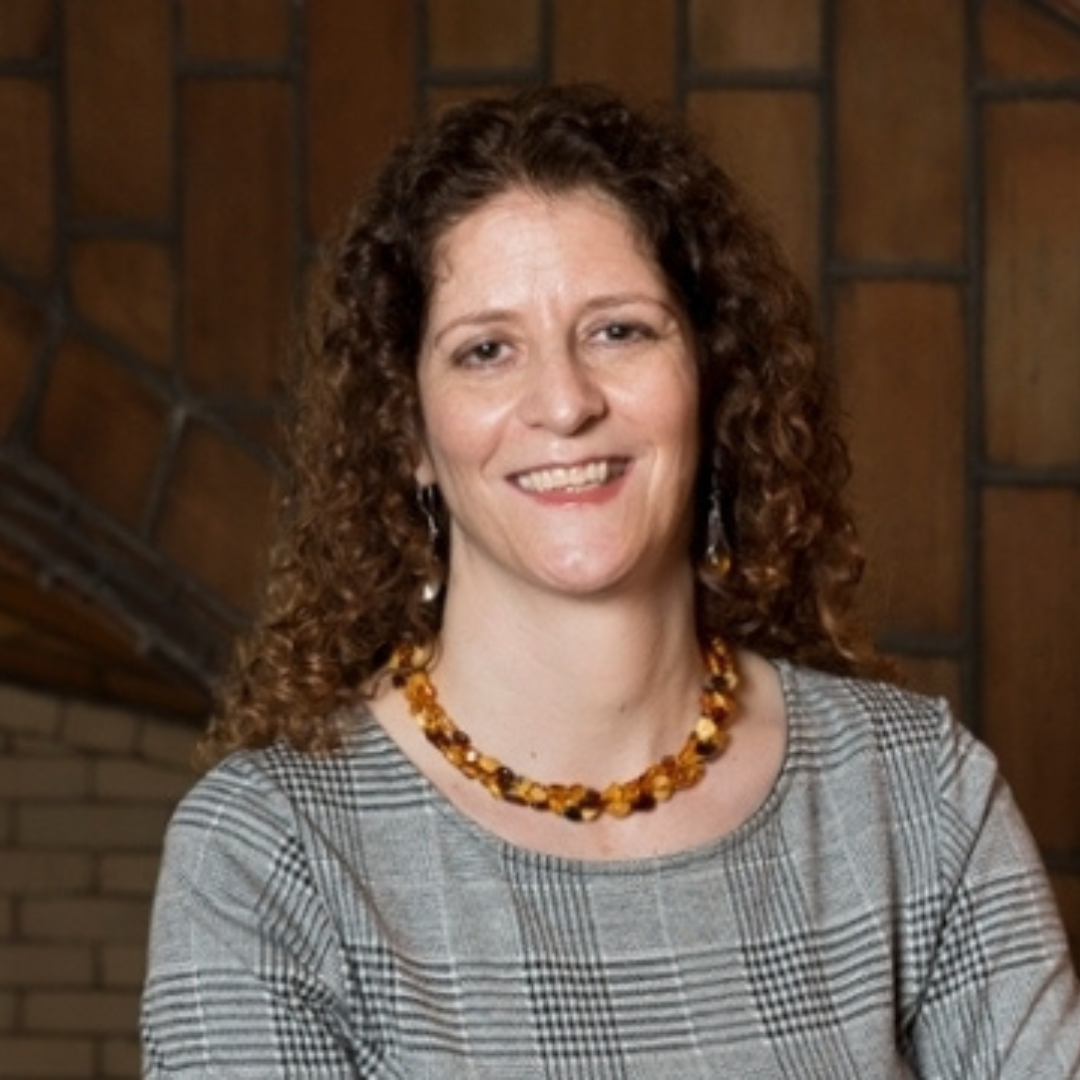
Michal Friedman
· Assistant Professor of HistoryVerifiedCarnegie Mellon University · History
Active 1969–2022
About
Michal Friedman is the Jack Buncher Endowed Chair in Jewish Studies at Carnegie Mellon University, where she is an Assistant Teaching Professor in the Department of History. She specializes in Jewish Diasporic history, particularly that of Sephardi and Spanish-speaking Jewish communities, as well as Spanish history and culture. Her research and teaching focus on the history of ethnic and religious minorities in Europe, the Middle East, and the Americas, along with concepts of diaspora and nationhood. Born in Israel and raised in Tel Aviv and New York City, Friedman completed her university studies in the US and Spain, earning her Ph.D. in Jewish history at Columbia University. She has held postdoctoral fellowships at the Herbert D. Katz Center for Advanced Judaic Studies at the University of Pennsylvania and at The Seminar in Advanced Jewish Studies at the University of Oxford. Her scholarly work includes a book manuscript based on her doctoral dissertation, which examines efforts to recover the Jewish past and the legacy of Sefarad in modern Spain, exploring how this history was used in various ideological contexts. Friedman has contributed to numerous publications, edited collections, and is a co-founder of the interdisciplinary group Genealogies of Sepharad. She has also established collaborations with the Centropa Archive, a digitized collection of interviews and photographs of Jews in Eastern and Central Europe after the Holocaust.
Research topics
- Computer Science
- World Wide Web
- Software engineering
- Human–computer interaction
- Multimedia
- Programming language
Selected publications
SPEAK YOUR MIND: INTRODUCING APTLY, THE SOFTWARE PLATFORM THAT TURNS IDEAS INTO WORKING APPS
ICERI proceedings · 2022 · 1 citations
- Computer Science
- Computer Science
- Human–computer interaction
Appears in: ICERI2022 Proceedings Publication year: 2022Pages: 1653-1660ISBN: 978-84-09-45476-1ISSN: 2340-1095doi: 10.21125/iceri.2022.0432Conference name: 15th annual International Conference of Education, Research and InnovationDates: 7-9 November, 2022Location: Seville, Spain
Democratizing Computing with App Inventor
GetMobile Mobile Computing and Communications · 2015-01-13 · 87 citations
articleSenior authorMIT App Inventor is a visual blocks language that enables beginners and non-programmers to create apps for their phones and tablets. It has empowered thousands to create software with real-world usefulness, and see themselves as creators rather than only consumers in the mobile computing environment. Educationally, it offers a "gateway drug" that can help broaden and diversify participation in computing education.
Blood · 2015-12-03 · 1 citations
articleAbstract Introduction: Current practice guidelines in the United States (US) recommend that anticoagulation treatment for deep vein thrombosis (DVT) and/or pulmonary embolism (PE) is initiated with parenteral administration of low-molecular-weight heparin (LMWH), fondaparinux or low-dose unfractionated heparin (UFH), followed by the use of warfarin or other vitamin K antagonist therapies (Kearon et al Chest 2012). Given the relatively recent introduction of novel oral anticoagulants (NOACs), it is essential to understand the demographic and clinical characteristics of DVT/PE patients receiving these therapies. The objective of this study was to evaluate characteristics and treatment patterns of patients with DVT and/or PE in the US hospital setting. Methods: This retrospective observational cohort study used hospital administrative claims data spanning 11/1/2011-12/31/2013 from more than 600 hospitals. Patients ≥18 years old with a primary discharge diagnosis of DVT and/or PE in the inpatient setting during the identification period (11/1/2012-12/31/2013) were selected. The first-observed hospitalization for DVT/PE during the identification period was defined as the index hospitalization, and thus the principal event for analysis. Patients with a secondary diagnosis of atrial fibrillation, atrial flutter, cardiomyopathy, or a coagulation disorder during the index hospitalization were excluded. Patients needed to have had a complete hospital stay defined as (1) observed admission and discharge dates and (2) a discharge status other than expired or unknown. Patients were categorized into mutually-exclusive treatment cohorts based on the anticoagulant (AC) treatment regimen received during the index hospitalization, including lack of receipt of any AC treatment. Parenteral anticoagulant (PAC) therapy was defined as LMWH, fondaparinux or UFH. Demographic, hospital, and clinical characteristics were assessed during the index hospitalization. A logistic regression was conducted to assess the likelihood of receiving rivaroxaban with PAC and/or warfarin (vs. rivaroxaban alone) adjusting for the following covariates: age, sex, race, geographic region, payer type, primary or secondary diagnosis of DVT and/or PE, history of DVT/PE, discharge status, receipt of thrombolytic drugs, presence of primary malignancy, presence of renal disease, attending provider specialty, hospital setting, and hospital size. Results: In this study, 46,214 patients met the selection criteria (mean age: 61 years; 53% female). Sixty-eight percent of all patients were white and 50% were Medicare beneficiaries. The majority of patients received a primary diagnosis of PE during the index hospitalization (54%), followed by those with a primary diagnosis of DVT without mention of PE (38%) and primary diagnosis of DVT and secondary PE (8%). The most common AC treatment during the index hospitalization was PAC + warfarin (70%), PAC alone (16%), PAC + rivaroxaban (6%), PAC + warfarin + rivaroxaban (4%), warfarin alone (1%), rivaroxaban alone (1%), and no AC therapy (2%). Among the patients who received rivaroxaban, more than 90% additionally received PAC. The mean [SD] Deyo-Charlson Comorbidity Index scores were lowest for the cohorts receiving rivaroxaban (rivaroxaban alone, 1.1 [1.7]; PAC + rivaroxaban, 1.2 [1.8]; and PAC + warfarin + rivaroxaban cohorts, 1.2 [1.6]). In logistic regression analyses, patients with a primary PE diagnosis (odds ratio (OR): 1.49; 95% CI 1.17-1.88), a primary DVT diagnosis with a secondary PE diagnosis (OR 2.07; 95% CI 1.31-3.26), receipt of thrombolytic drugs (OR: 12.45; 95% CI 3.95-39.23), presence of renal disease (OR: 1.61; 95% CI 1.02-2.54), and receipt of care in an urban hospital (OR: 1.53; 95% CI 1.16-2.00) were significantly more likely to receive rivaroxaban with PAC and/or warfarin compared to rivaroxaban alone. Conclusion: This study evaluated characteristics and treatment patterns among patients with DVT and/or PE in the US hospital setting, following the introduction of the NOACs. Our findings indicate that the standard of care (PAC + warfarin) remains the dominant treatment regimen despite the availability of newer NOACs. Future studies of treated patients with DVT and/or PE should examine whether these preliminary observations of treatment patterns change with increased clinical experience with NOACs. Disclosures Lim: Boehringer Ingelheim Pharmaceuticals Inc.: Employment. Sander:Boehringer Ingelheim Pharmaceuticals Inc.: Employment.
Live Programming of Mobile Apps in App Inventor
2014-01-01 · 9 citations
articleOpen accessSenior authorMIT App Inventor is a programming environment that lowers the barriers to creating mobile apps for Android devices, especially for people with little or no programming experience. App Inventor apps for a mobile device are constructed by arranging components with a WYSIWYG editor in a computer web browser, where the development computer is connected to the device by WiFi or USB. The behavior of the components is specified using a blocks-based graphical programming language. A key feature in making App Inventor accessible to beginning programmers is live programming: developers interact directly with the state of the evolving program as it is being constructed, and changes made in the web browser are realized instantaneously in the running app on the device. This paper describes the live programming features of App Inventor and explains how they are implemented. Keywords: live programming; android; mobile app development; interpretation
Performance Management in the Virtual Data Center: Virtual Memory Management.
Int. CMG Conference · 2013-01-01
article1st authorCorrespondingLate Breaking: Measuring Processor Utilization in Windows and Windows Applications.
Int. CMG Conference · 2011-01-01
article1st authorCorresponding2010-10-01 · 3 citations
articleApp Inventor for Android is a visual programming environment being created by Google that enables non-programmers to easily build mobile phone applications. It will become publicly available starting in 2010. A prototype implementation was piloted in introductory computer science courses at 12 colleges and universities in Fall 2009. App Inventor is designed to let students with no previous computing experience explore mobile applications, including communication, location-awareness, social networking, and massive Web-based data collections. One goal of App Inventor to change the nature of introductory computing, to make it less dissociated: more about people and their interactions with others and with the world around them. We want to enable young people - and everyone - to engage the world of mobile services and applications as creators, not just as consumers. This workshop will provide (1) a hands-on introduction to using App Inventor; (2) demonstrations of effective teaching techniques in order to help attendees decide whether and how to offer similar courses; (3) discussions by faculty in the pilot projects of their experiences and their students' work (4) time for general discussion of creating mobile applications as an introduction to computing.
Mainstream NUMA and the TCP/IP stack.
Int. CMG Conference · 2008-01-01
article1st authorCorrespondingThe Art and Science of Measurement.
Int. CMG Conference · 2007-01-01
article1st authorCorrespondingSledování a optimalizace výkonu Microsoft Windows Serveru 2003.
2006-01-01
article1st authorCorresponding
Frequent coauthors
- 5 shared
Takeo Kanade
- 3 shared
H.B. Brown
- 3 shared
Mark Nagurka
Marquette University
- 2 shared
John M. Dolan
- 2 shared
Bruce H. Krogh
Carnegie Mellon University
- 2 shared
Hal Abelson
Massachusetts Institute of Technology
- 1 shared
Yusheng Xu
Collaborative Innovation Centre for Advanced Ship and Deep-Sea Exploration
- 1 shared
Evan W. Patton
Labs
Friedman LabPI
Education
- 2012
Ph.D., Jewish history
Columbia University
- Resume-aware match score
- Save to shortlist
- AI-drafted outreach
See your match with Michal Friedman
PhdFit ranks faculty by your research interests, methods, and publications — grounded in their actual work, not templates.
- Free to start
- No credit card
- 30-second signup