
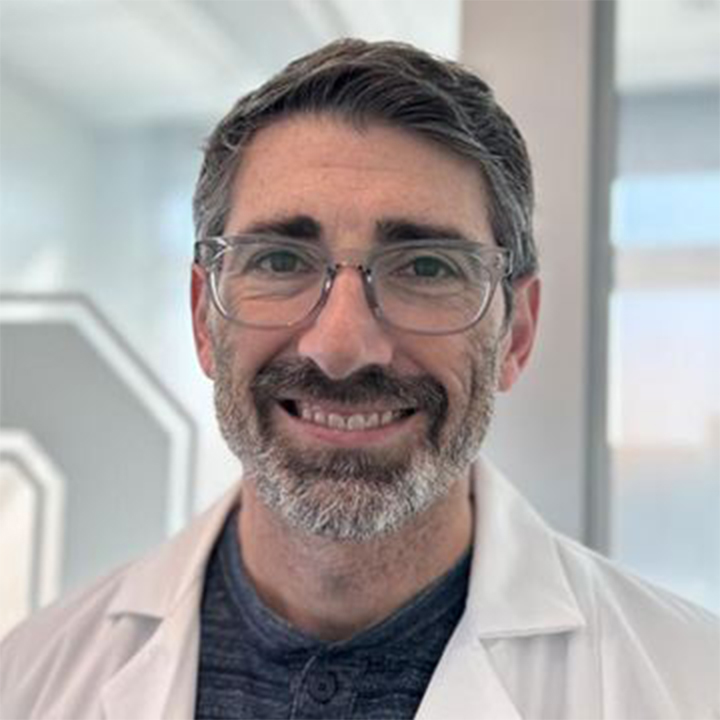
Michael Tranter
· Associate ProfessorOhio State University · Translational and Molecular Therapeutics
Active 2008–2026
Academic metrics are sourced from OpenAlex and public funding records; values may differ from Google Scholar.
About
Michael Tranter, PhD, is an Associate Professor in the Department of Molecular Medicine and Therapeutics at Ohio State College of Medicine. His research focuses on understanding the molecular mechanisms of post-transcriptional gene regulation that drive cardiometabolic diseases. His lab has demonstrated a functional role for the RNA binding protein HuR in the pathophysiology of cardiac remodeling, acting in both myocytes and fibroblasts. Additionally, his work has contributed to the field of adipose tissue biology, particularly in understanding how disruptions in adipose tissue homeostasis impact cardiac physiology. Dr. Tranter's research employs multi-disciplinary, mechanism-focused translational systems physiology approaches using both mouse and human tissues. His ongoing projects include studying pathological left ventricular cardiac hypertrophy and fibrosis leading to heart failure, calcium-mediated thermogenic metabolism in brown adipocytes, and adipose tissue-mediated endocrine effects on cardiac physiology. He earned his PhD in Molecular Pharmacology from the University of Cincinnati, College of Medicine, and his BS in Molecular Biology from Rose-Hulman Institute of Technology.
Research topics
- Internal medicine
- Endocrinology
- Medicine
- Biology
- Genetics
- Pharmacology
- Immunology
- Biochemistry
- Cardiology
Selected publications
The FASEB Journal · 2025-03-14 · 6 citations
articleOpen accessSenior authorCorrespondingThe RNA-binding protein human antigen R (HuR) has been shown to reduce cardiac remodeling following both myocardial infarction and cardiac pressure overload, but the full extent of the HuR-dependent mechanisms within cells of the myocardium has yet to be elucidated. Wild-type mice were subjected to 30 min of cardiac ischemia (via LAD occlusion) and treated with a novel small molecule inhibitor of HuR at the time of reperfusion, followed by direct in vivo assessment of cardiac structure and funct…
RNA binding proteins as mediators of pathological cardiac remodeling
Frontiers in Cell and Developmental Biology · 2024-05-16 · 4 citations
reviewOpen accessSenior authorCorrespondingRNA binding proteins (RBPs) play a central in the post-transcriptional regulation of gene expression, which can account for up to 50% of all variations in protein expression within a cell. Following their binding to target RNAs, RBPs most typically confer changes in gene expression through modulation of alternative spicing, RNA stabilization/degradation, or ribosome loading/translation rate. All of these post-transcriptional regulatory processes have been shown to play a functional role in patho…
Cardiac macrophages and fibroblasts: A synergistic partnership without cellular transition
Journal of Molecular and Cellular Cardiology · 2024-09-19 · 2 citations
editorialOpen access<i>MCM2</i> mediates post-MI cardioprotection by promoting the pro-angiogenic cardiosome signaling
bioRxiv (Cold Spring Harbor Laboratory) · 2024-12-17 · 1 citations
preprintOpen accessAbstract Background In the past decade, induced cardiac rejuvenation has emerged as a leading approach to repair cardiac injury. Recent studies demonstrate that promoting cell cycle reentry in adult cardiomyocytes (CM) enhances cardiac rejuvenation by influencing paracrine signaling. We previously demonstrated that the inhibition of two cell cycle inhibitors, Retinoblastoma 1 (Rb1) and Meis homeobox 2 (Meis2), in the adult CM enhances angiogenesis and cardiac function following ischemic injury,…
PAR2 (Protease-Activated Receptor 2) Deficiency Attenuates Atherosclerosis in Mice
UNC Libraries · 2026-03-20
articleOpen accessOBJECTIVE: PAR2 (protease-activated receptor 2)-dependent signaling results in augmented inflammation and has been implicated in the pathogenesis of several autoimmune conditions. The objective of this study was to determine the effect of PAR2 deficiency on the development of atherosclerosis. APPROACH AND RESULTS: PAR2 mRNA and protein expression is increased in human carotid artery and mouse aortic arch atheroma versus control carotid and aortic arch arteries, respectively. To determine the eff…
Recent grants
NIH · $1.8M · 2022
Frequent coauthors
- 45 shared
Sarah Anthony
The Ohio State University
- 22 shared
Xiaoping Ren
Guangxi University of Chinese Medicine
- 22 shared
Samuel Slone
University of Cincinnati Medical Center
- 22 shared
Jack Rubinstein
University of Cincinnati Medical Center
- 21 shared
A. Phillip Owens
University of Cincinnati Medical Center
- 18 shared
Michelle L. Nieman
University of Cincinnati Medical Center
- 18 shared
Adrienne Guarnieri
University of Cincinnati Medical Center
- 17 shared
W. Keith Jones
Loyola University Chicago
Education
- 2012
Post-Doctoral Fellowship, Pharmacology
University of Cincinnati College of Medicine
- 2010
Ph.D., Molecular, Cellular, and Biochemical Pharmacology
University of Cincinnati College of Medicine
- 2004
B.S.
Rose Hulman Institute of Technology
Similar researchers at Ohio State University
- Resume-aware match score
- Save to shortlist
- AI-drafted outreach
See your match with Michael Tranter
PhdFit ranks faculty by your research interests, methods, and publications — grounded in their actual work, not templates.
- Free to start
- No credit card
- 30-second signup