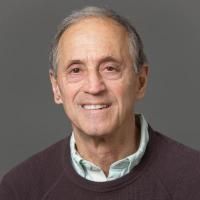
Michael Steven Hershfield
· Professor of MedicineDuke University · Biochemistry
Active 1968–2024
About
Michael Steven Hershfield is a Professor of Medicine and a Professor of Biochemistry at Duke University. He is based in the 230 Sands Building in Durham, North Carolina. His professional roles include secondary faculty positions, and he is actively involved in research within the Duke Department of Biochemistry. Further details about his specific research focus, background, and key contributions are not provided on the page.
Research topics
- Medicine
- Internal medicine
- Immunology
- Gastroenterology
- Biochemistry
- Pharmacology
- Virology
- Biology
- Genetics
- Pediatrics
- Organic chemistry
- Chemistry
Selected publications
Advanced Science · 2022 · 66 citations
- Chemistry
- Pharmacology
- Biochemistry
Protein therapeutics, except for antibodies, have a short plasma half-life and poor stability in circulation. Covalent coupling of polyethylene glycol (PEG) to protein drugs addresses this limitation. However, unlike previously thought, PEG is immunogenic. In addition to induced PEG antibodies, ≈70% of the US population has pre-existing anti-PEG antibodies. Both induced and preexisting anti-PEG antibodies result in accelerated drug clearance, reduced clinical efficacy, and severe hypersensitivity reactions that have limited the clinical utility of uricase, an enzyme drug for treatment for refractory gout that is decorated with a PEG corona. Here, the authors synthesize a poly(oligo(ethylene glycol) methyl ether methacrylate) (POEGMA) conjugate of uricase that decorates the protein with multiple polymer chains to create a corona to solve these problems. The resulting uricase-POEGMA is well-defined, has high bioactivity, and outperforms its PEG counterparts in its pharmacokinetics (PK). Furthermore, the conjugate does not induce anti-POEGMA antibodies and is not recognized by anti-PEG antibodies. These findings suggest that POEGMA conjugation may provide a solution to the immunogenicity and antigenicity limitations of PEG while improving upon its PK benefits. These results transcend uricase and can be applied to other PEGylated therapeutics and the broader class of biologics with suboptimal PK.
Hematopoietic Cell Transplantation Cures Adenosine Deaminase 2 Deficiency: Report on 30 Patients
Journal of Clinical Immunology · 2021 · 73 citations
- Medicine
- Internal medicine
- Gastroenterology
PURPOSE: Deficiency of adenosine deaminase 2 (DADA2) is an inherited inborn error of immunity, characterized by autoinflammation (recurrent fever), vasculopathy (livedo racemosa, polyarteritis nodosa, lacunar ischemic strokes, and intracranial hemorrhages), immunodeficiency, lymphoproliferation, immune cytopenias, and bone marrow failure (BMF). Tumor necrosis factor (TNF-α) blockade is the treatment of choice for the vasculopathy, but often fails to reverse refractory cytopenia. We aimed to study the outcome of hematopoietic cell transplantation (HCT) in patients with DADA2. METHODS: We conducted a retrospective study on the outcome of HCT in patients with DADA2. The primary outcome was overall survival (OS). RESULTS: Thirty DADA2 patients from 12 countries received a total of 38 HCTs. The indications for HCT were BMF, immune cytopenia, malignancy, or immunodeficiency. Median age at HCT was 9 years (range: 2-28 years). The conditioning regimens for the final transplants were myeloablative (n = 20), reduced intensity (n = 8), or non-myeloablative (n = 2). Donors were HLA-matched related (n = 4), HLA-matched unrelated (n = 16), HLA-haploidentical (n = 2), or HLA-mismatched unrelated (n = 8). After a median follow-up of 2 years (range: 0.5-16 years), 2-year OS was 97%, and 2-year GvHD-free relapse-free survival was 73%. The hematological and immunological phenotypes resolved, and there were no new vascular events. Plasma ADA2 enzyme activity normalized in 16/17 patients tested. Six patients required more than one HCT. CONCLUSION: HCT was an effective treatment for DADA2, successfully reversing the refractory cytopenia, as well as the vasculopathy and immunodeficiency. CLINICAL IMPLICATIONS: HCT is a definitive cure for DADA2 with > 95% survival.
Autologous Ex Vivo Lentiviral Gene Therapy for Adenosine Deaminase Deficiency
New England Journal of Medicine · 2021 · 211 citations
- Medicine
- Virology
- Biology
BACKGROUND: Severe combined immunodeficiency due to adenosine deaminase (ADA) deficiency (ADA-SCID) is a rare and life-threatening primary immunodeficiency. METHODS: . Data from the two U.S. studies (in which fresh and cryopreserved formulations were used) at 24 months of follow-up were analyzed alongside data from the U.K. study (in which a fresh formulation was used) at 36 months of follow-up. RESULTS: Overall survival was 100% in all studies up to 24 and 36 months. Event-free survival (in the absence of reinitiation of enzyme-replacement therapy or rescue allogeneic hematopoietic stem-cell transplantation) was 97% (U.S. studies) and 100% (U.K. study) at 12 months; 97% and 95%, respectively, at 24 months; and 95% (U.K. study) at 36 months. Engraftment of genetically modified HSPCs persisted in 29 of 30 patients in the U.S. studies and in 19 of 20 patients in the U.K. study. Patients had sustained metabolic detoxification and normalization of ADA activity levels. Immune reconstitution was robust, with 90% of the patients in the U.S. studies and 100% of those in the U.K. study discontinuing immunoglobulin-replacement therapy by 24 months and 36 months, respectively. No evidence of monoclonal expansion, leukoproliferative complications, or emergence of replication-competent lentivirus was noted, and no events of autoimmunity or graft-versus-host disease occurred. Most adverse events were of low grade. CONCLUSIONS: expression, metabolic correction, and functional immune reconstitution. (Funded by the National Institutes of Health and others; ClinicalTrials.gov numbers, NCT01852071, NCT02999984, and NCT01380990.).
Deficiency of Adenosine Deaminase 2 in Adults and Children: Experience From India
Arthritis & Rheumatology · 2020 · 77 citations
- Medicine
- Pediatrics
- Internal medicine
OBJECTIVE: Deficiency of adenosine deaminase 2 (DADA2) is a potentially fatal monogenic syndrome characterized by variable manifestations of systemic vasculitis, bone marrow failure, and immunodeficiency. Most cases are diagnosed by pediatric care providers, given the typical early age of disease onset. This study was undertaken to describe the clinical phenotypes and treatment response both in adults and in children with DADA2 in India. METHODS: A retrospective analysis of pediatric and adult patients with DADA2 diagnosed at various rheumatology centers across India was conducted. Clinical characteristics, diagnostic findings, and treatment responses were analyzed in all subjects. RESULTS: In total, 33 cases of DADA2 were confirmed in this cohort between April 2017 and March 2020. Unlike previous studies, nearly one-half of the confirmed cases presented during adulthood. All symptomatic patients exhibited features of vasculitis, whereas constitutional symptoms and anemia were more common in pediatric patients. Cutaneous and neurologic involvement were common, and 18 subjects had experienced at least one stroke. In addition, the clinical spectrum of DADA2 was expanded by recognition of novel features in these patients, including pancreatic infarction, focal myocarditis, and diffuse alveolar hemorrhage. Treatment with tumor necrosis factor inhibitors (TNFi) was initiated in 25 patients. All of the identified disease manifestations showed marked improvement after initiation of TNFi, and disease remission was achieved in 19 patients. Two cases were complicated by tuberculosis infection, and 2 deaths were reported. CONCLUSION: This report presents the first case series of patients with DADA2 from India, diagnosed by adult and pediatric care providers. The findings raise awareness of this syndrome, particularly with regard to its presentation in adults.
Recent grants
NIH · $216k · 1985
NIH · $500k · 1998
NIH · $1.4M · 2009
NIH · $5.5M · 2007
Frequent coauthors
- 2304 shared
T. S. Patrick
- 1312 shared
Alexander K. C. Leung
- 1248 shared
Alexander K. C. Leung
- 1227 shared
Daniel Batlle
Hypertension Institute
- 1206 shared
Thomas Klockgether
University of Bonn
- 838 shared
Thomas A. Luger
University of Münster
- 836 shared
André B. P. Kuilenburg
Amsterdam University Medical Centers
- 836 shared
Albert H. Gennip
Similar researchers at Duke University
- Resume-aware match score
- Save to shortlist
- AI-drafted outreach
See your match with Michael Steven Hershfield
PhdFit ranks faculty by your research interests, methods, and publications — grounded in their actual work, not templates.
- Free to start
- No credit card
- 30-second signup