
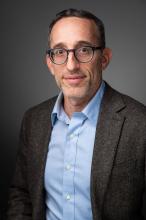
Michael Gurven
· ProfessorUniversity of California, Santa Barbara · Anthropology
Active 1998–2026
Academic metrics are sourced from OpenAlex and public funding records; values may differ from Google Scholar.
About
Michael Gurven's research is informed by human behavioral ecology and life history theory, which seek to explain variation in behavior and physiological systems as adaptive solutions to the competing demands of growth, development, maintenance, and reproduction. His research focuses primarily on the biodemography of human lifespan and aging, with a secondary focus on child development, intergenerational transfers, and familial organization. Additionally, he studies social and economic behavior among foragers and forager-farmers. Gurven is interested in both ultimate and proximate explanations for the diversity of pro-social behaviors observed in small-scale, traditional populations as well as in large-scale modern societies. These research interests have culminated in the Tsimane Life History and Health Project, which has been funded by NIH/NIA and NSF since 2002. He has conducted fieldwork with two South American indigenous populations, the Ache of Paraguay and the Tsimane of Bolivia.
Research topics
- Biology
- Medicine
- Sociology
- Psychology
- Ecology
- Demography
- Social psychology
- Political Science
- Endocrinology
- Mathematics
Selected publications
Daily energy expenditure through the human life course
Science · 2021 · 570 citations
Total daily energy expenditure ("total expenditure") reflects daily energy needs and is a critical variable in human health and physiology, but its trajectory over the life course is poorly studied. We analyzed a large, diverse database of total expenditure measured by the doubly labeled water method for males and females aged 8 days to 95 years. Total expenditure increased with fat-free mass in a power-law manner, with four distinct life stages. Fat-free mass-adjusted expenditure accelerates ra…
A standard calculation methodology for human doubly labeled water studies
Cell Reports Medicine · 2021 · 130 citations
over this size range that agrees well with indirect calorimetry (average difference 0.64%; SD = 12.2%). We propose adoption of these equations in future studies.
Energy compensation and adiposity in humans
Current Biology · 2021 · 121 citations
This suggestion has profound implications for both the evolution of metabolism and human health. It implies that a long-term increase in activity does not directly translate into an increase in total energy expenditure (TEE) because other components of TEE may decrease in response-energy compensation. We used the largest dataset compiled on adult TEE and basal energy expenditure (BEE) (n = 1,754) of people living normal lives to find that energy compensation by a typical human averages 28% due t…
WEIRD bodies: mismatch, medicine and missing diversity
Evolution and Human Behavior · 2020 · 118 citations
1st authorCorrespondingThe life history of human foraging: Cross-cultural and individual variation
Science Advances · 2020 · 107 citations
Human adaptation depends on the integration of slow life history, complex production skills, and extensive sociality. Refining and testing models of the evolution of human life history and cultural learning benefit from increasingly accurate measurement of knowledge, skills, and rates of production with age. We pursue this goal by inferring hunters' increases and declines of skill from approximately 23,000 hunting records generated by more than 1800 individuals at 40 locations. The data reveal a…
Recent grants
The Human Life Course and the Biodemography of Aging
NIH · $289k · 2015–2015
Doctoral Dissertation Research: The skeletal biology of porous cranial lesions
NSF · $31k · 2020–2021
NSF · $23k · 2012–2015
Frequent coauthors
- 251 shared
Hillard Kaplan
- 173 shared
Jonathan Stieglitz
- 123 shared
Benjamin C. Trumble
Arizona State University
- 74 shared
Aaron D. Blackwell
- 65 shared
Paul L. Hooper
Chapman University
- 65 shared
Christopher von Rueden
- 62 shared
Bret Beheim
Max Planck Institute for Evolutionary Anthropology
- 49 shared
Thomas S. Kraft
University of Utah
Labs
Education
- 2000
Ph.D., Anthropology
University of New Mexico
- 1996
Dual B.A., Anthropology, Mathematics
Pennsylvania State University
Similar researchers at University of California, Santa Barbara
- Resume-aware match score
- Save to shortlist
- AI-drafted outreach
See your match with Michael Gurven
PhdFit ranks faculty by your research interests, methods, and publications — grounded in their actual work, not templates.
- Free to start
- No credit card
- 30-second signup