
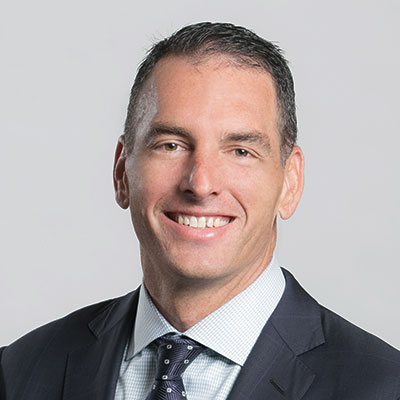
Michael Faulkender
· Distinguished Professor of FinanceUniversity of Maryland, College Park · Logistics, Business & Public Policy
Active 2001–2020
Academic metrics are sourced from OpenAlex and public funding records; values may differ from Google Scholar.
About
Michael Faulkender is the William A. Longbrake Professor of Finance at the Robert H. Smith School of Business. He joined the University of Maryland in 2008 and has served as the Associate Dean of Master’s Programs. Faulkender has held significant roles in the U.S. Department of the Treasury, including serving as the Assistant Secretary for Economic Policy in 2019, and was confirmed as the 16th Deputy Secretary of the Treasury in March 2025. He was also appointed acting commissioner of the Internal Revenue Service in April 2025. His work in government involved advising on domestic and international economic issues, negotiating the CARES Act during the COVID-19 pandemic, and leading the implementation of the Paycheck Protection Program (PPP). He was awarded the Alexander Hamilton Award for Distinguished Leadership, the highest service award at the Department of the Treasury. His research intersects financial economics and public policy, focusing on topics such as the job impacts of the PPP, corporate capital structure, risk management, corporate liquidity, and executive compensation. Faulkender's scholarly work has been published in top academic finance journals, received numerous awards, and has been cited in major media outlets including the Wall Street Journal, Washington Post, and The New York Times. He has taught classes in the MBA and EMBA programs at the Smith School. Faulkender holds a PhD in Finance from Northwestern University and a Bachelor's Degree in Managerial…
Research topics
- Business
- Economics
- Labour economics
Selected publications
Corporate Financial Policy and the Value of Cash
The Journal of Finance · 2006-08-01 · 1615 citations
article1st authorCorrespondingABSTRACT We examine the cross‐sectional variation in the marginal value of corporate cash holdings that arises from differences in corporate financial policy. We begin by providing semi‐quantitative predictions for the value of an extra dollar of cash depending upon the likely use of that dollar, and derive a set of intuitive hypotheses to test empirically. By examining the variation in excess stock returns over the fiscal year, we find that the marginal value of cash declines with larger cash h…
Inside the black box: The role and composition of compensation peer groups☆
Journal of Financial Economics · 2010-02-02 · 424 citations
article1st authorCorrespondingHedging or Market Timing? Selecting the Interest Rate Exposure of Corporate Debt
The Journal of Finance · 2005-03-02 · 297 citations
article1st authorCorrespondingABSTRACT This paper examines whether firms are hedging or timing the market when selecting the interest rate exposure of their new debt issuances. I use a more accurate measure of the interest rate exposure chosen by firms by combining the initial exposure of newly issued debt securities with their use of interest rate swaps. The results indicate that the final interest rate exposure is largely driven by the slope of the yield curve at the time the debt is issued. These results suggest that inte…
Investment and Capital Constraints: Repatriations Under the American Jobs Creation Act
Review of Financial Studies · 2012-09-22 · 232 citations
article1st authorCorrespondingThe American Jobs Creation Act (AJCA) significantly lowered U.S. firms' tax cost when accessing their unrepatriated foreign earnings. Using this temporary shock to the cost of internal financing, we examine the role of capital constraints in firms' investment decisions. Controlling for the capacity to repatriate foreign earnings under the AJCA, we find that a majority of the funds repatriated by capital-constrained firms were allocated to approved domestic investment. Although unconstrained firm…
Understanding the Rise in Corporate Cash: Precautionary Savings or Foreign Taxes
Review of Financial Studies · 2019-01-14 · 166 citations
article1st authorAbstract What has driven the dramatic rise in U.S. corporate cash? Using non-public data, we show that the run-up is not uniform across firms but is concentrated in the foreign subsidiaries of multinational firms. Standard precautionary motives explain only domestic cash holdings, not these burgeoning foreign cash balances. Falling foreign tax rates, coupled with relaxed restrictions on income shifting, are the root of the changing foreign cash patterns. Firms with intellectual property have the…
Frequent coauthors
- 63 shared
Mitchell A. Petersen
National Bureau of Economic Research
- 5 shared
Jun Yang
Zhejiang Sci-Tech University
- 5 shared
Jason M. Smith
Utah State University
- 4 shared
Kristine Watson Hankins
- 2 shared
Mark J. Flannery
- 2 shared
Rong Wang
- 2 shared
Todd T. Milbourn
- 2 shared
Nicole Thorne Jenkins
University of Virginia
Labs
Michael Faulkender LabPI
Awards & honors
- Alexander Hamilton Award for Distinguished Leadership (2020)
Similar researchers at University of Maryland, College Park
- Resume-aware match score
- Save to shortlist
- AI-drafted outreach
See your match with Michael Faulkender
PhdFit ranks faculty by your research interests, methods, and publications — grounded in their actual work, not templates.
- Free to start
- No credit card
- 30-second signup