Resume-aware faculty matching

Find professors who actually fit you

Upload your resume. Four AI agents analyze your background, rank the faculty who fit, inspect their recent research, and help you draft outreach — grounded in their actual work, not templates.

Free to startNo credit cardCancel anytime
Top matches Balanced preset
Dr. Sarah Chen
Stanford · Interpretability · NLP
91
Dr. Marcus Holloway
MIT · Robotics · RL
84
Dr. Aisha Okonkwo
CMU · Fairness · HCI
82
Nova · Professor Researcher · re-ranking top 20…
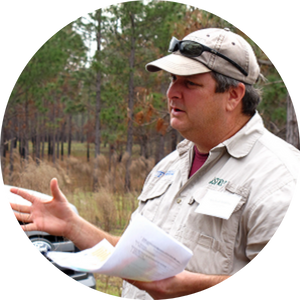
Michael Andreu

Michael Andreu

· Associate Professor, Forest SystemsVerified

University of Florida · Forest Resources and Conservation

Active 1995–2026

h-index16
Citations783
Papers17852 last 5y
Funding
See your match with Michael Andreu — sign in to PhdFit.Sign in

About

Michael Andreu is an Associate Professor in the School of Forest, Fisheries, and Geomatics Sciences at the University of Florida, within the Institute of Food and Agricultural Sciences (UF/IFAS). His appointment is split between teaching and extension, with a focus on sustainable forest management across urban and rural landscapes. He has served as the Undergraduate Coordinator for several B.S. degree programs and as the FFGS Extension Coordinator since 2019. Dr. Andreu's extension work involves collaborating with faculty, staff, and stakeholders to deliver relevant programming on forestry issues statewide, including programs for private landowners, urban forestry, invasive species management, native seed development, and international capacity building in Belize. He oversees multiple programs such as Florida Land Steward, Kids in the Woods, and efforts related to invasive species and native plant materials, working with various partners and agencies to promote sustainable resource management and environmental education. His research broadly addresses sustainable forest management at all scales, from urban to rural, supporting his extension and teaching activities.

Research topics

  • Geography
  • Ecology
  • Environmental science
  • Biology
  • Political Science
  • Forestry
  • Environmental resource management
  • Public relations
  • Linguistics
  • Agroforestry
  • Psychology
  • Engineering
  • Finance
  • Mathematics
  • Physical geography
  • Environmental planning
  • Agronomy
  • Business
  • Economics
  • Natural resource economics
  • Meteorology

Selected publications

  • Evaluating the Flammability of Select Native Grasses in the Southeastern Coastal Plain

    Natural Areas Journal · 2026-01-16

    articleSenior author

    Fire has historically shaped the structure and function of many plant communities in the southeastern Coastal Plain, where graminoids serve as a source of fine fuels that carry surface fires. One of the dominant grass species, wiregrass (Aristida beyrichiana), is considered a foundational species due to its high flammability and is consequently important to re-establish for restoration projects. However, low germination rates and high seed costs associated with wiregrass have created interest in the use of other species to serve a similar functional role in restoration. We experimentally assessed the flammability of nine common native grass species found in these pyric communities, including wiregrass. We measured key flammability metrics—flame duration, smoldering duration, maximum flame height, percent mass loss, and mass loss rate—for each species. Contrary to conventional wisdom, the flammability of wiregrass is not unique; our results from multivariate and cluster analyses revealed that several other species, including purple lovegrass (Eragrostis spectabilis) and split-beard bluestem (Andropogon ternarius), exhibited similarly high flammability. These findings suggest that the foundational role of wiregrass may stem from a combination of traits rather than a uniquely superior flammability profile. Given that species like purple lovegrass are also widespread and often more cost-effective for restoration, our findings support a more diversified approach to pine savanna restoration. By incorporating a broader suite of flammable species, restoration practitioners can promote community flammability and biodiversity.

  • Elegir los árboles adecuados para espacios urbanos y suburbanos: evaluación de los sitios y especies

    DOAJ (DOAJ: Directory of Open Access Journals) · 2026-05-01

    articleOpen access

    Este documento trata de la selección del árbol: atributos deseables del árbol, evaluación del sitio de siembra, modificación y prácticas de mantenimiento.

  • Testing seed mixtures featuring ruderal grasses in restoration of pine savannas in the southeastern, <scp>United States</scp>

    Restoration Ecology · 2025-07-10 · 1 citations

    article

    Florida's pine savannas, known for their biodiversity and fire‐adapted species, have faced extensive degradation due to land use changes, prompting active restoration efforts. This study evaluates the use of native ruderal grasses as alternatives to wiregrass ( Aristida beyrichiana ) in restoration, given wiregrass's low seed viability and high restoration costs. We examined, in a 48‐plot field study, the establishment and cover of seeded grasses and forbs over 2 years post‐seeding in various treatments, comparing wiregrass, Lovegrass ( Eragrostis spectabilis ), and Broomsedge ( Andropogon virginicus ). Results indicated wiregrass failed to establish, while Lovegrass showed significant establishment and cover, outperforming Broomsedge. Lovegrass cover reached 66.38% in high seeding treatments in the second year, significantly reducing the cover of non‐native species. Seeded species like lopsided Indiangrass ( Sorghastrum secundum ) and Silkgrass ( Pityopsis trayci ) established well with Lovegrass, suggesting Lovegrass does not hinder native species recovery. Non‐native pasture grasses declined significantly in Lovegrass treatments, indicating potential for weed suppression. Our study highlights Lovegrass's cost‐effectiveness and higher establishment success compared to wiregrass, making it a viable candidate for pine savanna restoration. The positive correlation of Lovegrass with seeded species and its perceived flammability suggests it can support fire‐dependent ecosystems. However, the long‐term impacts of ruderal grasses and their interaction with fire regimes require further investigation. The failure of wiregrass and several other seeded species to establish underscores the need for improved seeding strategies and understanding of germination barriers. Future research should explore higher seeding rates and alternative methods to enhance restoration outcomes.

  • Developing Successful Extension Tree Stewardship Programs

    EDIS · 2025-09-30

    articleOpen access

    This publication is for Extension agents and the stakeholders they partner with in urban forestry, parks and recreation, and urban greening and urban tree management roles in cities or municipalities. This publication can also help communities working with these actors to better understand the collaborative and iterative process of developing Extension tree stewardship programs. Written by Stephanie Cadaval, Michael Andreu, Ryan Klein, Andrew Koeser, and Paul Monaghan, and published by the UF/IFAS Department of Agricultural Education and Communication, August 2025.

  • Florida's Forest Stewardship Program: An Opportunity to Manage Your Land for Now and the Future

    EDIS · 2025-03-03

    articleOpen access

    Forest stewardship is the wise use and management of resources that maintain and enhance the value of the forest for present and future generations. The goals of the Forest Stewardship Program are to encourage landowners to manage for multiple natural resources, increase public awareness of the importance of Florida's forestlands, and improve cooperation among natural resource agencies and organizations to meet Florida's forest resource conservation and management needs and opportunities.

  • Expanding a Hurricane Wind Resistance Rating System for Tree Species Using Machine Learning

    Arboriculture & Urban Forestry · 2025-02-10 · 3 citations

    articleOpen access

    Abstract Background Hurricanes and other wind events are significant disturbances that affect coastal urban forests around the world. Past research has led to the creation of wind resistance ratings for different tree species, which can be used in urban forest management efforts to mitigate the effects of these storms. While useful, these ratings have been limited to species common to urban forestry in Florida, USA. Methods Drawing on past ratings and data from a global literature review on tropical storm research, we created a machine learning model to broaden both the geographic coverage and the variety of species currently assessed for their resistance to wind. Results We assigned wind resistance ratings to 281 new species based on the available data and our modelling efforts. The model accuracy and agreement with the original ratings when applied to the testing data set was high with 91% accuracy. Conclusions Our study demonstrated how a machine learning algorithm can be used to expand rating systems to include new species given sufficient data. Communities can use the expanded wind resistance rating species list to choose wind resistant species for planting and focus risk assessment on low wind resistant trees.

  • Standardizing Pre- and Post-Storm Data Collection for Urban Forestry Research

    Arboriculture & Urban Forestry · 2025-07-28 · 1 citations

    articleOpen access

    Abstract Background To better understand the impacts of storms on urban forests and to develop effective management strategies, it is essential to collect accurate and consistent data on urban forests before and after a storm. However, there is often limited time for researchers to establish sampling protocols and gather data before cleanup efforts erase key visual information, such as failure modes and damage severity. Moreover, storms differ in how frequently and predictably they impact regions, potentially limiting some researchers’ opportunities to gain experience with storm assessment methods. Methods This paper presents a standardized protocol for collecting pre- and post-storm data on urban forests based on previous studies and the authors’ experiences collecting urban tree data following severe storms. Results The protocol covers a wide range of data, including tree species, size, and condition; risk factors; and damage type. The protocol also includes instructions for post-storm data collection using a variety of methods, including field surveys, remote sensing, and citizen science efforts. Conclusions A standardized protocol will help researchers collect consistent data on urban forests before and after storms, while also making the findings more relevant to urban forest managers, as the data will align with what they already collect.

  • Combined impact of semantic segmentation and quantitative structure modelling of Southern pine trees using terrestrial laser scanning

    Scientific Reports · 2025-07-08 · 1 citations

    articleOpen access

    Southern pine forests play a key role in the ecological function and economic vitality of the southeastern United States. High-resolution terrestrial laser scanning (TLS) has become an indispensable tool for advancing tree structural research and monitoring. A critical challenge in this field is the accurate segmentation of leaf and wood components, which directly impacts the reliability of Quantitative Structure Models (QSMs). Segmentation techniques have progressed, but most existing methods are tailored for broadleaf species, with limited exploration for coniferous species such as southern pines. Addressing this gap, our study evaluates the performance of multiple segmentation algorithms on TLS data from southern pines, providing valuable insights into improving structural analysis and supporting more precise and efficient forest research and monitoring methodologies. We collected TLS data from longleaf pine (Pinus palustris Mill.) and loblolly pine (Pinus taeda L.) trees in Florida, USA, and compared the performance of four segmentation algorithms: TLSep, Graph, DBSCAN, and KPConv to separate leaf and wood. We found that KPConv was the most accurate method of segmenting wood and leaf points, with an overall accuracy (OA) of 98% and F1 score of 98% for loblolly pine and 95% and 94%, respectively, for longleaf pine. Although KPConv requires a substantial initial investment for training, its inference time is fast, making it a strong candidate for high-accuracy large-scale applications. These results led to highly reliable QSMs across trunk, branch, and total volume estimates. In contrast, DBSCAN, while slightly less accurate (OA of 92% for loblolly pine and 90% for longleaf pine), does not require training data and offers a favorable trade-off between performance and efficiency. These findings highlight the importance of selecting segmentation algorithms based on specific research goals, balancing accuracy and computational feasibility in forest structural modeling.

  • The Role of Bulk Density and Leaf Morphology in Litter Flammability

    UF Journal of Undergraduate Research · 2025-11-05

    articleOpen access

    Litter flammability is a key factor in fire behavior prediction and management, particularly in ecosystems with frequent fire regimes. While numerous studies have examined the physical, morphological, and chemical traits influencing flammability and have speculated about the relative importance of each factor, few have isolated the effects of bulk density and leaf morphology on fire dynamics or performed other mechanistic studies. This research investigates how these factors contribute to litter combustion by standardizing leaf shape and size across four Quercus species while measuring key fire behavior metrics, including flame height, burn duration, temperature variation, and mass loss. Results indicate that bulk density plays a significant role in flame height and mass loss and has a lesser, but not negligible impact on flame duration and max temperature. Each species responded similarly but each to a different degree in response to equal changes in bed height and bulk density, indicating bulk density has a non-linear effect on flammability characteristics. These findings underscore the importance of considering inherent leaf traits alongside bulk density when predicting fire behavior and informing fire management.

  • Standardizing Pre- and Post-Storm Data Collection for Urban Forestry Research

    Preprints.org · 2025-07-07

    preprintOpen access

    Background: To better understand the impacts of storms on urban forests and to develop effective management strategies, it is essential to collect accurate and consistent data on urban forests before and after a storm. However, there is often limited time for researchers to establish sampling protocols and gather data before cleanup efforts erase key visual information, such as failure modes and damage severity. Moreover, storms differ in how frequently and predictably they impact regions, potentially limiting some researchers' opportunities to gain experience with storm assessment methods.Methods: This paper presents a standardized protocol for collecting pre- and post-storm data on urban forests based on previous studies and the authors’ experiences collecting urban tree data following severe storms.Results: The protocol covers a wide range of data, including tree species, size, and condition; risk factors; and damage type. The protocol also includes instructions for post-storm data collection using a variety of methods, including field surveys, remote sensing, and citizen science efforts.Conclusions: A standardized protocol will help researchers collect consistent data on urban forests before and after storms, while also making the findings more relevant to urban forest managers, as the data will align with what they already collect.

Frequent coauthors

  • Melissa H. Friedman

    University of Florida

    111 shared
  • Robert J. Northrop

    University of Florida

    82 shared
  • Heather V. Quintana

    31 shared
  • Mary McKenzie

    30 shared
  • Andrew K. Koeser

    University of Florida

    27 shared
  • Deborah R. Hilbert

    Purchase College

    24 shared
  • Bijay Tamang

    22 shared
  • Donald L. Rockwood

    18 shared
  • Resume-aware match score
  • Save to shortlist
  • AI-drafted outreach

See your match with Michael Andreu

PhdFit ranks faculty by your research interests, methods, and publications — grounded in their actual work, not templates.

  • Free to start
  • No credit card
  • 30-second signup