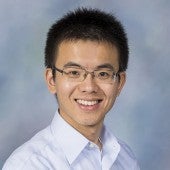
Meng Li
· StatisticsRice University · Electrical and Computer Engineering
Active 2002–2024
About
Meng Li is a faculty member at Rice University specializing in Artificial Intelligence and Machine Learning within the School of Engineering and Computing. His research focuses on advancing the fields of AI and ML, contributing to the development of innovative methods and applications. Meng Li is engaged in teaching and research activities that support the university's mission to foster cutting-edge technological advancements and education in data science and related disciplines.
Research topics
- Artificial Intelligence
- Computer Science
- Electrical engineering
- Data Mining
- Machine Learning
- Mathematics
- Statistics
- Engineering
- Mathematical optimization
- Applied mathematics
- Discrete mathematics
- Parallel computing
- Optoelectronics
- Econometrics
- Metallurgy
- Nanotechnology
- Combinatorics
- Chemical engineering
- Computer vision
- Materials science
Selected publications
Vertically Aligned Bismuthene Nanosheets on MXene for High-Performance Capacitive Deionization
ACS Nano · 2023 · 191 citations
- Materials science
- Nanotechnology
- Chemical engineering
Capacitive deionization has been considered as a promising solution to the challenge of freshwater shortage due to its high efficiency, low environmental footprint, and low energy consumption. However, developing advanced electrode materials to improve capacitive deionization performance remains a challenge. Herein, the hierarchical bismuthene nanosheets (Bi-ene NSs)@MXene heterostructure was successfully prepared by combining the Lewis acidic molten salt etching and the galvanic replacement reaction, which achieves the effective utilization of the molten salt etching byproducts (residual copper). The vertically aligned bismuthene nanosheets array evenly in situ grown on the surface of MXene, which not only facilitate ion and electron transport as well as offer abundant active sites but also provide strong interfacial interaction between bismuthene and MXene. Benefiting from the above advantages, the Bi-ene NSs@MXene heterostructure as a promising capacitive deionization electrode material exhibits high desalination capacity (88.2 mg/g at 1.2 V), fast desalination rate, and good long-term cycling performance. Moreover, the mechanisms involved were elaborated by systematical characterizations and density functional theory calculations. This work provides inspirations for the preparation of MXene-based heterostructures and their application for capacitive deionization.
Inference in functional linear quantile regression
Journal of Multivariate Analysis · 2022 · 22 citations
1st authorCorresponding- Computer Science
- Artificial Intelligence
- Econometrics
Vision Transformers with Patch Diversification
arXiv (Cornell University) · 2021 · 42 citations
- Computer Science
- Artificial Intelligence
- Computer Science
Vision transformer has demonstrated promising performance on challenging computer vision tasks. However, directly training the vision transformers may yield unstable and sub-optimal results. Recent works propose to improve the performance of the vision transformers by modifying the transformer structures, e.g., incorporating convolution layers. In contrast, we investigate an orthogonal approach to stabilize the vision transformer training without modifying the networks. We observe the instability of the training can be attributed to the significant similarity across the extracted patch representations. More specifically, for deep vision transformers, the self-attention blocks tend to map different patches into similar latent representations, yielding information loss and performance degradation. To alleviate this problem, in this work, we introduce novel loss functions in vision transformer training to explicitly encourage diversity across patch representations for more discriminative feature extraction. We empirically show that our proposed techniques stabilize the training and allow us to train wider and deeper vision transformers. We further show the diversified features significantly benefit the downstream tasks in transfer learning. For semantic segmentation, we enhance the state-of-the-art (SOTA) results on Cityscapes and ADE20k. Our code is available at https://github.com/ChengyueGongR/PatchVisionTransformer.
AttentiveNAS: Improving Neural Architecture Search via Attentive Sampling
2022 IEEE/CVF Conference on Computer Vision and Pattern Recognition (CVPR) · 2021 · 88 citations
- Computer Science
- Computer Science
- Machine Learning
Neural architecture search (NAS) has shown great promise in designing state-of-the-art (SOTA) models that are both accurate and efficient. Recently, two-stage NAS, e.g. BigNAS, decouples the model training and searching process and achieves remarkable search efficiency and accuracy. Two-stage NAS requires sampling from the search space during training, which directly impacts the accuracy of the final searched models. While uniform sampling has been widely used for its simplicity, it is agnostic of the model performance Pareto front, which is the main focus in the search process, and thus, misses opportunities to further improve the model accuracy. In this work, we propose AttentiveNAS that focuses on improving the sampling strategy to achieve better performance Pareto. We also propose algorithms to efficiently and effectively identify the networks on the Pareto during training. Without extra re-training or post-processing, we can simultaneously obtain a large number of networks across a wide range of FLOPs. Our discovered model family, AttentiveNAS models, achieves top-1 accuracy from 77.3% to 80.7% on ImageNet, and outperforms SOTA models, including BigNAS, Once-for-All networks and FBNetV3. We also achieve ImageNet accuracy of 80.1% with only 491 MFLOPs. Our training code and pretrained models are available at https://github.com/facebookresearch/AttentiveNAS.
Limits of sums for binomial and Eulerian numbers and their associated distributions
Discrete Mathematics · 2020 · 3 citations
1st authorCorresponding- Mathematics
- Discrete mathematics
- Combinatorics
Recent grants
Semiparametric Methods for Analysis of Complex Data
NSF · $100k · 2020–2023
Frequent coauthors
- 1705 shared
Lei Zhang
Beijing Chaoyang Emergency Medical Center
- 930 shared
Wei Wu
University of Chinese Academy of Sciences
- 528 shared
Jia Li
Chinese Academy of Sciences
- 279 shared
Kai Zhu
Tongren Hospital
- 155 shared
Li Lü
Children's Hospital of Chongqing Medical University
- 124 shared
Xi Sun
- 93 shared
Kezhe Tan
Shanghai Jiao Tong University
- 93 shared
Yu Dong
Second Military Medical University
Education
- 2015
Ph.D, Department of Statistics
North Carolina State University
Similar researchers at Rice University
- Resume-aware match score
- Save to shortlist
- AI-drafted outreach
See your match with Meng Li
PhdFit ranks faculty by your research interests, methods, and publications — grounded in their actual work, not templates.
- Free to start
- No credit card
- 30-second signup