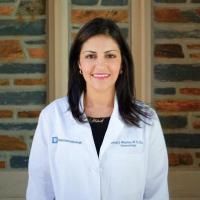
Melodi Javid Whitley
· Assistant Professor of DermatologyVerifiedDuke University · Dermatology
Active 2010–2026
About
Melodi Javid Whitley is an Assistant Professor of Dermatology at Duke University and a member of the Duke Cancer Institute. She is affiliated with the Department of Dermatology at Duke University Medical Center in Durham, North Carolina. Her role involves research, education, and clinical practice within the field of dermatology, contributing to the department's mission and activities.
Research topics
- Pathology
- Immunology
- Medicine
- Biology
- Dermatology
- Cell biology
- Bioinformatics
- Genetics
Selected publications
Time to second cutaneous squamous cell carcinoma among Hispanic patients: A retrospective study
JAAD International · 2026-01-06
articleOpen accessSenior authorJAAD Case Reports · 2025-01-28 · 2 citations
articleOpen accessSenior authorMetastatic urothelial carcinoma (mUC) is an aggressive malignancy with historically poor survival rates with platinum-based chemotherapy. Recently, combination therapy with nectin-4-directed antibody-drug conjugate enfortumab vedotin (EV) and programmed death-1 (PD-1) inhibitor pembrolizumab (P) has emerged as a preferred first-line therapy, demonstrating superior progression-free and overall survival.1,2 However, both EV and P have been associated with frequent cutaneous adverse events (cAEs), including widespread toxic erythema of chemotherapy (TEC), Stevens-Johnson syndrome (SJS), and toxic epidermal necrolysis (TEN).
Current landscape of AI Regulation in Dermatology
Journal of the American Academy of Dermatology · 2025-11-20 · 1 citations
articleSenior authorTransplant International · 2025-09-11 · 2 citations
editorialOpen accessSolid organ transplant recipients (SOTRs) have a high risk of developing aggressive skin cancers. However, there are no standardized triage guidelines to assist dermatology clinics with scheduling new patients pre- or post-transplant. Dermatologic care of SOTRs requires multidisciplinary coordination, extensive assessment, tailored counseling, and longitudinal care. Specialized high-risk transplant clinics are designed to address this clinical need but are a limited resource. This triage algorithm aims to provide a practical framework for tertiary care centers or community practice clinics receiving pre- or post-transplant referrals for active concerning growths or routine skin cancer screening exams. In summary, our expert panel recommends SOTRs are seen within 1-2 weeks for evaluation of an active growth and triaged according to their risk factors for the initial post-transplant screening visit (6 months-2+ years post-transplant). Transplant candidates should be seen for pre-transplant evaluation within 1 month of the referral for a skin cancer screening exam, depending on the transplant team's timeline and dermatologist availability. Overall, dermatologists face numerous challenges in caring for transplant patients, and scheduling these patients in a timely manner according to the acuity of their needs will facilitate prevention and early diagnosis of skin cancer, thus improving transplant patient outcomes.
Pruritic rash secondary to cendakimab, an investigative IL-13 inhibitor
JAAD Case Reports · 2025-11-29
articleOpen accessSenior authorClinical and Experimental Dermatology · 2025-02-27 · 1 citations
article5-fluorouracil (5-FU) is a widely prescribed therapy for field cancerization. However, the emergence of cutaneous squamous cell carcinoma (cSCC) after 5-FU treatment is poorly described. We report five patients treated for field cancerization at four university hospitals between March 2019 and May 2021 who had eruptive cSCCs of varying severity following 5-FU. We examined the indications for treatment, immunosuppression status, onset of cSCCs, staging and outcomes. The patients (three female, two male; median age 74 years) were treated with 5-FU for field cancerization. Four, including two solid-organ-transplant recipients, were on immunomodulating therapy. Eruptive cSCCs developed within 3 weeks to 3 months of 5-FU treatment, mostly within the treated area. Staging revealed a spectrum of BWH T2b in two patients and BWH T1 in three. Eruptive cSCCs are a poorly characterized adverse event of topical 5-FU treatment. High-risk T-stage cSCCs, not yet reported and distinct from eruptive squamous atypia, may also develop despite low-grade background disease. Inflammation and immunomodulation could contribute to pathogenesis.
JEADV Clinical Practice · 2025-10-15
articleOpen accessSenior authorCorrespondingABSTRACT Background Hematopoietic stem cell transplant (HSCT) recipients face an increased risk of cutaneous malignancies. Chronic cutaneous graft‐versus‐host disease (cGVHD), specific to allogeneic HSCT (alloHSCT), has been proposed to further elevate this risk, though its impact on skin cancer latency and distribution remains unclear. Objectives To evaluate the timeline and characteristics of post‐transplant skin cancers in HSCT recipients, stratified by transplant type and presence of cutaneous cGVHD. Methods A retrospective cohort study of HSCT recipients with documented cutaneous malignancies treated at Duke University Medical Center from 2010 to 2020. Patients with solid organ transplants were excluded. Primary outcomes were time to first and second skin cancer post‐transplant. Secondary outcomes included cancer type, number, and anatomic location. Results Among 192 patients, 96 underwent alloHSCT with cutaneous cGVHD, 20 alloHSCT without cGVHD, and 76 autoHSCT. Time to first skin cancer was significantly longer in the cGVHD group (mean 2131 days) compared to alloHSCT without cGVHD (1686 days) and autoHSCT (1287 days; p = 0.047). However, time to second malignancy was shorter in the cGVHD cohort (2871 days) than in alloHSCT without cGVHD (4231 days) but longer than autoHSCT recipients (1954 days; p = 0.02). SCC was the most prevalent malignancy, though patients with cGVHD had higher rates of BCC and melanoma. Cutaneous cancers predominantly involved UV‐exposed areas, but truncal involvement was more common in cGVHD patients. Conclusions HSCT recipients with cutaneous cGVHD demonstrate delayed onset of first skin cancer but accelerated development of subsequent malignancies. These findings suggest dynamic immune shifts over time and emphasize the need for tailored dermatologic surveillance protocols based on transplant type and cGVHD status.
Journal of Investigative Dermatology · 2025-07-21
articleOpen accessSenior authorA cross-sectional analysis of dermatology resident research productivity in the United States
JAAD International · 2025-10-09
articleOpen accessSenior authorIchthyosiform sarcoidosis with associated calcinosis cutis and cardiac arrest
JAAD Case Reports · 2025-11-25
articleOpen accessSenior author
Frequent coauthors
- 90 shared
Kirk Foster
University of Nebraska Medical Center
- 90 shared
Lisa Sieczkowski
University of Nebraska Medical Center
- 80 shared
Antonia Gurney
Duke University Hospital
- 80 shared
William Poulson
University of Nebraska Medical Center
- 54 shared
Joslynn Hoburg
University of Nebraska Medical Center
- 42 shared
Priscilla Rosa-Nieves
University of Nebraska Medical Center
- 40 shared
Andrew M. Goldsweig
Creighton University
- 32 shared
David G. Kirsch
University of Toronto
- Resume-aware match score
- Save to shortlist
- AI-drafted outreach
See your match with Melodi Javid Whitley
PhdFit ranks faculty by your research interests, methods, and publications — grounded in their actual work, not templates.
- Free to start
- No credit card
- 30-second signup