Resume-aware faculty matching

Find professors who actually fit you

Upload your resume. Four AI agents analyze your background, rank the faculty who fit, inspect their recent research, and help you draft outreach — grounded in their actual work, not templates.

Free to startNo credit cardCancel anytime
Top matches Balanced preset
Dr. Sarah Chen
Stanford · Interpretability · NLP
91
Dr. Marcus Holloway
MIT · Robotics · RL
84
Dr. Aisha Okonkwo
CMU · Fairness · HCI
82
Nova · Professor Researcher · re-ranking top 20…
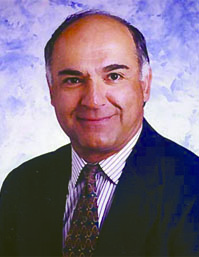
Mehrdad "Mark" Ehsani

Mehrdad "Mark" Ehsani

· Professor, Electrical & Computer EngineeringVerified

Texas A&M University · Electrical & Computer Engineering

Active 1977–2025

h-index64
Citations17.8k
Papers38334 last 5y
Funding
See your match with Mehrdad "Mark" Ehsani — sign in to PhdFit.Sign in

About

Mehrdad "Mark" Ehsani is a Professor in the Department of Electrical & Computer Engineering at Texas A&M University. He holds the titles of Robert M. Kennedy '26 Professor and has an extensive educational background including a Ph.D. from the University of Wisconsin–Madison earned in 1981, a Master’s degree from the University of Texas at Austin obtained in 1974, and a Bachelor’s degree from the same institution completed in 1973. His research interests encompass sustainable power and energy systems, power electronics and motor drives, electric and hybrid vehicles, superconductive magnetic storage (SMES), aerospace power systems, specialized power systems, control systems, energy storage systems, high-voltage direct current (HVDC) power transmission, applications of microcomputers to power control, pulsed power systems, and high voltage engineering, electrical failures, and hazards. He has been recognized as a Life Fellow of the IEEE and a Fellow of the Society of Automotive Engineers (SAE). Ehsani has received multiple awards including prize paper awards from IEEE Industry Applications Society and has served as a distinguished speaker for IEEE. His professional contributions include leadership roles such as Chairman of the IEEE Vehicular Technology Society Electric & Hybrid Vehicle Committee. His work is characterized by a focus on advancing power and energy systems, with significant recognition within his field.

Research topics

  • Computer Science
  • Engineering
  • Automotive engineering
  • Electrical engineering
  • Physics
  • Risk analysis (engineering)
  • Control engineering
  • Business
  • Environmental science
  • Systems engineering
  • Algorithm

Selected publications

  • Parametric Design of Vehicle Electrified Powertrain with Two-Member Transmotor-Flywheel

    Iranian Journal of Science and Technology Transactions of Electrical Engineering · 2025-07-18

    article
  • Application of the Transmotor-Flywheel Technology to Mild Hybrid Powertrain for Fuel Economy Improvement

    2025-05-18

    articleSenior author

    Previous research has used a flywheel connected to a dual-mechanical shaft electric machine named transmotor to improve energy efficiency and reduce electric power rating in a battery electric vehicle (BEV) powertrain. However, the effect of this transmotor-flywheel technology on a mild hybrid electric vehicle (HEV) powertrain has not been previously studied. This paper presents this study and optimizes the fuel economy using the dynamic programming (DP) algorithm. The optimal fuel economy of the proposed HEV powertrain is compared with that of the original mild HEV powertrain without this technology, during benchmark driving cycles. Results show that this technology can improve the fuel economy of the proposed powertrain with an electric drive which has notably smaller electric power rating than that of the original powertrain, leading to a reduction in costs.

  • End-of-Life Prediction Models for Lithium-ion Batteries in Electric Vehicles: Approaches, Challenges and Future Directions

    2025-10-14

    articleSenior author

    As the global transition toward electrification accelerates across the transportation and stationary energy storage sectors, the critical need for accurate end-of-life (EoL) prediction of lithium-ion batteries (LIBs) has become increasingly apparent. Current battery failures impose substantial costs on manufacturers through warranty claims, while creating significant safety risks that threaten both electric vehicle (EV) adoption and grid-scale energy storage deployment. This paper examines the modeling approaches to predict the EoL and the remaining useful life (RUL) of LIBs in EVs. The paper includes data-driven models, physics-based approaches, and hybrid frameworks. Through systematic analysis of recent advances, the paper identifies that hybrid models demonstrate superior performance compared to single-approach methods, effectively addressing the inherent limitations of individual methodologies across diverse operating conditions. Key challenges remain in Battery Management System (BMS) integration complexity, data quality constraints, and real-time computational requirements. The proposed review establishes that next-generation prediction systems and incorporates transfer learning, digital twin technologies, and second-life battery strategies to support sustainable EV adoption and circular economy principles.

  • Conceptual Overview of Transmotor and Transgenerator Technologies: Enhancing Energy Efficiency in Electric Vehicle and Renewable Energy Powertrains

    2025-02-10

    articleSenior author

    Electrification is rapidly becoming the dominant trend in transportation, with electric vehicles (EV s) leading the charge. However, persistent challenges such as large battery size and degradation, compromised multi-form power conversion ef-ficiency, and the limitations of traditional transmissions continue to undermine their potential. This paper reviews the Transmo-tor/Transgenerator, a pioneering three-port electric machine with two mechanical ports and one electrical port, simultaneously integrating motor/generator and magnetic clutch functionalities within a single system. By enabling the seamless integration of key components such as flywheels and ultracapacitors, the Trans-motor/Trangenerator redefines power delivery and recovery, providing a more efficient and scalable solution for both electric vehicle powertrains and renewable energy systems. Simulation-based case studies demonstrate its superiority over conventional electric powertrains, while experimental results further substan-tiate its performance enhancements and scalability, confirming its transformative potential.

  • Two-Stage Optimization of a DC Microgrid with Green Hydrogen for 1 MW Data Center Operation in NEOM, Saudi Arabia

    2025-10-12 · 2 citations

    articleSenior author

    An energy management system (EMS) is developed for a 1 MW data-center DC microgrid in NEOM, Saudi Arabia. Photovoltaic and wind generation are coupled with layered storage—a lithium-ion battery for fast balancing and a hydrogen loop (electrolyzer, tank, fuel cell) for long-duration shifting. A two-stage optimization (genetic-algorithm sizing followed by year-long model predictive control dispatch) is implemented in Python. Using hourly 2024 climate data, the microgrid supplies a 6.89 GWh annual load with 0 MWh grid import and avoids 100% of CO<inf xmlns:mml="http://www.w3.org/1998/Math/MathML" xmlns:xlink="http://www.w3.org/1999/xlink">2</inf> relative to a grid-only baseline, demonstrating the viability of coordinated battery–hydrogen storage and DC coupling for net-zero, high-reliability data-center power.

  • Double d-q Axes Control of Transgenerator-Flywheel System for Wind Power Generation and Energy Storage

    2025-02-10

    articleSenior author

    The authors proposed a transgenerator-flywheel system for wind power generation and storage in a previous paper. The transgenerator is a three-member dual-mechanical-shaft (DMS) electric machine consisting of a wound stator, a permanent magnet (PM) rotor, and a wound rotor. Due to the structural and control complexity of the transgenerator, the double d-q axes-based field-oriented control (FOC) is applied to control the two rotors independently for different purposes. This paper reviews the proposed transgenerator-flywheel system and illustrates how the control references of the current components are calculated using double d-q axes. Simulations are performed in MATLAB/ Simulink to verify the independent control of the two rotors and evaluate the control performance. Results show that with the double d-q axes, the inner and outer rotors can be controlled independently with accurate and fast control response.

  • Comparative Analysis of Ideal Energy Requirements in EV Powertrains

    Iranian Journal of Science and Technology Transactions of Electrical Engineering · 2025-04-16

    article
  • Conversion Function Theory of DC–DC Switching Power Converters

    IEEE Transactions on Power Electronics · 2025-02-21

    articleSenior author

    A new time domain modeling method for dc–dc switching power converters is introduced: conversion function theory of dc converters. This method is based on the concept of “wanted variables” at the input and output terminals of the converter, while ignoring the secondary “unwanted” effects, such as harmonics and ripples produced by the converter. The modeling method applies to every kind of dc–dc converter. Further, the modeling is applicable for both static and dynamic operations. This conversion function theory is useful for computer modeling of converters and power systems containing many dc–dc converters. The modeling algorithm significantly speeds up computer simulation of converter intensive power systems, such as micorgrids and electric vehicles. It also facilitates converter and system control design and their intuitive understanding. For example, input and output side system components can be referred to the opposite side of the converter, thus, suppressing the complexities of switched topology circuit simulation.

  • Application of the Transmotor-Flywheel Technology to Mild Hybrid Powertrain for Fuel Economy Improvement

    SSRN Electronic Journal · 2024-01-01

    preprintOpen accessSenior author
  • How Green Are Electric Vehicles in Developing Countries?

    2024-05-19 · 9 citations

    article

    This paper addresses the urgent challenges of escalating global warming, rapid ozone layer depletion, and persistent greenhouse gas (GHG) emissions exacerbated by nations’ reluctance to limit industrial emissions for economic growth. This has prompted a global shift towards exploring alternative strategies for pollution mitigation, including transitioning from conventional power generation to sustainable energy resources and a move from gasoline-based transportation to electric vehicles (EVs). Particularly critical is the question of whether this transition genuinely yields environmental benefits, or if it potentially exacerbates existing challenges, especially in underdeveloped or developing countries heavily reliant on fossil fuel-generated electricity. The paper presents a concise comparative analysis between Electric Vehicles (EVs) and Internal Combustion Engine Vehicles (ICEVs), examining GHG emissions throughout their lifetimes, during manufacturing, and in terms of fuel consumption. Additionally, it explores the energy mix of developing countries compared to the global scenario, presenting results for the comparison between ICEVs and EVs using electricity from coal, gas, nuclear, and a balanced energy mix-dominated power system. The study identifies opportunities for improvement in EV adoption and emission mitigation strategies, offering valuable insights into sustainable practices and environmental conservation.

Frequent coauthors

  • Yimin Gao

    64 shared
  • Babak Fahimi

    The University of Texas at Dallas

    32 shared
  • Ali Emadi

    McMaster University

    25 shared
  • Iqbal Husain

    Biju Patnaik University of Technology

    23 shared
  • K.L. Butler

    Texas A&M University System

    21 shared
  • K.M. Rahman

    Rivian

    20 shared
  • Ramin Tafazzoli Mehrjardi

    Texas A&M University

    20 shared
  • G. Suresh

    Hanyang University

    14 shared

Awards & honors

  • Prize paper awards from Institute of Electrical and Electron…
  • Distinguished Speaker, Institute of Electrical and Electroni…
  • Chairman, Institute of Electrical and Electronics Engineers…
  • Life Fellow, Institute of Electrical and Electronics Enginee…
  • Fellow, Society of Automotive Engineers (SAE)
  • Resume-aware match score
  • Save to shortlist
  • AI-drafted outreach

See your match with Mehrdad "Mark" Ehsani

PhdFit ranks faculty by your research interests, methods, and publications — grounded in their actual work, not templates.

  • Free to start
  • No credit card
  • 30-second signup