
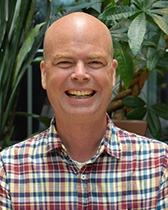
Matthew Hurtgen
· ProfessorNorthwestern University · Earth and Planetary Sciences
Active 1999–2025
Academic metrics are sourced from OpenAlex and public funding records; values may differ from Google Scholar.
About
Matthew Hurtgen is a professor in the Department of Earth, Environmental, and Planetary Sciences at Northwestern University. He holds a Ph.D. in Geosciences from Pennsylvania State University, an M.S. in Geosciences from the University of Missouri, a B.S. in Geosciences from the State University of New York, and a B.A. in Political Science from the University of Rochester. His research group seeks to better understand how the fundamental coupled components of the Earth system—the atmosphere, biosphere, hydrosphere, and solid Earth—interact to regulate the chemical composition of the ocean-atmosphere system and how this has changed over the past one billion years. Specifically, he focuses on the complex processes that influence the evolution of redox conditions during periods of marine anoxia, the biogeochemical feedback mechanisms regulating the exogenic carbon cycle, and the evolution of the marine biosphere. His work involves studying modern and ancient sedimentary systems, integrating field observations with geochemical tools, and employing simple geochemical models to investigate these relationships.
Research topics
- Oceanography
- Geology
- Paleontology
- Geochemistry
- Geomorphology
- Ecology
- Mineralogy
- Chemistry
Selected publications
Geology · 2020 · 31 citations
Senior authorCorrespondingAbstract Large igneous province (LIP) eruptions are hypothesized to trigger biocalcification crises. The Aptian nannoconid crisis, which correlates with emplacement of the Ontong Java Plateau and Oceanic Anoxic Event 1a (OAE 1a, ca. 120 Ma), represents one such example. The Ca isotope (δ44/40Ca) system offers potential to detect biocalcification fluctuations in the rock record because Ca isotope fractionation is sensitive to precipitation rate. However, other primary and secondary processes, suc…
Geology · 2019-10-28 · 21 citations
articleOpen accessAbstract Carbon dioxide release during Deccan Traps volcanism and the Chicxulub impact likely contributed to the Cretaceous-Paleogene (K-Pg) mass extinction; however, the intensity and duration of CO2 input differed between the two events. Large and rapid addition of CO2 to seawater causes transient decreases in pH, [CO32–], and carbonate mineral saturation states. Compensating mechanisms, such as dissolution of seafloor sediment, reduced biomineralization, and silicate weathering, mitigate thes…
Loss-On-Ignition Estimates for Soil Organic Carbon in Great Lakes Freshwater Coastal Wetlands
Wetlands · 2020-03-07 · 16 citations
articleApplication of the δ44/40Ca-δ88/86Sr multi-proxy to Namibian Marinoan cap carbonates
Geochimica et Cosmochimica Acta · 2023 · 14 citations
Senior authorCorrespondingCommunications Earth & Environment · 2022-12-13 · 13 citations
articleOpen accessSenior authorAbstract Ocean acidification causes biocalcification stress. The calcium isotope composition of carbonate producers can archive such stress because calcium isotope fractionation is sensitive to precipitation rate. Here, we synthesize morphometric observations of planktic foraminifera with multi-archive calcium isotope records from Gubbio, Italy and the Western Interior Seaway spanning Cretaceous Ocean Anoxic Event 2 (~94 million years ago). Calcium isotope ratios increase ~60 thousand years prio…
Recent grants
Collaborative Research: Ocean Oxidation and the Biosphere During Neoproterozoic Glaciation
NSF · $219k · 2009–2013
NSF · $512k · 2010–2016
NSF · $190k · 2007–2011
Frequent coauthors
- 29 shared
Bradley B. Sageman
- 24 shared
Andrew D. Jacobson
- 13 shared
Jiuyuan Wang
Peking University
- 12 shared
Galen P. Halverson
McGill University
- 9 shared
Maya Gomes
Johns Hopkins University
- 6 shared
Andrew L. Masterson
- 6 shared
Gabriella D. Kitch
Northwestern University
- 5 shared
Benjamin J. Linzmeier
University of South Alabama
Labs
Similar researchers at Northwestern University
- Resume-aware match score
- Save to shortlist
- AI-drafted outreach
See your match with Matthew Hurtgen
PhdFit ranks faculty by your research interests, methods, and publications — grounded in their actual work, not templates.
- Free to start
- No credit card
- 30-second signup